
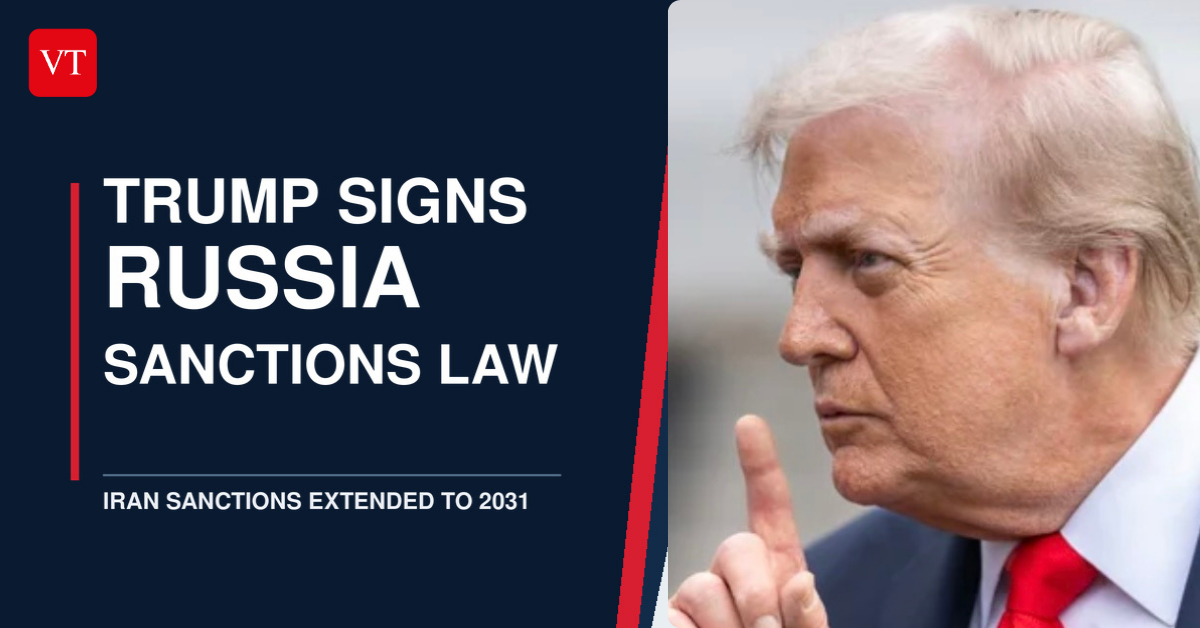
President Donald Trump signed a law Friday expanding sanctions on Russia, directing new tariffs on Russian imports and certain other countries, and extending the Iran Sanctions Act through 2031, the White House said.
The enrolled text of H.R. 5334 directs the president to raise duties on goods imported from Russia to a rate of up to 500% within 30 days of enactment. The duty would be added to other applicable charges. The law does not set a final rate.
It also directs tariffs of up to 100% on goods from certain countries. One group consists of countries among the five largest importers of Russian oil or natural gas during the preceding 12 months that make new purchases at least 30 days after enactment. The five countries found to have facilitated the most Russian oil sanctions evasion during that period are also covered.
The law names no countries subject to those tariffs. It includes a limited exception tied to natural gas purchases when a country’s Russian gas imports were below a specified threshold and it has taken significant steps to reduce them.
Sanctions on officials, banks and vessels
Within 30 days, and every 180 days afterward, the president must review potential sanctions targets and act against those determined to meet the law’s criteria. The listed categories include senior Russian government and military officials, foreign suppliers of goods tied to Russia’s defense industry and certain Russian oligarchs.
The law also covers foreign persons determined to have knowingly engaged in specified activities undermining Ukraine or involving serious human rights abuses against Ukrainians. Sanctions on covered individuals can block property under U.S. jurisdiction and bar them from receiving U.S. visas.
Russia’s central bank must face at least two of the law’s specified banking sanctions. Sberbank, VTB Bank, Gazprombank and other covered Russian banks must face all of them within 30 days. Foreign financial institutions conducting significant transactions with those banks can also be covered, subject to an exception based on U.S. economic or foreign policy interests.
After 30 days, the law restricts U.S. transactions with covered banks and transfers involving the Russian government, subject to licensing and other statutory exceptions. It also addresses interest on immobilized Russian sovereign assets and exempts certain payments on loans to Ukraine backed by proceeds from those assets.
Other provisions prohibit new U.S. investment in Russia and its energy sector and exports of U.S. energy products to Russia after 30 days. U.S. purchases of Russian government debt are prohibited upon enactment. The law also calls for implementation of existing restrictions on Russian uranium imports.
The vessel provisions target ships the president determines are used to move Russian commodities or other goods to evade sanctions. They also reach certain owners, insurers, crew leaders and port operators when the law’s conditions are met.
Exceptions and other provisions
The law exempts humanitarian transactions involving food, medicine and other assistance, along with certain official U.S. and United Nations business. A 270-day exception allows qualifying businesses to wind down or divest operations in Russia; it does not require all such businesses to leave.
The president may waive sanctions or duties after certifying in writing to Congress that a waiver serves U.S. national interests and explaining the decision. Ending measures against Russia requires a separate certification concerning a peace agreement accepted by Ukraine’s government and an end to specified hostilities, followed by congressional review.
The legislation changes the expiration year of the Iran Sanctions Act of 1996 from 2026 to 2031. Most of the Russia sanctions provisions are set to expire five years after enactment. A separate division expands the educator expense tax deduction to eligible early childhood educators for expenses in tax years beginning after Dec. 31, 2025.
Ukraine’s Foreign Ministry welcomed the signing. Foreign Minister Andrii Sybiha said, according to the ministry’s post:
“U.S. leadership sends a clear signal to the world that sanctions against Russia must be strengthened.”
He called for further coordinated action by European Union and other Group of Seven partners.

A global media for the latest news, entertainment, music fashion, and more.