

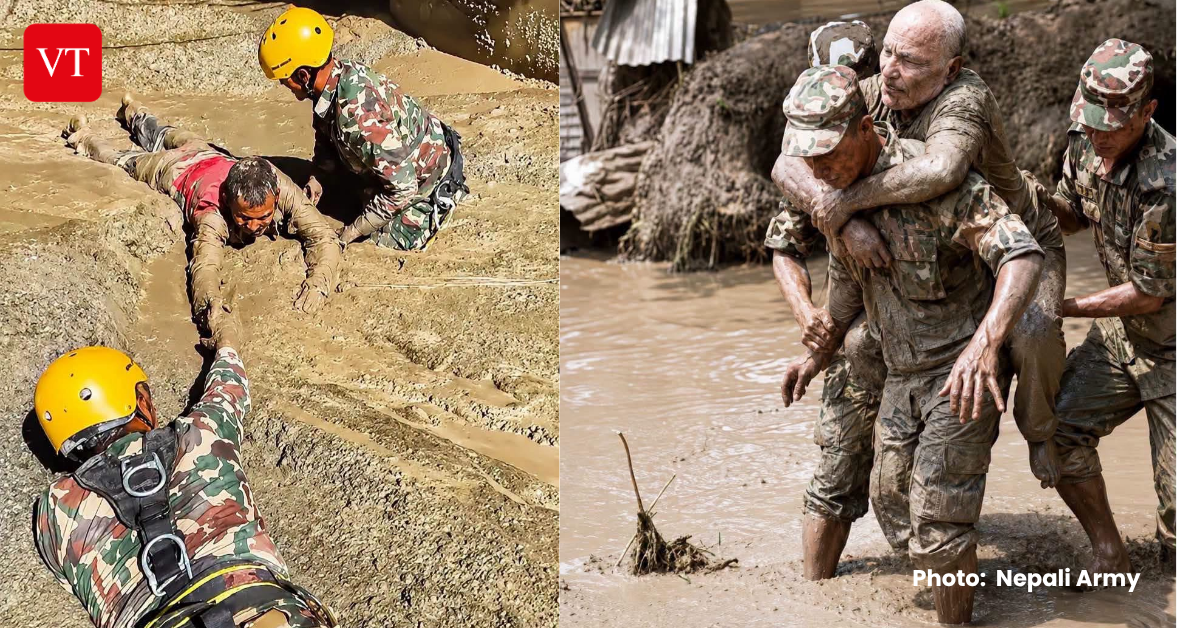
After the Bhotekoshi floods, Nepal declined offers from several countries to send search-and-rescue teams. The government said its own security agencies had the capacity to conduct the operation.
Those decisions came as hundreds remained missing, including foreign nationals. That leaves an understandable question: Why turn down rescue teams while families are still waiting for news?
The question is fair. But Nepal made the right call. The reasons have little to do with pride and much to do with manpower, local knowledge and the challenge of coordinating a large outside response.
That does not mean Nepal should reject international assistance. It should keep the field operation under Nepali command while accepting the equipment, technical support and relief supplies it needs from abroad.
In This Roundup
1 The 2015 experience matters
A peer-reviewed assessment found that 34 countries responded on the ground after Nepal requested international assistance within hours of the 2015 earthquake. They sent 76 urban search-and-rescue teams with 2,242 personnel and 135 dogs. Eighteen foreign military teams also joined the early response.
That mobilization reflected enormous international goodwill. It also placed heavy pressure on Nepal’s ability to receive, coordinate and deploy so many outside teams at once.
The assessment found that Nepal was overwhelmed by the volume of personnel, equipment and donations entering the country. Planning, aid delivery and distribution suffered. Tribhuvan International Airport faced congestion as aircraft carrying foreign teams and relief supplies arrived.
The lesson is not that foreign rescuers have nothing to contribute. It is that integrating large numbers of outside responders requires time, staff and coordination from a national system already under severe strain.
The Kathmandu Post reported that the 2015 experience shaped the current decision. A senior Foreign Ministry official told the newspaper that the government considered the earlier coordination and management problems before declining similar teams. The decision came on the recommendation of the Nepali Army and police.
2 Why the decision holds up
Nepali responders and local communities are familiar with the country’s geography, geological conditions and access routes. That knowledge matters when teams must reach damaged and isolated areas quickly.
Foreign teams would need to be integrated into Nepal’s command and communication systems before they could work effectively. That process would create additional demands for the same agencies directing the rescue.
The flooding mainly affected one part of the country, not the entire nation. The government can move security personnel, health workers, engineers and other trained responders from less affected regions into the disaster zone.
Nepal can deploy the Nepali Army, police, other security agencies, medical teams, local governments and community volunteers.
The country’s central shortage is not manpower. It is the equipment and technical capacity that allow available personnel to work safely and effectively. — Virginia Times
The current response already uses 12 sector teams with separate responsibilities. The Nepali Army leads search, rescue and relief. Other teams handle medical care, communications, transportation, damage assessment, missing-person information, supplies, airport operations and donor coordination.
Large foreign contingents would not merely add personnel. They would also add coordination demands to this structure, repeating the kind of management challenge Nepal encountered in 2015.
3 What Nepal should request instead
If the government declines large foreign teams, it has an obligation to state clearly what the rescue operation needs. That list should begin with drones and modern search equipment.
Nepal also needs reliable communications equipment, generators, emergency lighting, protective gear, transport and machinery capable of clearing mud and debris. International partners can provide rescue ropes, harnesses, helmets, life jackets and other equipment identified by agencies working on the ground.
Families who lost homes or livelihoods need tents, blankets, medicines, clean water, food, hygiene supplies and temporary shelter. These relief packages are not secondary to the rescue. They are part of keeping survivors safe after they are found.
Some specialized equipment may require outside expertise. In those cases, Nepal should accept a limited number of technical advisers or trainers rather than large operational contingents.
The policy should remain flexible. If Nepal lacks a particular search capability, the government should request targeted international support without delay.
4 The door to international assistance remains open
India delivered relief material after Nepal declined its offer to deploy a National Disaster Response Force team. South Korea pledged $1 million in humanitarian assistance through international organizations. Other countries have also offered financial or material support.
The government has established a “one-door” mechanism to bring cash and material contributions under a central system. The Kathmandu Post reported that its stated purposes include organizing collection and distribution, preventing irregularities and directing supplies according to need.
The Foreign Ministry also created an emergency response team to handle information, rescue-related assistance and consular matters involving foreign nationals. Diplomatic missions, international organizations and families of missing people have been asked to use official channels.
This is not a closed door. It is a decision to control how assistance enters and where it goes.
Central control, however, must not become a bureaucratic barrier. The government should regularly publish what equipment and relief supplies are needed, what has arrived and where it has been sent.
5 The policy is still being tested
In its Aug. 27 update, the Foreign Ministry said 359 bodies had been recovered and 596 foreign nationals from 33 countries remained missing. The ministry said the figures were provisional and subject to verification.
Separately, The Kathmandu Post cited Nepal’s disaster-management authority as reporting 826 people out of contact. That figure included 590 tourists, of whom 476 were foreign nationals and 114 were Nepali.
The figures cover different categories and should not be read as competing totals.
There is not enough evidence yet to determine whether keeping foreign rescue teams out has made the operation faster or more effective. What is clear is the policy choice: operational rescue remains with Nepali agencies while foreign equipment, money and relief enter through central channels.
That division is defensible. Nepal has reason to retain field leadership, while international partners can fill its technical and material gaps.
But a government that asks for control also accepts accountability. It should publish regular updates on the search, available resources, equipment needs and relief distribution so the public does not have to guess.
The decision was sound. Its success will be judged by how effectively Nepal turns its available manpower and international material support into a transparent and well-managed response.