
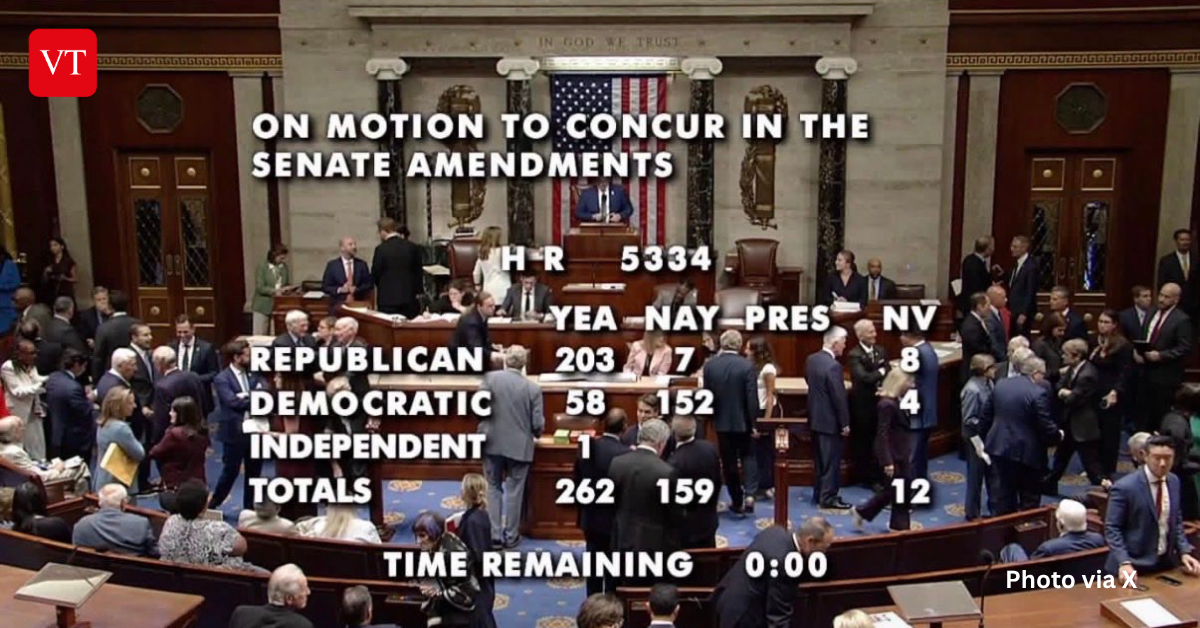
The House of Representatives approved the Lindsey O. Graham Sanctioning Russia and Iran Act of 2026 on Wednesday by a 262-159 vote, sending the legislation to the president’s desk for signature.
A total of 203 Republicans, 58 Democrats and an independent member supported the bill. Seven Republicans and 152 Democrats opposed the legislation, while eight Republicans and four Democrats abstained from voting.
House Speaker Mike Johnson said the bill would strengthen economic sanctions against the Russian government, its financial institutions and foreign governments that buy Russian oil and gas or help the Kremlin evade other sanctions.
“For too long, Putin has bankrolled this devastating war with money and resources from countries willing to look the other way, and today, that ends.”
In the post, Johnson described the legislation as an effort by House and Senate Republicans to place “maximum pressure” on Putin and Russia’s war operations.
He said the measure would give the administration additional tools to seek what he called a “just end” to the war. Johnson also described its passage as a message of American unity.
Former Vice President Mike Pence celebrated the passage, calling the outcome a “strong, bipartisan vote.”
Pence said the measure targets the economic lifelines sustaining Putin’s war operations. Remembering Graham, he wrote, “I know my friend Lindsey is smiling in Glory.”
The Kremlin warned Thursday that the sanctions would make efforts to reach a peace agreement in Ukraine more difficult if President Donald Trump signs the measure, Reuters reported.
Kremlin spokesperson Dmitry Peskov called the proposed sanctions “unfriendly actions” and said they would further complicate peace negotiations.
India’s Ministry of External Affairs said Thursday that the government had noted the legislation’s passage and was monitoring further developments.
The ministry said India remained “firmly committed to ensuring energy security for its 1.4 billion people” through diversified sourcing and decisions based on changing market conditions.
Indian officials have discussed the issue with U.S. representatives at high levels in recent months, according to the statement. India said it had explained the potential effects on bilateral relations and the international energy market.
The government also said it would take necessary measures to protect India’s trade and economic interests while working with Indian trade and industry groups to address the legislation’s implications.

A global media for the latest news, entertainment, music fashion, and more.