

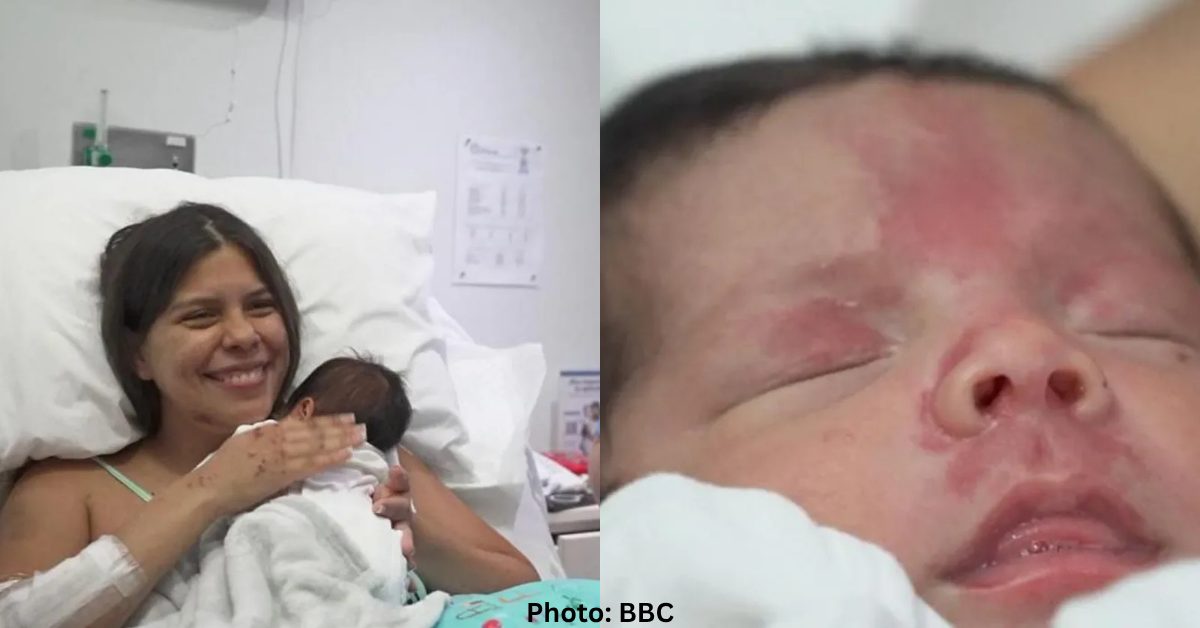
LA GUAIRA, Venezuela — Dayana Patiño was washing dishes in her eighth-floor apartment on Venezuela’s northern coast when the earthquakes hit.
She assumed it was only a light tremor. Her 18-day-old son, Juan David, was beside her, and in the seconds before the walls failed, she crossed the room to gather him in her arms. Then the building came down.
Patiño told the BBC she felt as though she were flying, then sinking through water and dirt, before the motion stopped and left her sealed in a dark pocket of debris. Somehow, through the fall, she had not let go of her baby.
Her left leg was pinned beneath concrete and her temple was pressed against rock. She could not move. But Juan David was still breathing, and that became the focus of everything that followed. Her son, she said, gave her “motivation to be awake and alert,” and she kept touching his nose to confirm he was still alive. As long as he held on, she told herself, so would she.
Her son gave her “motivation to be awake and alert,” and she kept touching his nose to confirm he was still alive. — Dayana Patiño, to the BBC
The rescue of mother and child has become one of the most resonant stories to emerge from Venezuela’s twin earthquakes, which struck on Wednesday, June 24, and have killed at least 1,450 people. Tens of thousands more have been reported missing in what the country’s interim president has called the most brutal natural disaster in Venezuela’s history. Search crews have continued working through collapsed buildings and unstable rubble, but hopes of finding more survivors are diminishing.
In La Guaira, one of the worst-hit regions, families, neighbors and rescue workers have been digging through the ruins of buildings that had been homes only hours earlier.
Beneath one of those buildings, a mother was listening.
Patiño said she screamed at first, then understood that no one could hear her. Rather than exhaust herself, she chose to save her voice for the moments when she could hear movement above — footsteps, voices, the sound of people nearby. In between, she held Juan David close and prayed.
In the darkness, she felt a Bible beneath her, which she said gave her hope, and she could make out a faint point of light, like a small moon, somewhere beyond the wreckage. It was not a way out, but it was a reminder that a world outside still existed.
Her husband, Gerson, had just returned home and parked the car when the earthquakes hit. He managed to climb a fence and reach safety, but when he turned to see what had happened to the building, he feared his wife and son were gone.
The family kept searching anyway.
The turning point, Patiño said, came when she heard her brother calling her name through the rubble. Knowing it might be her only chance, she cried out with what strength she had left. He heard her — and told her he would not leave until she was free.
A careful rescue operation followed on Thursday night. Rescuers reached both mother and child and brought them out of the debris. Widely shared footage of the operation shows Gerson cradling his son, his eyes shut and his face tilted toward the sky as emotion overtakes him.
He told the BBC he had believed his wife and baby were dead, and that seeing Juan David alive felt like being born again.
Patiño suffered injuries to both legs. Juan David, remarkably, escaped with only minor injuries. Both were taken for treatment in the capital, Caracas, where Patiño spoke to the BBC from a clinic on Sunday. Their home was destroyed, their possessions are gone, and the family’s pet dog is still missing.
What remains is their son — and the determination, as Gerson put it, to rebuild from nothing.
In the dark beneath the rubble, Juan David’s small, steady breaths had given his mother a reason to keep going.