

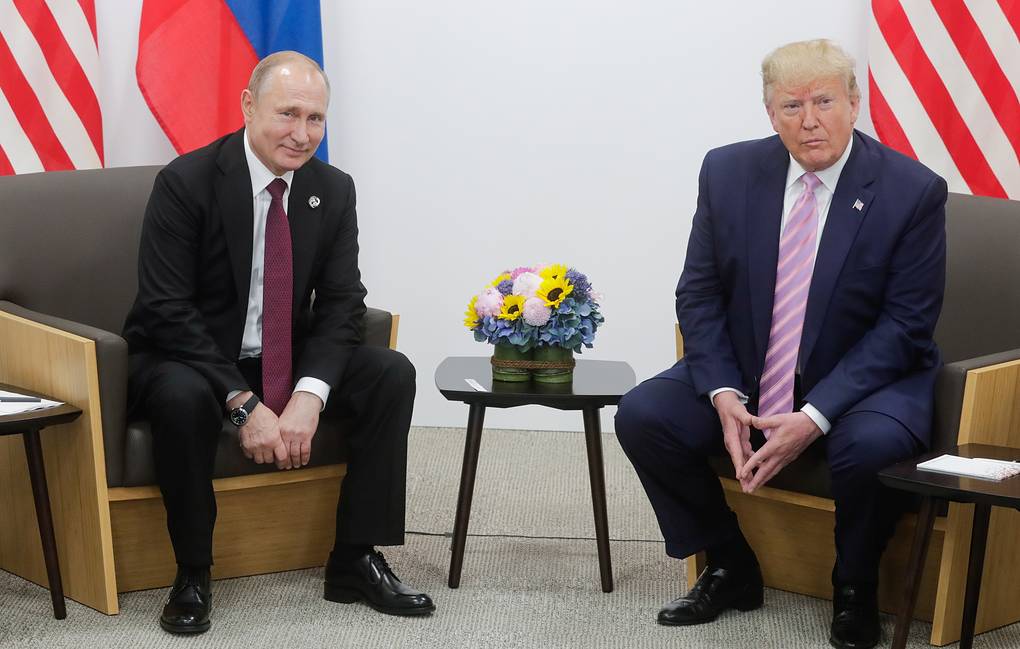
WASHINGTON — President Donald Trump has eased economic pressure on Russia in recent weeks and stepped up his criticism of Ukraine. Lawmakers from both parties are pushing back, and the fight could complicate his agenda once the Nov. 3 midterm elections are over, according to Reuters.
Start with the diesel. Trump lifted sanctions on Russian diesel exports. He also waived newly enacted sanctions aimed at Russian officials, oligarchs, banks and state enterprises — all of it part of an effort to draw Russian President Vladimir Putin into talks on ending the war in Ukraine.
Kyiv, meanwhile, has felt the pressure from the other direction. Trump has called for Ukrainian President Volodymyr Zelenskiy to be replaced as the country’s leader. And a satellite system Ukraine uses for battlefield communications and drone operations was throttled after an order from inside the White House, Reuters reported last week.
The pushback arrived in writing. In an Oct. 15 letter, 17 House Democrats and five House Republicans urged Trump to “apply the Graham law’s sanctions to their fullest extent and without delay.” Putin, they added, “has repeatedly shown that he responds to pressure, not goodwill.”
Signing for the Republicans were Brian Fitzpatrick of Pennsylvania, Joe Wilson of South Carolina, Michael McCaul of Texas, Don Bacon of Nebraska and Dan Newhouse of Washington state, all members of the House. The law they cited — the Lindsey O. Graham Sanctioning Russia and Iran Act, championed by the late South Carolina senator — passed Congress overwhelmingly and was signed by Trump in mid-September.
Fitzpatrick went further this week, and he did it alone. His vehicle was X. In a Monday post, he addressed the “Starshield” intelligence used to warn Kyiv of Russian attacks. Limit its use, he wrote, and Congress will respond. Such a move would be “fully investigated,” he said, with “harsh and punitive budget cuts to any responsible agency or agency head.”
Senators had moved a step earlier. On Oct. 13, a dozen of them — six Republicans and six Democrats, Mitch McConnell of Kentucky and Richard Blumenthal of Connecticut among them — wrote to Trump urging him to rescind his agreement allowing Russian-origin diesel fuel into global markets, according to a release from Blumenthal’s office.
“This deal is a gift to our adversary and a betrayal of our Allies; it should be rescinded,”
The White House answered by email. “President Trump has been clear that he wants to see this brutal war come to an end,” spokeswoman Taylor Rogers told Reuters. She added a caveat about the waivers. Trump, she said, “retains the ability to exercise these authorities at any time if he determines that doing so would advance national interests.”
Not every Republican is uneasy, though. Sen. Ted Budd, for one, is not. At a Trump rally in North Carolina, his home state, Budd told Reuters he backs the president’s pivot toward Putin. The diesel agreement, in his telling, matters because it keeps Moscow at the table.
“It’s a very minimal dollar amount actually to Russia, but it’s enough of a fig leaf to get them to the table to bring an end to the aggression against Ukraine,” said Budd, a member of the Armed Services Committee.
House Speaker Mike Johnson’s answer was harder to pin down. Johnson is a staunch Trump supporter. Still, asked on Fox News’ Sunday Morning Futures whether he backed waiving the Russia sanctions, he pointed to the vote itself. “Congress voted on this decisively,” he said. He is also talking with Republican members of the Foreign Affairs and Intelligence committees, he noted.
“We understand that Putin cannot be trusted,” Johnson said. He added that he told White House officials, “We need to talk about it and I think carefully consider the unintended consequences that may ensue” from putting the new sanctions on hold.
Timing gives the dispute its weight. After the elections, Congress takes up the annual defense policy bill. Government spending through Sept. 30, 2027 is on the same agenda, Pentagon and intelligence money included. Those bills are levers, and lawmakers could reach for them to reverse or alter Trump’s Russia policies. Trump could veto them. Reuters described the prospect as a showdown.
James Lindsay, a foreign policy expert at the Council on Foreign Relations, told Reuters the backlash was not surprising, given the Senate’s bipartisan votes on the Graham bill. Getting a new law passed is another matter.
“Even if Congress can overcome its institutional divisions, its partisan divisions and overcome a presidential veto … that’s no guarantee the president will act or observe that constraint,” he said.
What voters decide on Nov. 3 will frame all of it. The elections will determine whether Republicans keep their narrow House and Senate majorities, and they are widely seen as a referendum on Trump’s presidency, though Trump himself is not on the ballot. Voters, for their part, are on edge over rising consumer prices and the war with Iran.
Have something to promote?
Bring your business, services or event to our readers.