

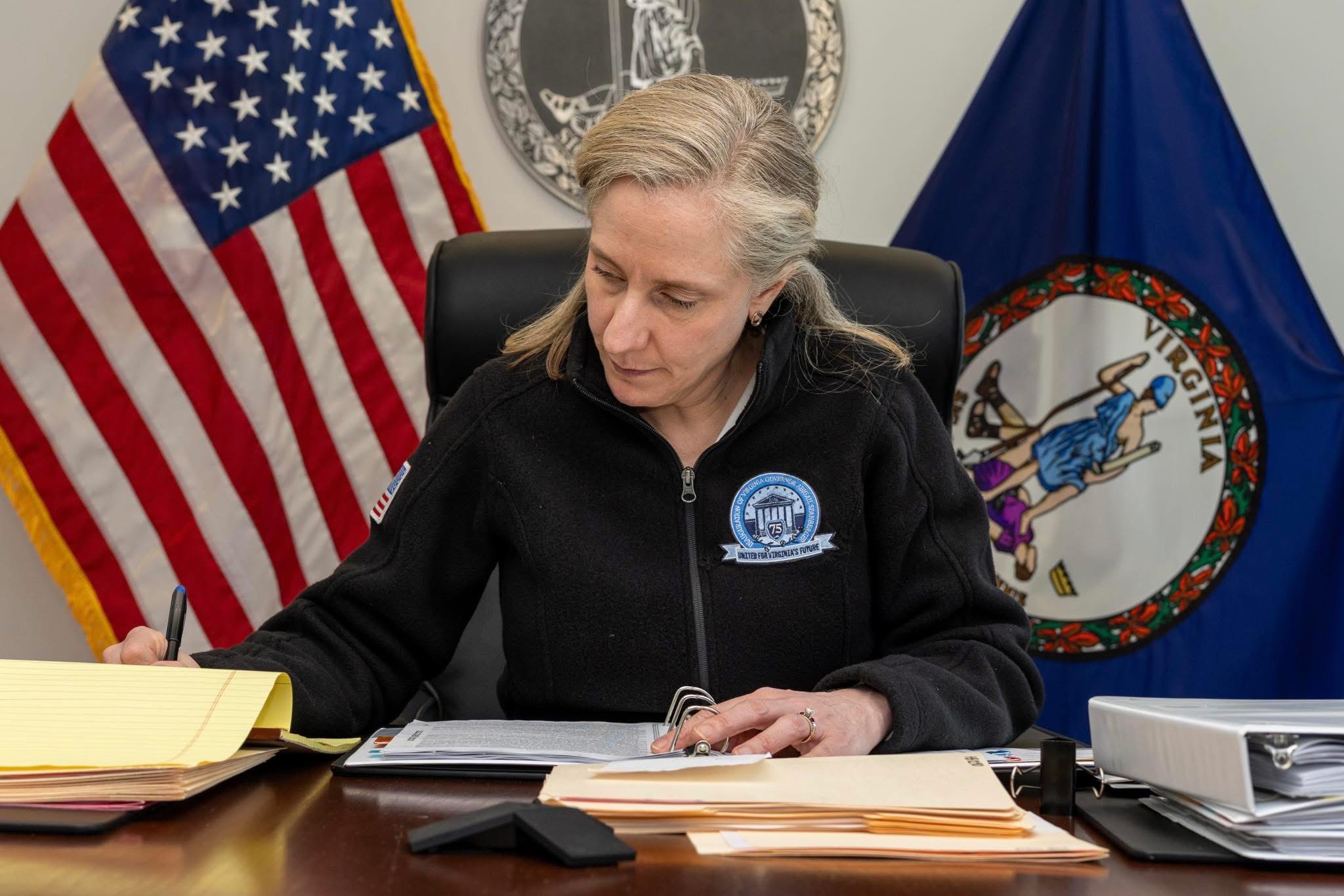
RICHMOND, Va. — Gov. Abigail Spanberger wants a six-year freeze on residential base electricity rates, and monthly bill credits tripled, before Virginia approves the proposed $67 billion merger between Dominion Energy and NextEra Energy.
Her office set out the terms in expert testimony filed with the State Corporation Commission. Without those guarantees, and other binding commitments, the commission should reject the merger, the Governor of Virginia said in a release.
The commitments she sought would protect and preserve Virginia jobs, lower energy costs for families and speed the state’s progress toward affordable, reliable, local and clean power, according to the release.
“Any proposed merger involving Virginia’s primary state-regulated utility must benefit families, small businesses, and Virginia’s workforce — not just the shareholders of these multi-billion-dollar corporations,”
“That’s why I am calling for a six-year freeze to Virginians’ base residential electricity rates, a tripling of monthly bill credits for ratepayers, and additional commitments to lower energy costs and meet our long-term clean and homegrown energy goals if the State Corporation Commission is to approve this merger,” Spanberger said.
Spanberger said she would keep pressing the case in the months ahead. She said she was deeply skeptical that the merger, as currently structured, would protect consumers or deliver meaningful public benefits, and that without enforceable commitments putting ratepayers first, lowering energy costs, protecting Virginia’s utility workforce and advancing the state’s energy goals, the commission should reject it.
The testimony was provided by Dr. Richard McCann, an energy, water and environmental policy expert, on behalf of Spanberger and Chief Energy Officer Josephus Allmond, the release said.
McCann concluded that the companies, in their original filing and supplemental testimony, had not yet met the standard for approval — that “just and reasonable rates will not be impaired or jeopardized” — and that the deal must otherwise be in the public interest, according to the summary of his testimony in the release.
On rates, McCann called for no increase to base rates for three rate case cycles. The credit for customers would rise to $29 a month for four years.
He also called for Dominion’s capital structure to change. The debt share would rise from 48% to 60%, a step the testimony said would reduce the company’s rate of return.
Another change, called the “Probability of Dispatch” method, would cut the residential share of the relevant costs by 25%, according to the summary.
Disconnection protections would also widen. They would cover households with infants, people with serious medical conditions or an inability to pay because of financial hardship, and days with a high Air Quality Index.
Allmond said the companies had not yet satisfied the legal standard for approval.
“Dominion and NextEra have not yet satisfied the legal standard that would allow the Commission to approve this transaction,” Allmond said.
On clean energy, the testimony called for energy efficiency and distributed energy resources to come first when the companies plan for and acquire resources to meet forecast demand.
A new subsidiary, headquartered in Virginia, would build zero-carbon generation to serve large data centers. It would be financially walled off from other customers, so families would not bear the cost of the data centers’ energy needs.
The filing also called for a state energy efficiency utility to be recommended to the General Assembly, a decarbonization incentive rate for heat pumps and electric vehicles, and the elimination of the cap on the rooftop solar net metering program, also by recommendation to the General Assembly.
Any commitments would have to carry strong enforcement provisions. The release said those provisions must hold the companies accountable for their promises to Virginians and their workers, including labor and workforce commitments.
The State Corporation Commission staff took a similar position in its own testimony, WHRO reported. The staff said the deal should not go forward because the merger would expose Dominion Energy Virginia to the additional financial and business risks of NextEra’s unregulated, competitive businesses, and it suggested limits on dividends paid by Dominion and an independent board of directors after the merger, according to WHRO.
Spanberger formally entered the case in August. She filed a Notice of Participation as Respondent, becoming the first Governor of Virginia to intervene at the State Corporation Commission, the release said.
She announced that decision in a Washington Post op-ed. In it, she set three priorities: more affordable energy bills, protection for Virginia’s utility workforce, and faster progress toward affordable, reliable, local and clean power.
As a party to the case, the governor can bring concerns forward, request detailed information about the merger and engage in the proceedings, according to the release. The commission has not yet decided whether to approve the transaction.
Have something to promote?
Bring your business, services or event to our readers.