
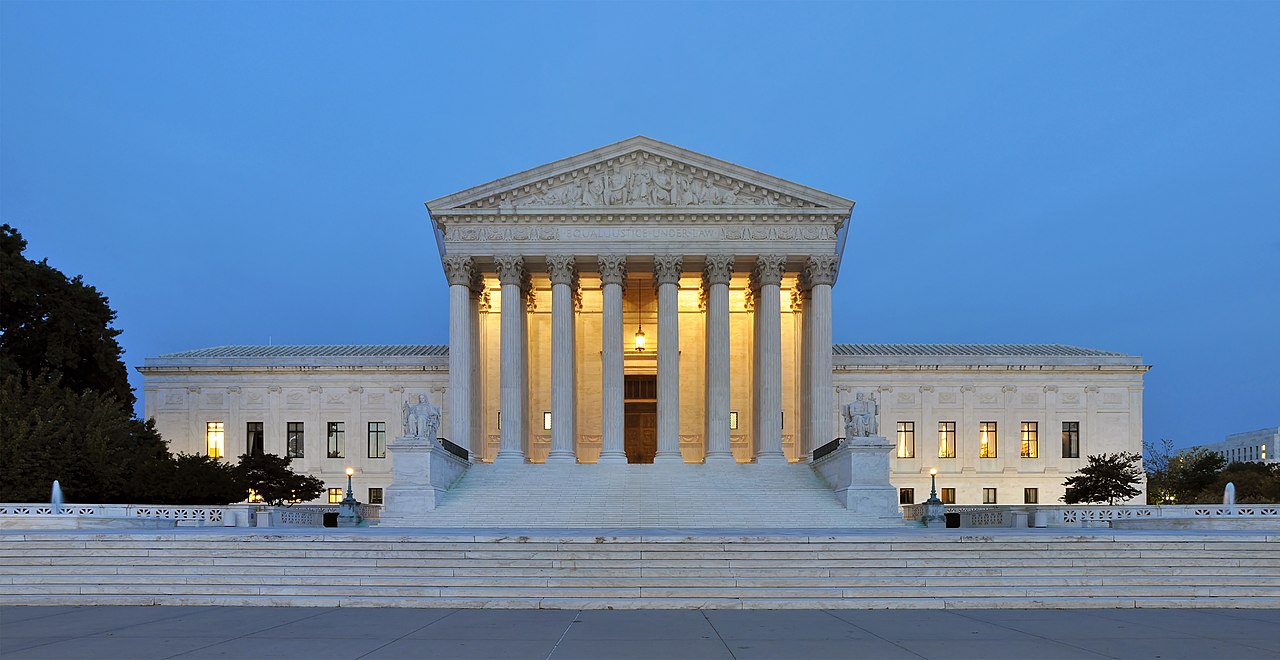
The Supreme Court on Tuesday upheld birthright citizenship and rejected President Donald Trump’s executive order seeking to deny citizenship to children born in the United States to parents who are in the country illegally or temporarily.
The 6-3 ruling affirmed a lower-court decision that had blocked the order and certified a nationwide class of children who stood to lose citizenship under it.
Chief Justice John Roberts wrote that citizenship “was the right to have rights — to freely participate in our political community,” and that the framers of the 14th Amendment extended that promise to “every free-born person in this land.”
We keep that promise today. — Chief Justice John Roberts
The court rested on the 14th Amendment, adopted after the Civil War, and on later federal law. It said anyone born in the country is a citizen, with only narrow exceptions.
Roberts was joined by Justices Sonia Sotomayor, Elena Kagan, Amy Coney Barrett and Ketanji Brown Jackson. Justice Brett Kavanaugh agreed the order was unlawful but said it violated federal law rather than the Constitution.
Three conservative justices — Clarence Thomas, Samuel Alito and Neil Gorsuch — dissented and would have let the restrictions take effect.
Trump signed the order on the first day of his second term as part of a broad immigration crackdown. It would have limited birthright citizenship to children with at least one parent who is a citizen or permanent resident.
The administration argued that children of some noncitizens are not “subject to the jurisdiction” of the United States, the phrase the 14th Amendment uses to define who is a citizen at birth.
Roberts wrote that there was “scant evidence” for that reading. The court pointed to its 1898 decision in United States v. Wong Kim Ark, which recognized citizenship for a man born in San Francisco to Chinese parents.
The ruling came in Trump’s appeal of a decision from New Hampshire, where a federal judge struck down the restrictions. The justices took the case before an appeals court ruled.
It was the court’s first ruling on the merits of Trump’s birthright citizenship policy. An earlier case reached the court in 2025 but turned on the scope of lower-court orders, not the legality of the policy.
The decision was also the second time this year the court invalidated a signature second-term initiative, following its February ruling striking down many of Trump’s tariffs.
The case is Trump v. Barbara, No. 25-365. It was argued April 1, 2026.

A global media for the latest news, entertainment, music fashion, and more.