

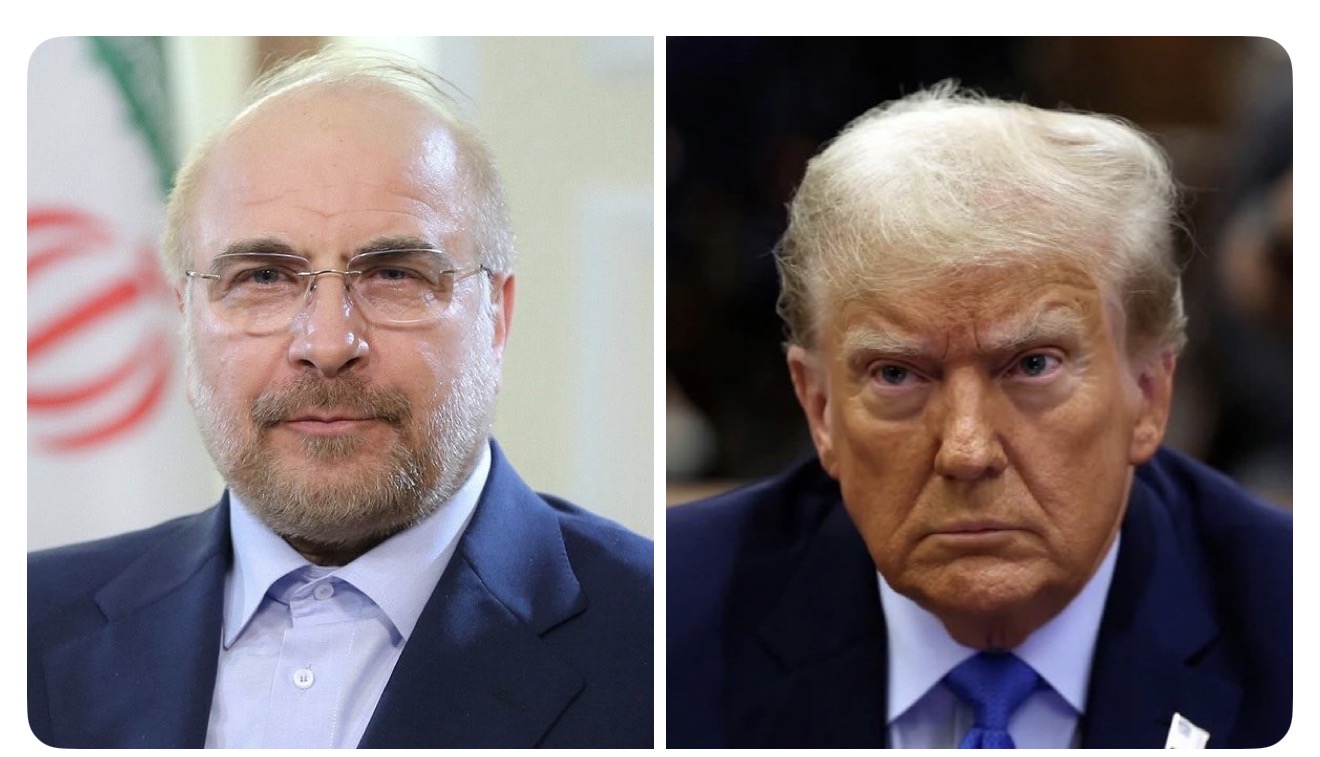
MB Ghalibaf, Iran’s parliament speaker, said President Donald Trump made seven false claims in one hour and warned that the Strait of Hormuz would not remain open under the same terms if the U.S. blockade continues. He said passage through the waterway would follow a “designated route” and require “Iranian authorization.”
Ghalibaf, who headed Iran’s negotiating team in the recent Pakistani-mediated talks in Islamabad, wrote on X: “The US president made seven claims in one hour, all seven of which are false. With these lies, they did not win in the war, and they certainly will not achieve results in negotiations either. With the continuation of the blockade, the Strait of Hormuz will not remain open. Passage through the Strait will take place based on a ‘designated route’ and with ‘Iran’s permission’. Whether the Strait is open or closed, and its regulations, are determined in the field, not on social media. Media warfare and the engineering of public opinion are an important part of the war, and the Iranian nation will not be influenced by these tactics.” Ghalibaf also said, “Read the real and accurate news of the negotiations in the recent interview of the Foreign Ministry spokesman.”
The statement was a direct pushback against Trump’s posts on Truth Social, where he said Iran had agreed never to close the Strait of Hormuz again and that the waterway would no longer be used “as a weapon against the World.” Trump also said Iran, “with the help of the U.S.A.,” had removed or was removing sea mines. That claim was not independently confirmed in the material provided.
Trump also wrote that the United States would receive all nuclear “dust” created by U.S. B-2 bombers and that “no money will exchange hands.” He said the arrangement was not tied to Lebanon and added that Washington would deal separately with Lebanon and the Hezbollah issue.
In another claim, Trump said Israel would no longer bomb Lebanon because the United States had prohibited it. No separate confirmation of that claim was included in the reporting provided.
Earlier Friday, Iranian Foreign Minister Seyed Abbas Araghchi said on X that commercial passage through the Strait of Hormuz was completely open for the remaining period of the Lebanon ceasefire on a coordinated route announced by Iran’s Ports and Maritime Organisation.
That message was then challenged from inside Iran’s own media space. Tasnim News criticized Araghchi’s post as incomplete and misleading, saying it created ambiguity over the reopening of the strait and did not properly reflect the military position.
A similar warning came from Ali Abdulahi, who said the situation in the strait had returned to its previous state of tight control. He said Iran had allowed limited passage in line with earlier understandings, but accused the United States of repeated violations.
Ebrahim Azizi, identified as head of the Iranian parliament’s national security commission, also warned that only commercial vessels authorized by the IRGC Navy would be allowed to use designated routes after paying required tolls. He added that the situation could change if the United States created problems for Iranian ships.
The spokesperson for Iran’s Khatam al-Anbiya Headquarters also said the Strait of Hormuz had been closed again following the continued U.S. naval blockade.
Taken together, the statements show a sharp public split between Trump’s account and the position laid out by senior Iranian political, military and media figures. Iran’s message was that access to the strait would be governed by Iranian rules, routing and authorization.
In separate remarks shared by Trump Truth on X, Trump said he may not extend the ceasefire with Iran if no deal is reached by Wednesday and said he may “have to start dropping bombs again.”
Have something to promote?
Bring your business, services or event to our readers.