
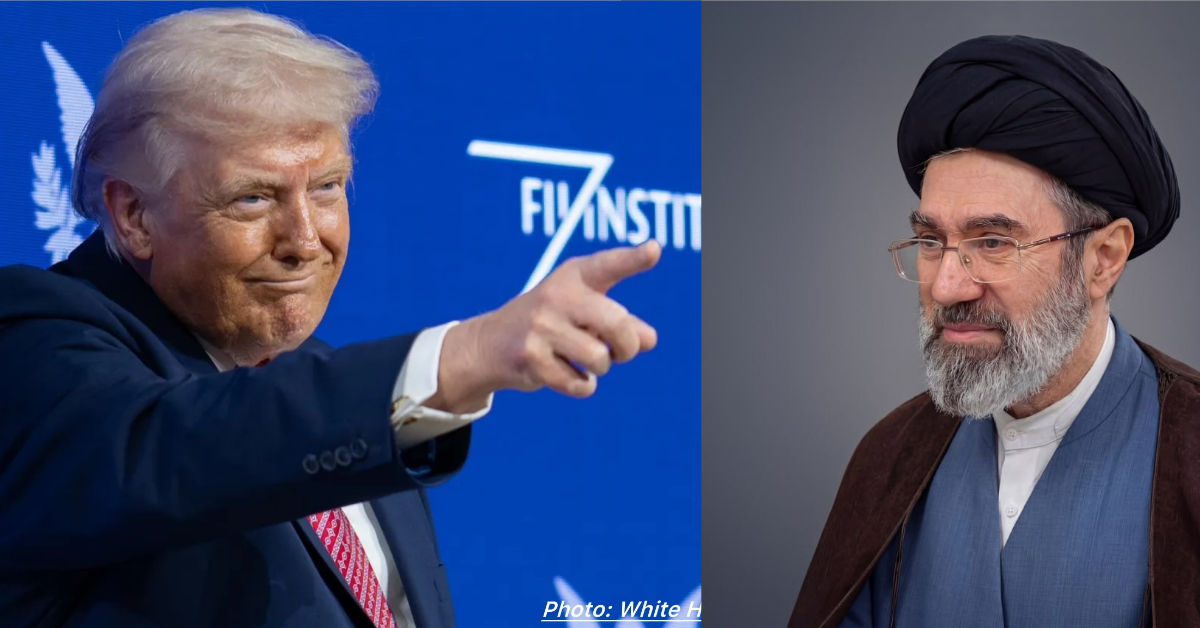
Iran has called Donald Trump’s blockade of Iranian ports illegal after weekend talks between Washington and Tehran in Pakistan ended without an agreement.
Iranian officials also warned ports in neighboring Gulf states could be at risk if the United States enforces the measure, according to Reuters.
On Sunday, US President Donald Trump immediately moved ahead with the order after marathon negotiations in Islamabad ended without a breakthrough. Trump said the United States would begin blocking ships trying to enter or leave the Strait of Hormuz after talks with Iran in Islamabad failed to produce agreement on Tehran’s nuclear program.
In a post on Truth Social, Trump said the meeting lasted nearly 20 hours and ended with broad agreement on most issues, but not on what he described as the central issue: Iran’s nuclear ambitions.
Trump said that Iran was “unwilling to give up its nuclear ambitions” and that the US would “immediately” move ahead with a naval blockade. He also said that the U.S. Navy had been told to stop ships in international waters that paid what he called an illegal toll to Iran and to start destroying mines that he said Iran had put in the strait.
The blockade took effect Monday and applies to vessels entering or leaving Iranian ports. Ships heading to other destinations are still being allowed to pass through the Strait of Hormuz.
U.S. Central Command (CENTCOM) also announced that its forces will begin enforcing a blockade on maritime traffic entering or leaving Iranian ports at 10 a.m. Eastern on April 13 under a presidential proclamation.
CENTCOM said the measure will apply to vessels of all nations traveling to and from Iranian ports and coastal areas, including ports along the Arabian Gulf and the Gulf of Oman.
CENTCOM said the blockade will not affect ships transiting the Strait of Hormuz if they are traveling to or from non-Iranian ports.
Vice President JD Vance, who led the U.S. delegation in Pakistan, said Iran rejected Washington’s proposal. He said the administration wanted a clear commitment that Tehran would not develop nuclear weapons or the systems needed to build them but did not publicly detail the full terms discussed in the talks.
The Associated Press reported that Iranian officials described the U.S. position as too harsh and unrealistic and denounced the blockade as unlawful.
The latest confrontation has pushed the Strait of Hormuz back to the center of the crisis. The US doesn’t plan to get involved in non-Iranian shipping, but Iran has warned that targeting its ports could make shipping security in the whole region worse, potentially leading to increased tensions and disruptions in global oil supply routes.

A global media for the latest news, entertainment, music fashion, and more.