

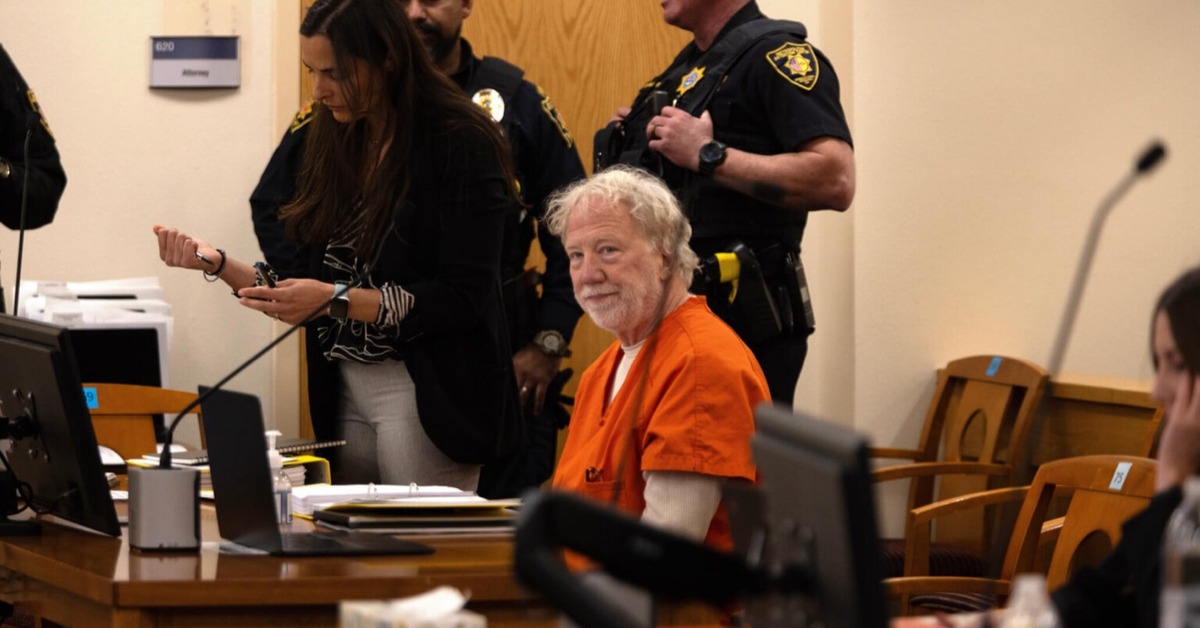
A New Mexico judge dismissed Timothy Busfield’s indictment Friday after finding that a prosecutor improperly prevented grand jurors from hearing witnesses they had requested.
District Judge Joseph Montano’s Second Judicial District Court order leaves the state free to bring new criminal proceedings. The ruling addresses the fairness of the grand jury process and does not decide whether Busfield committed the alleged offenses.
“The prosecuting attorney failed to act in a fair and impartial manner,”
Busfield filed his motion June 15, challenging the four-count indictment returned Feb. 5. Montano granted that request in a six-page order filed Oct. 16 in Bernalillo County.
Only Detective Marvin Brown and Busfield testified before the grand jury, which indicted Busfield on four counts of criminal sexual contact of a minor. Busfield discussed an independent Warner Bros. investigation, a polygraph examination and other witnesses available to testify that day, according to the order.
Several grand jurors asked on at least three occasions to hear additional witnesses. At one point, they specifically named Alan Caudillo, who was present and available.
Prosecutors recalled Brown to discuss, in part, Caudillo’s testimony at an earlier pretrial detention hearing. Grand jurors continued asking to hear other witnesses.
The prosecutor then told them that eight jurors would have to agree a witness was necessary and all 12 would have to agree to return for more testimony. The prosecutor explained that the state needed to issue subpoenas at least 36 hours beforehand.
No further requests for witnesses followed, the order says.
At the Sept. 25 hearing, eight witnesses said they had been at the courthouse on the day the grand jury met and would have testified if called. All eight said the prosecutor saw them waiting in the hallway throughout the day.
The prosecutor told jurors about the 36-hour subpoena requirement but left out two points, Montano wrote: a judge could shorten that period, and witnesses could appear voluntarily without a subpoena. He also found no rule or statute supporting the voting procedure the prosecutor described.
“The actions by the State did not facilitate the grand jury’s inquiry,” Montano wrote. He found that the instructions effectively kept requested witnesses from the panel.
Busfield’s defense argued that the prosecutor had abandoned his neutral role, misstated the law and blocked access to witnesses. It also alleged that he suppressed and mischaracterized favorable evidence and attacked the character of Busfield and his lawyers.
Prosecutors countered that the defense created the problem by failing to follow the established procedure for asking the state to alert grand jurors to favorable evidence. They maintained that Busfield had already conveyed that evidence through his testimony.
The state also argued that jurors received proper instructions and stopped requesting witnesses once the procedure was explained. Granting the motion, prosecutors warned, would cause unnecessary litigation during grand jury proceedings.
Montano agreed that Busfield had not followed the process established in the New Mexico Supreme Court’s 2009 decision in Jones v. Murdoch for bringing favorable evidence to a grand jury’s attention.
But the judge said that was not the issue before him. Brown and Busfield had already told jurors about the evidence without objection. Jurors then sought to hear witnesses the state had not called.
Montano cited state Supreme Court decisions requiring prosecutors to help grand jurors hear lawful, relevant and competent evidence. Prosecutors cannot decide on their own to withhold evidence or witnesses the panel requests, he wrote.
The judge found that the prosecutor’s handling of the proceeding violated laws protecting the grand jury’s independence. Under state precedent, those violations were enough to dismiss the indictment without requiring Busfield to prove prejudice.
The order does not state whether prosecutors intend to seek another indictment.
Have something to promote?
Bring your business, services or event to our readers.