

SAN FRANCISCO — An OpenAI engineer was arrested and charged after allegedly concealing an audio recorder in an executive conference room, the Justice Department said Tuesday.
Abdulrahman Alfozan, 35, a Saudi national who joined the company in July 2025, was arrested Oct. 9 and made his first federal court appearance Tuesday. Prosecutors accused him of using or attempting to use a device to intercept spoken communications.
OpenAI said it fired the employee and referred the discovery to the FBI. The company said its own AI models helped examine the recorder, trace where it came from and identify who had installed it.
“At this time, we have no indications of this individual inappropriately accessing or exfiltrating model weights, source code, or customer data.”
According to the complaint described in the Justice Department release, staff discovered the recorder around Sept. 30 in a USB port behind a television. It was concealed in toilet paper.
OpenAI determined that someone had installed it around Sept. 28 and that its contents were encrypted, prosecutors said.
The room was used for confidential discussions about research, product development, business opportunities and government dealings, according to the complaint. Prosecutors said Alfozan lacked authorization to enter the room or attend its meetings.
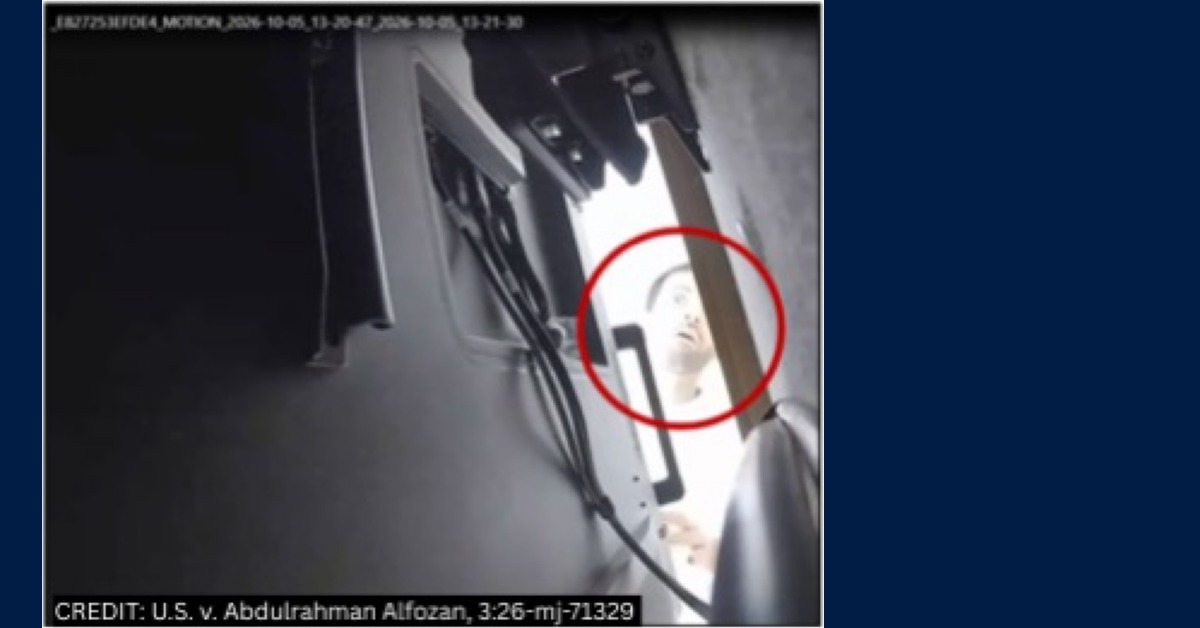
Surveillance footage placed him near the room on several dates before staff discovered the device, the complaint alleges. On Oct. 5, footage showed him entering the room and apparently looking behind the television.
Around that same date, prosecutors said, OpenAI security staff opened a bag Alfozan had left unattended in another room. Inside were his wallet, identification and a second recorder resembling the first.
Investigators also examined searches and chatbot activity.
Before Sept. 28, Alfozan used a productivity tool to ask about building addresses, meeting spaces, room calendars and the locations of executive and outside-partner meetings, according to the complaint.
Prosecutors said a chatbot account associated with his spouse submitted questions between Sept. 24 and Sept. 30 about assembling, concealing and remotely accessing a recording device. The account shared several identifiers and attributes with Alfozan’s account.
On Sept. 27 and Sept. 28, that account also submitted prompts containing details specific to the recorder, including its custom header and unique network address, the complaint alleges.
U.S. Attorney Craig H. Missakian described protecting the technology as a national security concern.
“For us it is a matter of national security,” he said.
The Justice Department linked the case to National Security Presidential Memorandum 11, saying the directive seeks to keep the United States ahead in superintelligence technology.
OpenAI said it works to guard against threats from employees, cybercriminals and nation states. In its December 2025 security overview, the company outlined protections that included limits on access, monitoring and teams assigned to identify security threats.
If convicted, Alfozan could receive a prison sentence of up to five years, a fine of up to $250,000 and three years of supervised release. He is presumed innocent unless proven guilty.
The FBI investigation continues. Assistant U.S. Attorney Nicolas Parker is prosecuting the case with assistance from Justice Department trial attorney Kate Tagert. OpenAI said it would continue helping investigators.