

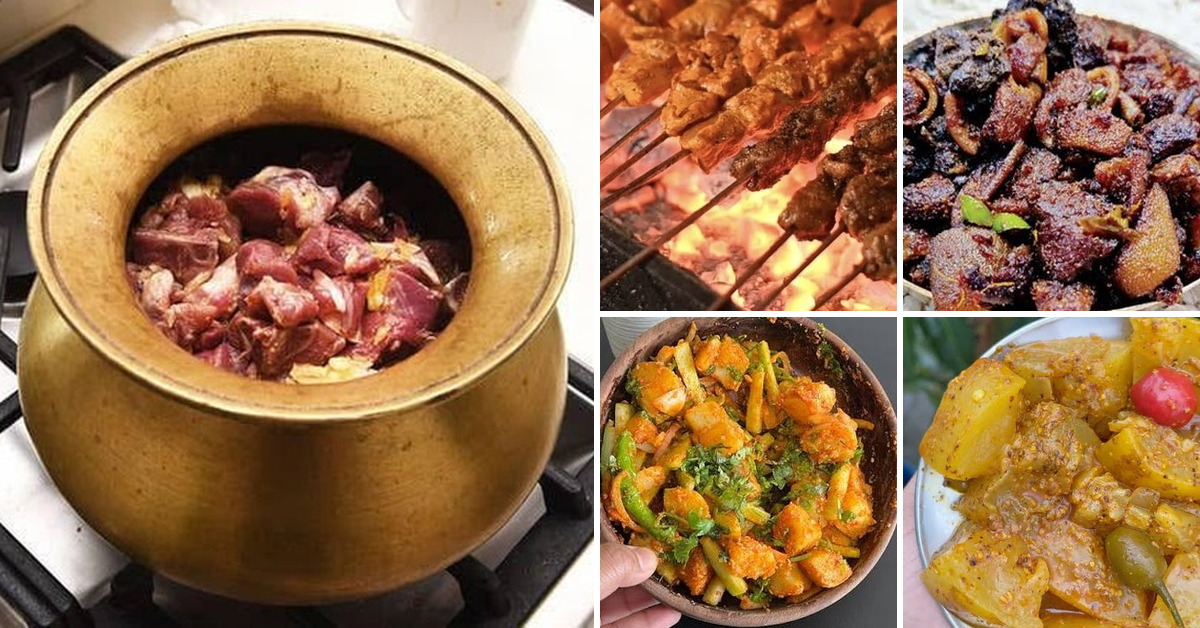
Five dishes for the Dashain table: slow-cooked goat pakku, smoky sekuwa, spicy potato achar, mature cucumber pickle and goat intestine fry.
Dashain, Nepal’s biggest festival, brings family and friends together to share delicious Nepali meals and celebrate cherished traditions. On Vijaya Dashami, the main Tika day, younger family members receive tika, jamara and blessings from their elders for good health, happiness and prosperity.
Food is at the heart of these gatherings. The five recipes below bring together slow-cooked goat, smoky sekuwa, spicy achars and bhuttan for a festive meal served with chiura, steamed rice or sel roti.
Before you begin: Each recipe makes about six small portions as part of a larger meal. Cooking times are estimates; goat meat can take longer depending on the cut and age of the animal. All spoon measurements are level. Use pure mustard oil intended for culinary use throughout.
1. Khasi ko Pakku/Kawab — Five-Hour Slow-Cooked Goat
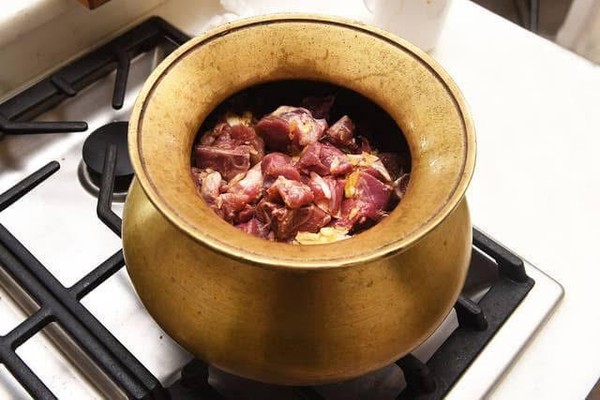
This pakku is made with medium pieces of boneless goat, pure mustard oil, lemon juice and dry spices. There is no ginger or garlic paste and no added water. A thick, rounded pot with a close-fitting lid holds the meat’s own juices as it cooks slowly for about five hours.
Ingredients
- 1 kg (2.2 lb) boneless goat shoulder or leg, cut into medium pieces, roughly 3–4 cm across
- 5 tablespoons pure mustard oil, divided
- 2 tablespoons fresh lemon juice
- 2 teaspoons ground cumin
- 2 teaspoons ground coriander
- 1 teaspoon turmeric
- 1–2 teaspoons red chili powder, to taste
- ½ teaspoon ground black pepper
- 1½ teaspoons fine salt, then adjust to taste
- 2 bay leaves, 1 small cinnamon stick, 4 cloves and 2 lightly crushed black cardamom pods
- 1 teaspoon garam masala
Equipment
A thick, rounded cooking pot, such as a heavy kasaudi, with a close-fitting lid and stable support on the stove. Use a heat diffuser if needed to maintain gentle, even heat. Do not use a pressure cooker.
Method
- Season the boneless meat. Mix the goat with lemon juice, 2 tablespoons of the mustard oil, cumin, coriander, turmeric, chili powder, black pepper and salt. Cover and refrigerate for 2–8 hours.
- Warm the whole spices. Put the remaining 3 tablespoons mustard oil in the thick, rounded pot over medium heat. Add the bay leaves, cinnamon, cloves and cardamom. Stir briefly until fragrant, without scorching the spices.
- Begin cooking. Add the meat and all its marinade. Turn the pieces in the oil and spices for 5–10 minutes. Cover as the meat begins releasing its own juices.
- Cook slowly under the lid. Reduce the heat to very low, maintaining gentle cooking rather than merely keeping the pot warm. Keep the lid on between checks. Turn and scrape gently from the bottom every 20–30 minutes, checking more frequently as the juices reduce. The meat cooks in its own moisture, mustard oil and rendered fat; do not add water.
- Allow about five hours. Continue cooking gently, counting approximately five hours from when the meat went into the pot. Keep watch throughout. If the spices begin sticking, reduce the heat or use a heat diffuser rather than allowing the base to burn. The pieces should become deeply browned and tender, with the masala coating the meat.
- Finish. Stir in garam masala during the final 5 minutes. If there is excess moisture, leave the lid off briefly and turn the meat carefully until the coating is thick. Adjust the salt and serve hot with chiura or rice.
Cook’s tip: The five-hour method depends on a thick pot, a close-fitting lid and very gentle heat. Keep the meat in medium pieces so it holds together during the long cooking. Check tenderness as well as time; do not continue frying a dry pot until the spices burn.
2. Goat Sekuwa — Nepali-Style Grilled Meat

Sekuwa brings smoke and char to the feast. Small, evenly cut pieces are easier to grill without drying out. Use tender young goat where possible; a long marinade will not turn a tough stewing cut into a tender grilling cut.
Ingredients
- 800 g (1¾ lb) boneless tender goat leg, trimmed and cut into 2–2.5 cm cubes
- 3 tablespoons plain yogurt
- 2 tablespoons pure mustard oil, plus a little for the grill
- 1 tablespoon lemon juice
- 1½ tablespoons ginger paste
- 1½ tablespoons garlic paste
- 2 teaspoons ground cumin
- 1 teaspoon ground coriander
- 1 teaspoon red chili powder, or to taste
- ½ teaspoon each turmeric, ground black pepper and garam masala
- ¼ teaspoon ground timur, optional
- 1¼ teaspoons fine salt
- Lemon wedges, sliced red onion and chopped cilantro, to serve
Method
- Marinate. Combine all the ingredients except the serving garnishes. Cover and refrigerate for 4–12 hours.
- Prepare the grill. Set up a medium-high direct-heat area and a cooler area. Lightly oil the grate. If using bamboo skewers, soak them in water for at least 30 minutes.
- Thread the meat. Leave a little space between pieces. Discard the leftover raw marinade.
- Grill and turn. Cook over direct heat, turning every few minutes. Move the skewers to the cooler area if the outside browns too quickly. Begin checking at 12 minutes; the actual time depends on the meat and grill.
- Check before serving. Use a food thermometer in several of the largest pieces. Whole-cut goat should reach at least 145°F (63°C), followed by a three-minute rest. Serve with lemon, onion and cilantro.
Cook’s tip: A lightly charred edge is enough. Repeatedly blackening the surface will dry out the meat. Charcoal grills belong outdoors.
3. Aloo ko Achar — Hot Nepali Potato Pickle

Here, “hot” means spicy. This potato achar gets its body from roasted sesame and its sharp finish from lemon. Toss gently so the potatoes hold their shape.
Ingredients
- 750 g (1⅔ lb) waxy potatoes
- 4 tablespoons sesame seeds
- 2–3 green chilies, finely chopped
- 1 teaspoon red chili powder, or to taste
- ½ teaspoon turmeric
- ½ teaspoon ground cumin
- ¼ teaspoon ground timur, optional
- 1 teaspoon fine salt, then adjust to taste
- 3 tablespoons lemon juice, plus more to taste
- 2 tablespoons pure mustard oil
- ½ teaspoon fenugreek seeds
- ¼ cup chopped cilantro
- 2–4 tablespoons boiled water, cooled
Method
- Cook the potatoes. Boil until a knife enters easily but the potatoes still hold together, about 20–25 minutes depending on size. Drain, cool enough to handle, peel if desired and cut into bite-size pieces.
- Make the sesame dressing. Toast the sesame seeds in a dry skillet over medium-low heat until lightly golden. Cool and grind. Mix with the lemon juice and enough cooled boiled water to make a thick, pourable paste.
- Season. Put the potatoes in a large bowl. Add the sesame paste, green chilies, chili powder, cumin, timur and salt.
- Add the tempering. Heat the oil in a small pan. Add fenugreek and cook until dark brown, without burning it black. Remove from the heat, stir in the turmeric and immediately pour over the potatoes.
- Finish. Fold gently, add cilantro and let stand for 15 minutes. Taste for salt, chili and lemon. Serve promptly or refrigerate.
Cook’s tip: Add lemon gradually. The finished achar should taste bright and spicy, with enough dressing to coat the potatoes.
4. Khalpi ko Achar — Mature Cucumber Pickle
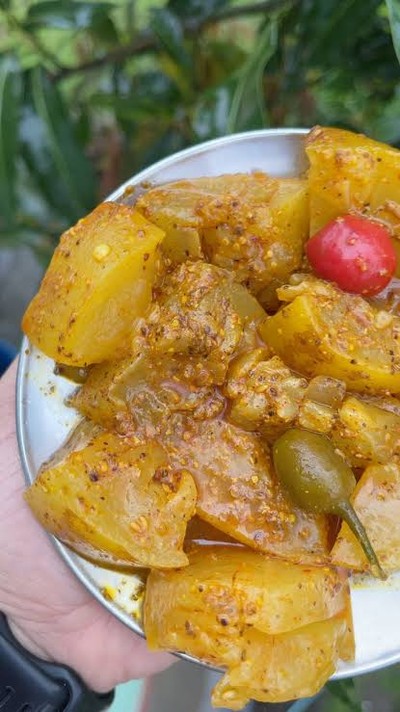
Khalpi is made with fully mature cucumber, often the large, thick-skinned bhadaure kankro. Its sourness develops through fermentation. Like kimchi, it is a fermented vegetable preparation, although the ingredients and method are different.
In the household method described here, the cucumber is cleaned, cut and sun-dried before being mixed with salt, mustard, chilies, spices and pure mustard oil. It is then packed into a jar and traditionally placed in sunlight for about 5–7 days to develop its characteristic sour flavor.
Traditional Ingredients
- Firm, fully mature cucumber, with the large seeds and soft seed pulp removed
- Salt
- Coarsely ground mustard seeds
- Red chili powder and sliced green chilies
- Turmeric
- Pure mustard oil
- Fenugreek seeds
- Ground timur, optional
The Traditional Household Method
- Clean and cut. The cucumber is washed thoroughly, trimmed and cut into medium chunks or thick strips. Tough peel, large seeds and soft seed pulp are removed as needed. Only sound cucumber is used.
- Dry in the sun. The pieces are spread in a single layer on a clean tray, protected from insects and dust with clean food-safe mesh. Sun-drying removes some moisture and firms the pieces before seasoning.
- Mix the seasonings. The partially dried cucumber is combined with salt, ground mustard, chili powder, green chilies and timur. Mustard oil is warmed with fenugreek; turmeric is added off the heat. The seasoned oil is cooled and mixed through the cucumber.
- Pack the jar. The seasoned cucumber is packed into a clean food-grade jar, leaving space for fermentation. A suitable fermentation lid allows gas to escape; an actively fermenting jar must not be sealed so tightly that pressure builds unchecked.
- Allow the sour flavor to develop. In this household tradition, the jar is placed in sunlight for about 5–7 days. Sourness is the customary flavor cue, but the timetable and taste alone do not establish that fermentation is safe or complete.
- Refrigerate after properly controlled fermentation. Once fermentation has been completed under a tested procedure, the khalpi is refrigerated and served in small portions with the feast, using a clean spoon.
Fermentation note: The steps above document a traditional household practice, not a validated preservation formula. Ingredient quantities are deliberately not presented as a tested fermentation recipe. For home preparation, follow a tested recipe’s salt proportions, packing requirements, temperature and acidity checks. University extension guidance recommends controlled fermentation away from direct sunlight; a sun-heated jar can exceed the recommended temperature. Do not judge safety by sour taste or by the passage of 5–7 days, and do not taste a batch to check whether it is safe. See University of Minnesota Extension’s fermentation guidance. This preparation is not a shelf-stable canning recipe.
5. Bhuttan — Goat Intestine Fry
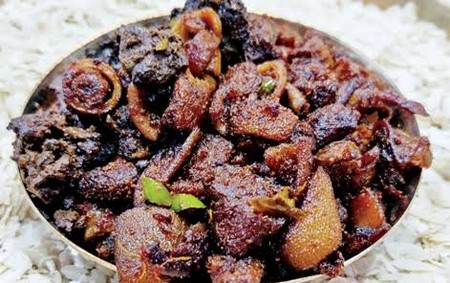
Bhuttan is often made with a mixture of goat offal. This version uses intestines, simmered until tender and then fried with ginger, garlic and spices. The final pan-fry gives the pieces browned edges while keeping the center tender.
Ingredients
- 750 g (1⅔ lb) goat intestines sold for human consumption, professionally emptied and cleaned by a reputable butcher
- Water for the initial boil and a fresh batch for simmering
- 1 teaspoon turmeric, divided
- 1 teaspoon fine salt, divided, then adjust to taste
- 3 tablespoons pure mustard oil
- ½ teaspoon fenugreek seeds
- 1 medium onion, thinly sliced
- 1 tablespoon ginger paste
- 1½ tablespoons garlic paste
- 1 teaspoon each ground cumin and ground coriander
- 1 teaspoon red chili powder, or to taste
- ½ teaspoon ground black pepper
- ½ teaspoon garam masala
- 2 green chilies, slit
- 1 tablespoon lemon juice and 2 tablespoons chopped cilantro, to finish
Method
- Prepare carefully. Keep the intestines and their juices away from the achar ingredients. Even precleaned intestines need full cooking. Bring them to a boil in water and boil for 5 minutes before any further cleaning or trimming. Drain carefully without splashing, let cool enough to handle and remove any remaining unwanted material. Use a dedicated bowl for any necessary rinsing.
- Simmer until tender. Put the prepared intestines in fresh water with ½ teaspoon each turmeric and salt. Bring to a boil, then simmer until fully cooked and tender, usually 1–2 hours, sometimes longer. Add water as necessary. For this recipe, use a conservative internal target of 165°F (74°C) in the thickest pieces; tenderness may take considerably longer. Drain, cool briefly and cut into 2–3 cm pieces.
- Build the base. Heat the oil in a wide pan. Brown the fenugreek, add the onion and cook until golden. Stir in ginger and garlic for about a minute.
- Fry the intestines. Add the cooked pieces, remaining turmeric and salt, cumin, coriander, chili powder and black pepper. Fry over medium-high heat for 10–15 minutes, turning regularly, until the surface is browned. Add a small splash of water if the spices start sticking.
- Finish and serve. Add garam masala and green chilies for the final 2 minutes. Turn off the heat, add lemon juice and cilantro, and serve hot.
Cook’s tip: Drain the simmered intestines well before frying. Clean and sanitize equipment and surfaces after handling them, and wash your hands before preparing other food. Lemon and spices do not replace thorough cooking.
Bring the Feast Together
Plan the khalpi well ahead of the feast, allowing for sun-drying and the household method’s 5–7-day fermentation timetable while observing the fermentation note above. On feast day, start the pakku about five hours before serving. Prepare the intestines while it cooks, using separate equipment. Make the potato achar and keep it chilled. Grill the sekuwa and finish frying the bhuttan shortly before serving.
Set out chiura or steamed rice, small bowls of achar and a simple green salad. Sel roti can be served alongside. With three meat dishes on the table, smaller portions allow everyone to try the full spread.
Keeping and Reheating
Refrigerate perishable dishes in shallow containers within 2 hours, or within 1 hour when the temperature is above 90°F (32°C). Keep the refrigerator at 40°F (4°C) or below. Use cooked leftovers within 3–4 days and reheat cooked meat to 165°F (74°C). Keep the potato achar refrigerated and use within 3–4 days. Refrigerate properly fermented khalpi and follow the storage period specified by the tested fermentation recipe used; the traditional sun method here does not establish a shelf life.
Allergen note: All five dishes use pure mustard oil, and the khalpi also contains mustard seeds. The potato achar contains sesame, and sekuwa contains milk from yogurt. Check packaged spice blends for additional allergens.
Have something to promote?
Bring your business, services or event to our readers.