

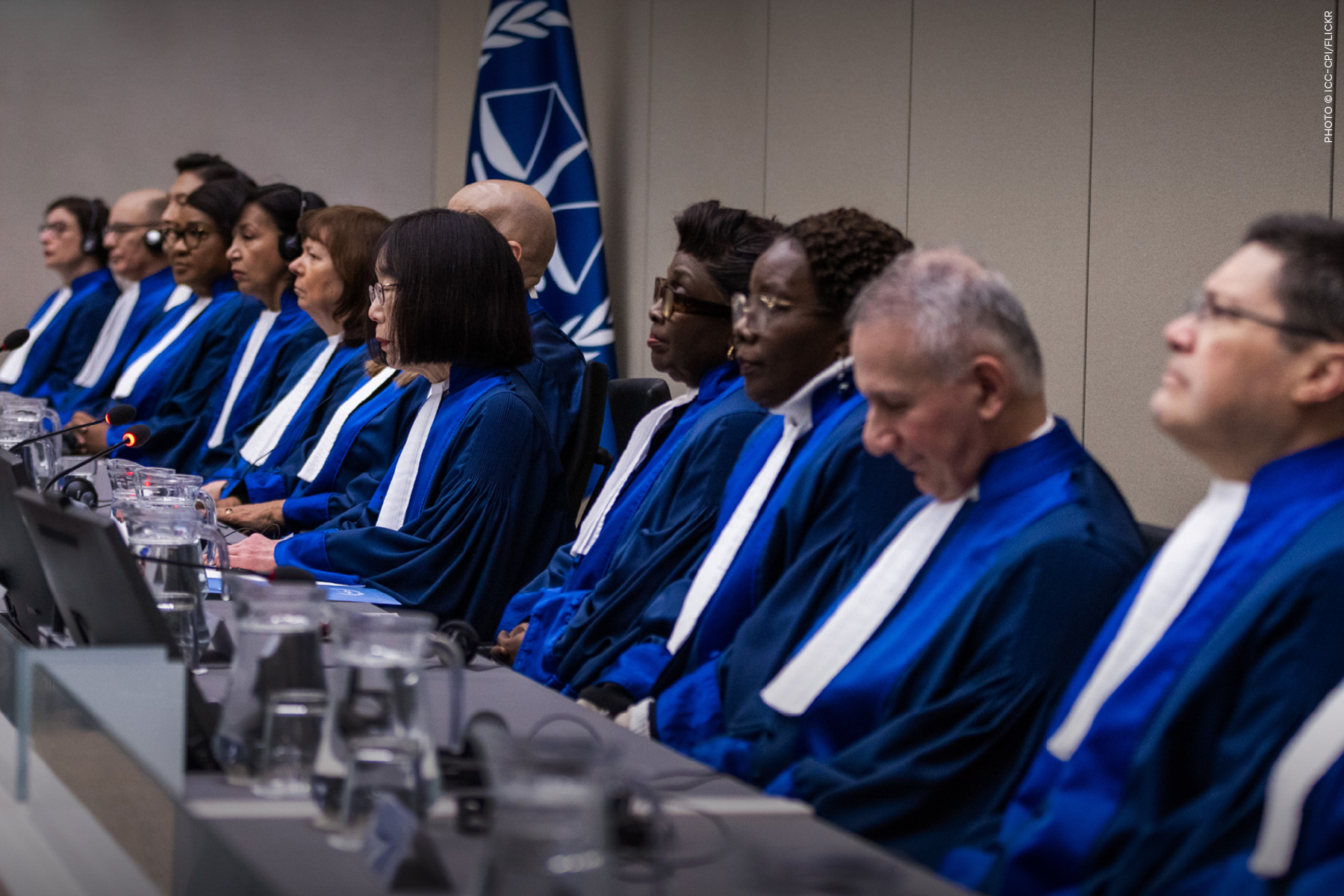
The International Criminal Court and its officials won the European Parliament’s 2026 Sakharov Prize for Freedom of Thought on Thursday.
Parliament President Roberta Metsola announced the award in the chamber, saying lawmakers were recognizing the court’s work to uphold international law and justice.
“The European Union is built on respect for multilateralism and international institutions.”
The prize honors the court’s investigations, prosecutions and trials, as well as the arrest warrants it has issued or authorized, according to Parliament.
Based on a treaty called the Rome Statute, the ICC was the world’s first permanent international criminal court. It investigates people accused of genocide, war crimes, crimes against humanity and the crime of aggression, and tries them when warranted.
National courts get the first chance to act. The ICC steps in as a last resort.
European lawmakers have spent the past year raising alarms about pressure on the court. Since 2025, the ICC and its prosecutors, judges, staff and partners have faced sanctions, most notably from the United States.
Members of Parliament called those sanctions serious attacks on the international justice system. They did so in two annual reports in 2025, one on EU foreign and security policy and one on human rights and democracy around the world.
The court’s president and several judges came to Parliament committees in 2025 and 2026. They described how U.S. sanctions had hit both their work and their personal lives.
Lawmakers want the European Commission to switch on the EU’s so-called blocking statute, and they have asked more than once. They say it would protect ICC officials from measures imposed from outside the bloc and let the court keep working independently.
Under the statute, foreign court rulings based on foreign laws have no effect inside the EU. European operators, whatever their size or sector, can also go to court to recover damages when foreign laws are applied to them beyond those countries’ borders.
The reports also welcomed continued EU funding for the court during what lawmakers called a particularly difficult period for international justice.
All EU member states belong to the Rome Statute and must carry out the court’s decisions. Lawmakers warned that growing disregard for international law, and the politicization of debate over international justice bodies, amounted in their view to an existential threat to the rules-based international order.
The prize carries the name of Andrei Sakharov, the Soviet physicist and political dissident. Parliament created it in 1988 and awards it each year to people or groups defending human rights and fundamental freedoms, including free expression, minority rights, international law, democracy and the rule of law.
The ICC and its officials will receive the prize in December in Strasbourg, during Parliament’s plenary session.
Have something to promote?
Bring your business, services or event to our readers.