

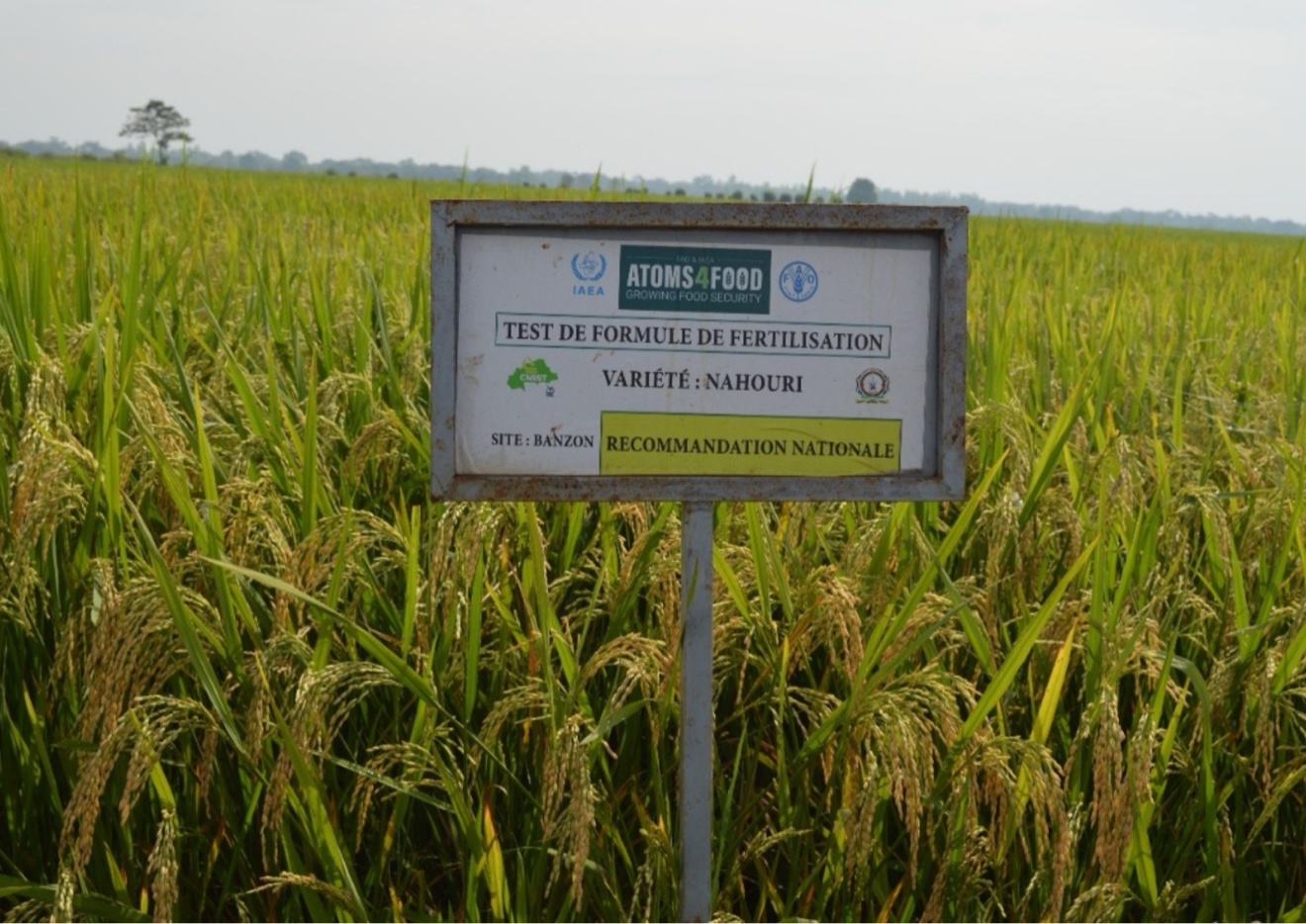
Eight rice varieties released in Burkina Faso in 2025 mature faster and yield more grain than existing varieties, the International Atomic Energy Agency reported Oct. 15.
The varieties produce between 9 and 11 metric tons per hectare and mature in 95 to 106 days, according to the agency. Those already in the national catalogue typically yield 4 to 6 metric tons per hectare and have longer growing periods.
The yield figures come from the IAEA, which supported the research. Virginia Times has not independently verified them.
Authorities registered eight of 11 advanced rice lines in Burkina Faso’s National Catalogue of Plant Species and Varieties in June 2025, following field testing and evaluation of farmer and consumer needs.
The country is seeking to grow more rice at home as demand rises. Consumption has doubled over the past decade, but imports still account for about half its rice supply, the agency said.
Scientists developed the varieties through mutation breeding, which uses radiation to accelerate natural genetic variation, the report says. Researchers select plants with desirable characteristics, then develop and test promising rice lines.
The IAEA and the Food and Agriculture Organization of the United Nations supported the work through their Atoms4Food initiative, the agency said. Training and expert assistance through the IAEA’s technical cooperation program helped national researchers apply the technique and conduct field trials.
Researchers also selected grain characteristics to suit consumer preferences. The eight varieties include two with large grains, two rich in resistant starch and one waxy, or sticky, rice variety.
Imaël Henri Nestor Bassolé of Université Joseph Ki-Zerbo said the collaboration had strengthened the country’s ability to continue breeding crops suited to changing growing conditions and the needs of farmers and consumers.
Demonstration fields in Bama and Banzon are being used to evaluate performance under local conditions. In the Banzon rice-growing plain, one variety yielded as much as 11.76 metric tons per hectare during evaluations with farmers, the IAEA reported.
The partnership also supports research on future rice varieties that combine desirable traits identified in the eight approved lines, according to the IAEA report.
Burkina Faso hosted the first joint Atoms4Food assessment mission in May 2025. It identified priorities for the next phase of support.
With the varieties approved, efforts are underway to increase seed production and make them available to more farmers.
Have something to promote?
Bring your business, services or event to our readers.