
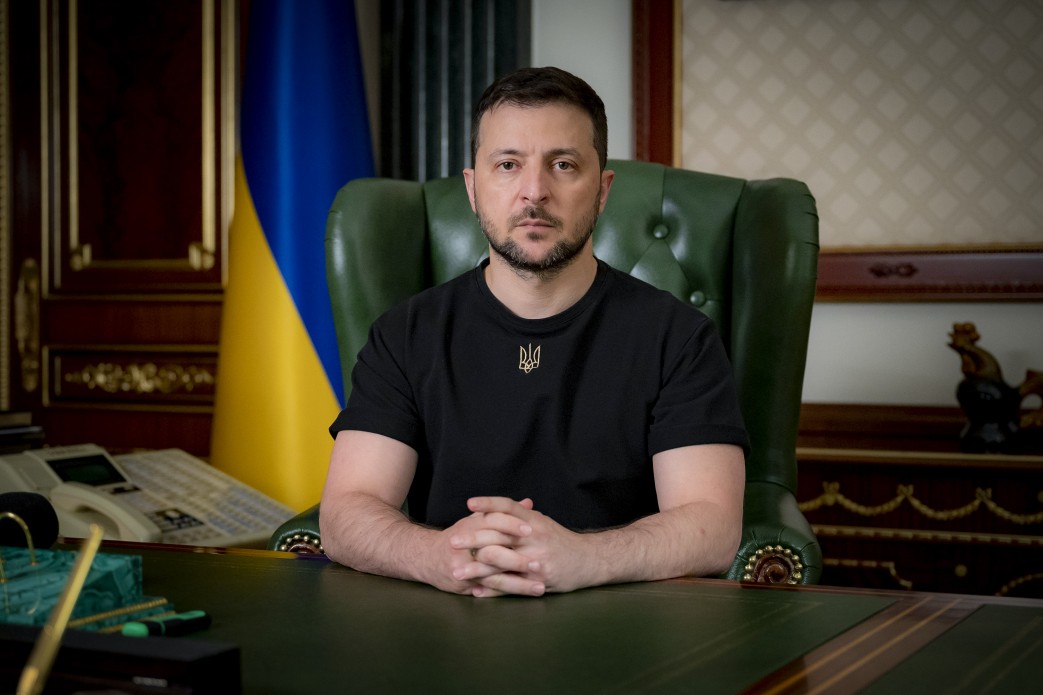
Ukrainian President Volodymyr Zelensky on Sunday criticized Washington’s latest easing of restrictions tied to Russian oil shipments, saying the move helps Moscow keep funding its war against Ukraine.
In a post on X , Zelensky said the rollback “does not reflect the real situation in the war or in diplomacy” and feeds what he called the Kremlin’s belief that it can outlast the conflict.
According to Zelensky, Russian forces launched more than 2,360 attack drones, over 1,320 guided aerial bombs and nearly 60 missiles against Ukrainian cities and communities over the past week. The figures could not be independently verified.
Zelensky also claimed that more than 110 tankers from what he described as Moscow’s shadow fleet are currently at sea carrying over 12 million tons of Russian oil, and that easing sanctions would allow that oil to be sold — generating roughly $10 billion that could fund further attacks on Ukraine.
“Every dollar paid for Russian oil is money for the war,” he wrote.
He called for Russian tankers to be intercepted before reaching port and thanked partners helping increase pressure on Moscow.
The License Behind the Backlash
Two days before Zelensky’s statement, on Friday, April 17, the U.S. Treasury’s Office of Foreign Assets Control issued General License 134B — an authorization allowing the sale, delivery, and offloading of Russian-origin crude oil and petroleum products loaded onto vessels by that same date.
The license appears designed to protect non-Russian shipping operators and cargo handlers who may have taken on Russian oil before the previous authorization lapsed, giving them a defined window to complete those transactions without penalty.
The window is narrow but significant. Transactions are permitted through 12:01 a.m. EDT on May 16, 2026. The license replaces General License 134A, which had been issued March 19 and lapsed on April 11.
OFAC said the authorization extends to a broad set of shipping activities connected to the affected cargoes — among them safe docking, crew welfare, emergency repairs, and environmental work. Supporting services including vessel insurance, flagging, bunkering, and salvage are also covered.
The license applies to shipments from companies sanctioned under two sets of U.S. rules: the Russian Harmful Foreign Activities Sanctions Regulations and the Ukraine-Russia-Related Sanctions Regulations.
The license does not override existing sanctions on Iran, North Korea, Cuba, or Russian-occupied Ukrainian territories including Crimea, and covers only what it explicitly lists — any other dealings blocked under existing sanctions rules remain blocked.
Have something to promote?
Bring your business, services or event to our readers.