

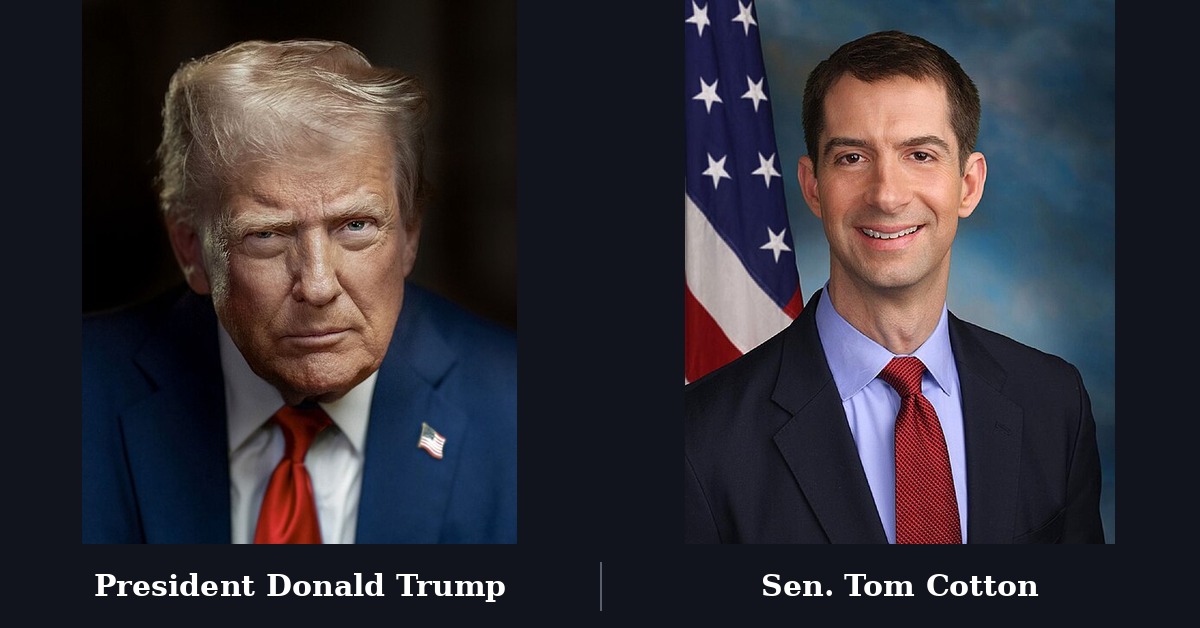
President Donald Trump on Saturday told Arkansas voters to lean on Sen. Tom Cotton, blaming him for stalling a bill that would make daylight saving time permanent.
Trump called Cotton a friend in a Truth Social post. He also wrote that Cotton was blocking the Sunshine Protection Act, something one senator can do alone in the Senate. Trump did not say what Cotton objects to.
“For some reason, Tom is stopping the Bill”
Trump’s account of Cotton’s role could not be independently confirmed. The post did not include a response from Cotton.
The House passed the measure 308-117, according to Trump, who wants the Senate to vote now. He predicted it would pass easily with support from both parties.
The post also included a phone number that Trump described as Cotton’s cellphone, and it urged Arkansans to call. The Virginia Times is not publishing the number.
Trump argued that 65% or more of Americans want more afternoon sunlight and that no one wants to change clocks twice a year. He also wrote that resetting clocks is costly where they sit on high, dangerous steeples on churches and municipal buildings.
Golfers, tennis players, hunters and farmers would benefit from more afternoon daylight, the president wrote. He said the PGA Tour needs that light to finish its tournaments and pointed readers to a letter from Brian Rolapp, the tour’s CEO.
In the letter, dated Oct. 1, Rolapp told the president that the tour strongly supports the bill. He said he was putting in writing a position he had already shared with Trump in person. He also thanked Trump for attending the final round of the Presidents Cup at Medinah Country Club.
Rolapp cited National Golf Course Owners Association estimates that permanent daylight saving time would add 23 million rounds of golf and $1 billion in direct revenue to the industry each year. That works out to about $250,000 per facility, according to the letter.
The association also found that afternoon and evening tee times bring in about 40% more revenue than morning play.
Casual golfers who fit in rounds after work or school would gain the most, Rolapp argued, because the time they have to play shrinks to nothing once clocks fall back in autumn. He wrote that more fall and winter daylight would also let the tour’s broadcast partners extend live coverage of finishing holes and avoid poor lighting late in rounds.
The letter also pointed to the health benefits of playing golf outdoors and to the more than 1 million Americans that Rolapp said are employed across the golf economy.