

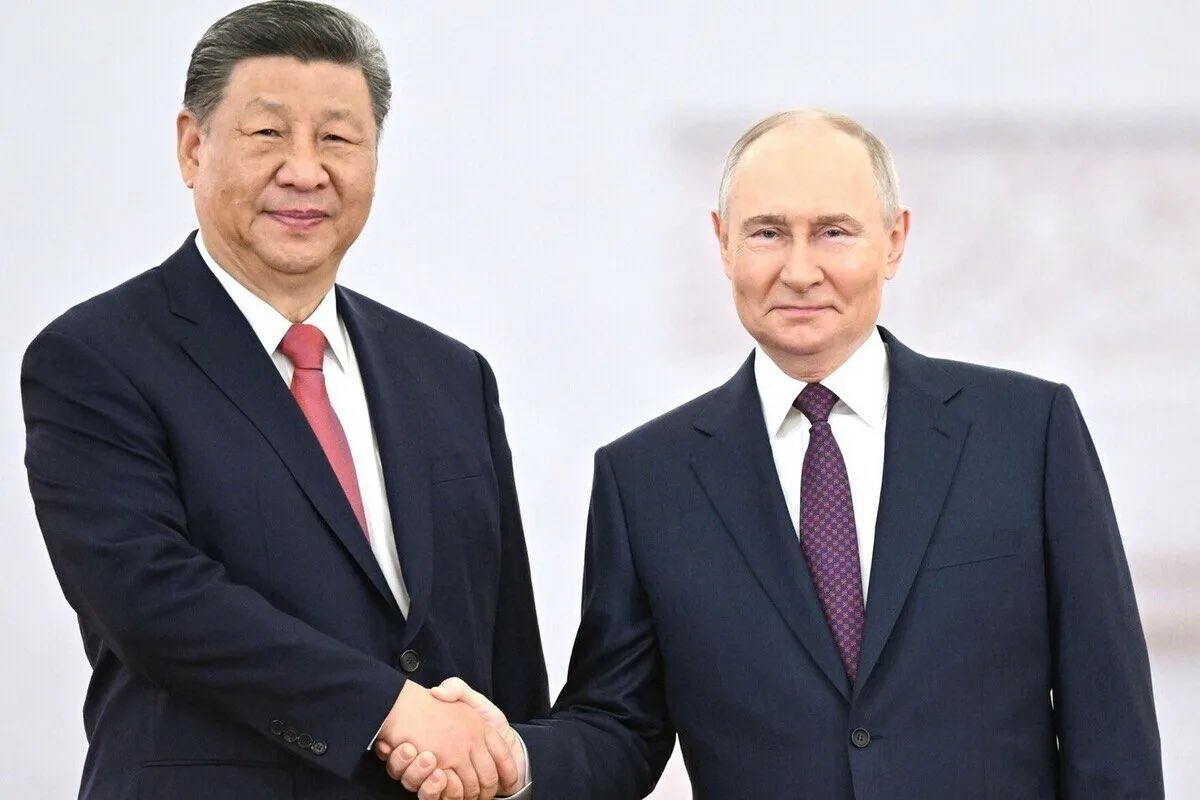
Russian President Vladimir Putin will visit China from May 19 to 20 at the invitation of Chinese President Xi Jinping, giving Beijing another major diplomatic stage just days after President Donald Trump met Xi in China.
The Chinese Foreign Ministry said Saturday Putin will pay a state visit to China at the invitation of Xi.
The visit marks the 25th anniversary of the signing of the Treaty of Good-Neighbourliness, Friendship, and Cooperation, a landmark agreement that helped shape modern-day Russia-China relations, the Russian Foreign Ministry said.
The agenda includes bilateral relations, deepening the strategic partnership between Russia and China, and the review of urgent international issues, the Russian Foreign Ministry said. The two leaders will also participate in the opening ceremony of the Russia-China Years of Education 2026-2027.
Putin will also meet Chinese Premier Li Qiang, with trade and economic cooperation at the top of the agenda.
The visit comes shortly after Trump’s trip to China for talks with Xi. That timing gives Putin’s visit added weight, with Beijing hosting the leaders of the United States and Russia within days of each other.
The visit is a chance for Russia to show it continues to have strong partners while it faces pressure from the West over the war in Ukraine. For Xi, the visit is a chance to show China can have a relationship with both Washington and Moscow but on its terms. For China, it’s another chance to polish its reputation as the indispensable intermediary—a country that can talk to both sides of the world’s most profound divides.
Even if Ukraine is not the main topic, it will probably dominate the talks. Putin will want reassurance – political cover and continued economic ties – while Xi will want to keep China’s delicate balancing act: sympathetic to Moscow, but not so enmeshed that it invites a Western backlash.
The Middle East could also be on the agenda. Iran and the Strait of Hormuz were among the issues Trump raised during his recent meetings in Beijing, and Putin’s visit is another chance for Xi to show Chinese influence on energy flows and regional stability.
The broader perspective is increasingly unavoidable. Beijing remains at the heart of the world’s most important conversations. China is no longer merely reacting to the initiatives of Washington or Moscow; it is now in the driver’s seat, deciding who visits and when and presenting itself as the place where serious leaders must come.
That does not mean China controls the outcome of the Ukraine war or Middle East conflicts. Those crises remain driven by many actors, including Russia, Ukraine, the United States, European governments, Iran, Israel and regional powers. But Beijing’s ability to bring major leaders to China gives it growing influence at a tense moment in world politics.