

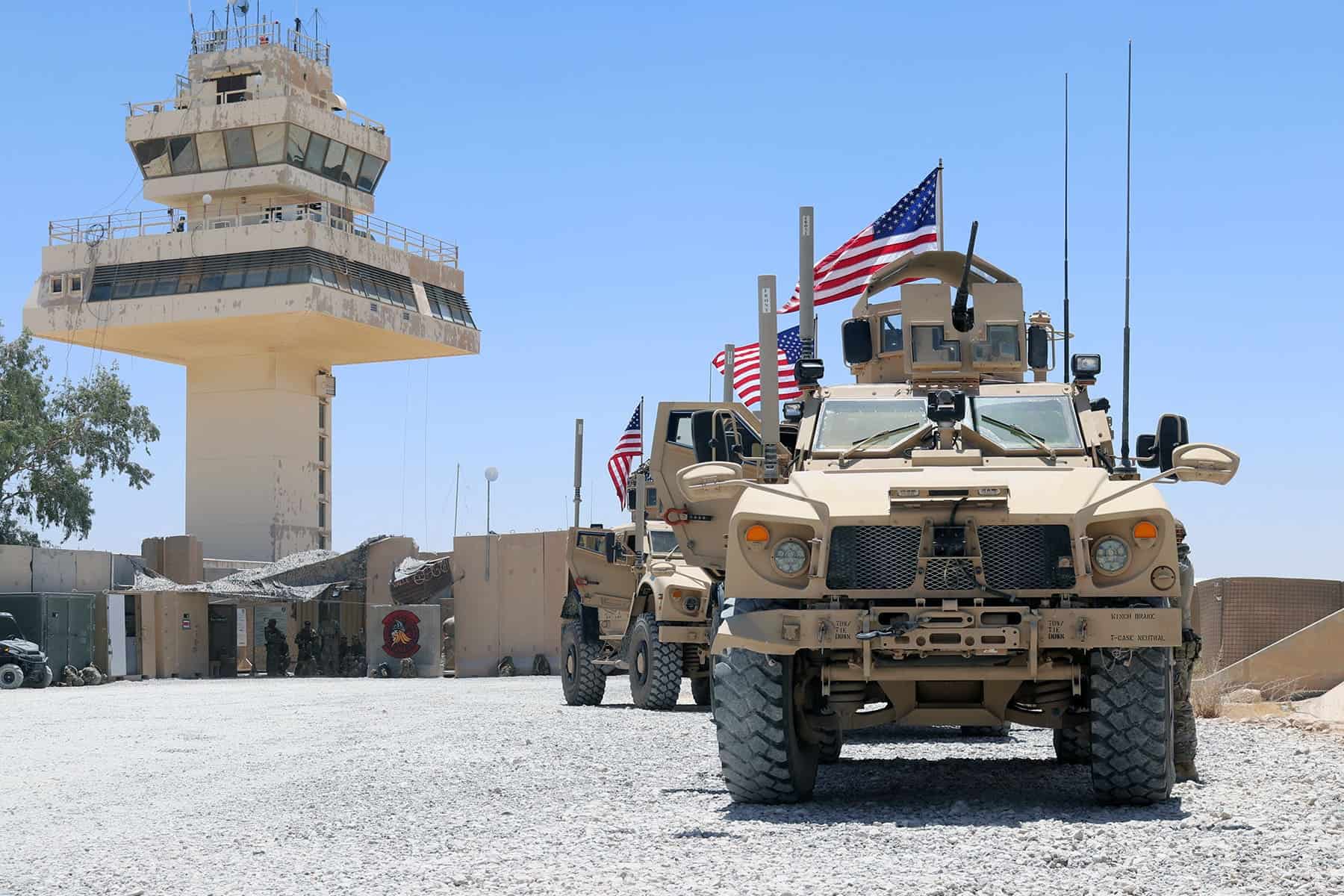
The U.S. military ended its Operation Inherent Resolve mission in Iraq on Wednesday after completing the departure of forces and equipment from Erbil Air Base, according to U.S. Central Command.
The command, known as CENTCOM, described the move as part of a planned transition to a bilateral U.S.-Iraq defense relationship. Combined Joint Task Force-Operation Inherent Resolve remains operational and is now headquartered in Jordan, the command said. U.S. forces are continuing the fight against the Islamic State group in Syria alongside coalition partners and the Syrian government, according to the statement.
Erbil Air Base in northern Iraq served as the task force’s main operational hub. It hosted most of the 1,500 American and coalition troops supporting counter-ISIS operations, CENTCOM said. American and coalition forces began leaving federal Iraq in October 2025, in a transition that ended with the removal of personnel and equipment from Erbil this month.
Reuters reported that the departure from Iraq’s last military base marked the full withdrawal of U.S. forces from the country. According to The Washington Post, the final group of remaining troops was relocated outside Iraq, and the regional campaign against the Islamic State group is expected to continue from beyond Iraq’s borders.
Adm. Brad Cooper, CENTCOM’s commander, credited U.S. personnel with weakening the militant group. Because of their work, he said, ISIS “no longer poses a systemic threat to Iraq’s national security.”
Iraqi security forces, including the Peshmerga and other Kurdistan Region forces, “now possess the capacity, leadership, and operational independence to unilaterally manage threats to their homeland,” Cooper said.
In a statement issued Monday, the Kurdistan Regional Government’s Ministry of Peshmerga Affairs said U.S. forces would leave Iraq, including the Kurdistan Region, on Sept. 30. The ministry thanked the United States and coalition partners for years of support. It also called it deeply concerning that no alternative air defense system would replace the departing U.S. forces.
More than 1,000 drones and ballistic missiles have struck the Kurdistan Region during the ongoing conflict involving the United States, Israel and Iran, according to the ministry. Some hit civilian areas, causing injuries, deaths and property damage, the statement said. Those figures could not be independently verified.
The ministry described the withdrawal as coming at a sensitive time for Iraqi and regional security. It said the region’s airspace is part of Iraq’s national airspace and that the Iraqi government bears primary responsibility for protecting it from aerial threats.
Peshmerga forces are prepared to respond to emerging threats, and the ministry remains committed to coordination with the Iraqi army, according to the statement.
Some Iraqi security officials and analysts share concerns about the country’s security after the withdrawal. They worry that Iran-backed armed groups could gain influence and that the Islamic State group could find room to regroup, Reuters reported.
Direct U.S. support to Iraqi forces, including intelligence and aerial surveillance of Islamic State activity, is expected to decline, according to the news agency. Iraqi officials told Reuters the group still has sleeper cells in the country.
Jasim al-Bahadli, an Iraqi security analyst, told Reuters the U.S. departure removes an important counterweight to Iranian influence. In his view, Iran-backed armed groups may try to expand their role in security and political decisions. He warned that a security vacuum could be extremely dangerous.
U.S. troops first entered Iraq in 2003 during the U.S.-led invasion that toppled President Saddam Hussein. The number of American troops in Iraq peaked at about 170,000 in 2007, The Washington Post reported.
U.S. forces withdrew from Iraq at the end of 2011 but returned in 2014. That year, the Islamic State group had seized large parts of Iraq and Syria, and the Iraqi government asked for international help. CENTCOM established the task force that year to advise, assist and enable partner forces fighting the group in both countries.
Cooper said U.S. and coalition forces stationed across the region will stay ready.
“As we step back and hand full primary responsibility for Iraq’s security to the Government of Iraq and the brave people of Iraq, U.S. and Coalition forces stationed across the region will remain ready to respond to any ISIS threats that arise.”
In 2024, Washington and Baghdad agreed to end the coalition’s military mission. Under that plan, coalition forces would leave most of Iraq by 2025, and the remaining troops would depart by September 2026. The Peshmerga ministry said the withdrawal is taking place under an agreement among the coalition, the Iraqi government and the United States.