
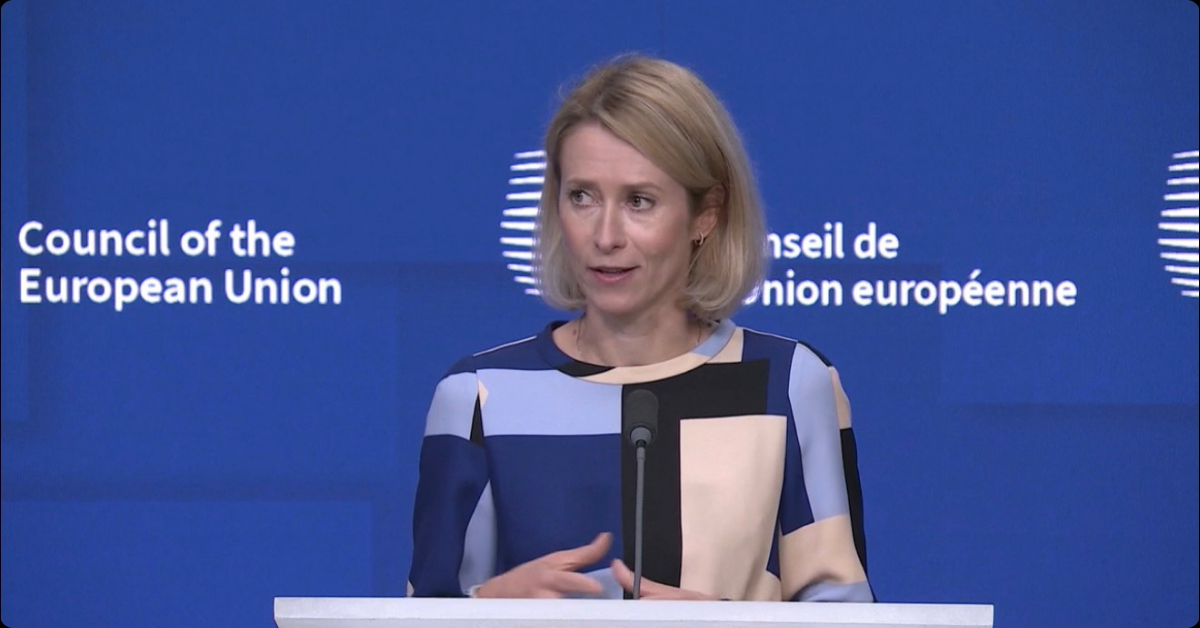
EU member states have agreed how to distribute €6.6 billion in European Peace Facility funds for Ukraine, while EU foreign policy chief Kaja Kallas is urging countries to supply Patriot missiles from their stocks.
Air defense remains Ukraine’s key priority, Kallas told reporters in Brussels after a Sept. 28 meeting of EU defense ministers. Ukrainian Defense Minister Khmara made that need clear to ministers, she said in remarks published by the European External Action Service.
Kallas said the EU had approved €28.3 billion in procurement plans under the Ukraine Support Loan, including purchases of Patriot missiles from future U.S. production. Production takes time, she said, and Ukraine needs the missiles now.
One option is for member states and partners to send missiles from their own stocks, then receive replacements financed by the loan. Kallas did not announce an agreement on those transfers.
Ministers also discussed Ukraine’s financing needs. Many called for bringing forward part of a €90 billion loan allocated for 2027, Kallas said. She added that Ukraine could benefit from up to €20 billion remaining under the SAFE defense initiative. Separately, she is discussing how to add new money to the European Peace Facility, including after its current funding cycle ends.
On training, Kallas said member states had agreed on the first step of a strategic review that would extend the EU’s military assistance mission for Ukraine by two years. The EU also plans a coordination cell in Kyiv focused on battlefield lessons and military education.
A contribution announced by the Netherlands closed a funding gap for modernizing two training centers in Ukraine, Kallas said. She also credited support from Germany, Ireland, Denmark and Luxembourg.
European Defense Readiness
Earlier Sept. 28, the European Defence Agency’s steering board approved the next phase of strengthening the agency. Kallas said it would expand joint procurement, defense innovation and work to develop military capabilities among EU countries.
Ministers also discussed the first annual defense readiness report. Kallas did not disclose its findings but said Europe must increase the pace of investment, production and capability development to meet its 2030 target.
In a separate Sept. 27 announcement, the European Commission welcomed member states’ endorsement of five joint defense projects that can now move toward funding. The commission has allocated €325 million under the €1.5 billion European Defence Industry Programme to support them.
The projects cover drones and counter-drone systems, maritime and seabed defense, space, air and missile defense, and security along the EU’s eastern flank. An average of 18 member states participate in each project, the commission said. Ukraine participates in four of the five, and the framework is open to Norway.
Maritime Security and EU Missions
Kallas called for further efforts to reduce Moscow’s ability to fund its war, including action involving its shadow fleet. She said the EU’s naval Operation IRINI had boarded six suspected vessels in recent months. National boarding operations should continue alongside it, she said, with countries coordinating inspections and seizures under the existing legal framework.
Ministers also held an initial discussion on an emergency security protocol to coordinate responses to what Kallas described as Russian sabotage, arson and airspace violations. She said the proposed mechanism would complement Article 42.7 and NATO.
Kallas identified the Strait of Hormuz, the Bab el-Mandeb and the Black Sea as critical shipping routes. She called for more resources for Operation ASPIDES in the Red Sea, where she said Houthi advances had increased risks to shipping.
The ministers formally extended the mandates of EUBAM Rafah and EUPOL COPPS, EU missions supporting border management, Palestinian policing and justice.

A global media for the latest news, entertainment, music fashion, and more.