











Key Points
- The Festival de Cannes condemned a new five-year, one-month prison sentence for Iranian filmmaker Jafar Panahi.
- The Tehran court also ordered his assets confiscated, with two-year travel and social media bans; a third case is pending.
- Cannes called on the international community to act to prevent the Palme d’Or winner’s imprisonment.
CANNES, France — A new prison sentence for Iranian filmmaker Jafar Panahi drew condemnation from the Festival de Cannes, which called the case judicial persecution and urged the international community to intervene before he is imprisoned.
The Revolutionary Court in Tehran imposed the sentence — five years and one month in prison — the festival said in a statement. Alongside the prison term came an order for the confiscation of all his assets. He also faces a two-year ban on leaving Iran. And a two-year ban on any activity on social media.
“The Festival de Cannes strongly condemns the judicial persecution of Jafar Panahi and calls for the lifting of all restrictions that prevent him from traveling, creating, and expressing himself freely.”
That is not the only sentence against him. In 2025, the festival noted, Panahi was sentenced to one year in prison, with a two-year ban on leaving the country on top of it. A third legal proceeding — this one, too, tied to his filmmaking — is still underway.
Panahi has been arrested and imprisoned several times, the festival said, simply for his work as a filmmaker. He will not go into exile. He believes he must stay in Iran, and keep working freely.
Panahi and Cannes go back a long way. In 1995, “The White Balloon” won the Caméra d’Or. “Crimson Gold” took the Un Certain Regard Jury Prize in 2003. “3 Faces” won Best Screenplay in Competition in 2018. The festival invited him onto its jury in 2010 — while he was imprisoned in Iran. At the opening ceremony, his seat stayed empty.
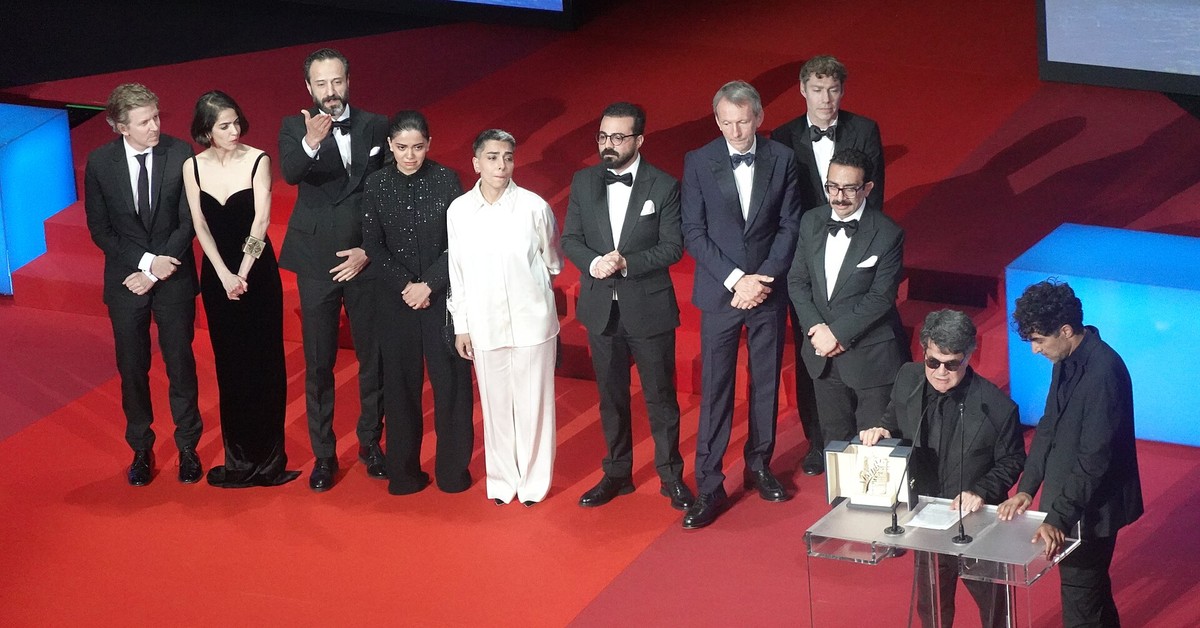
Fifteen years on, he was back on the Cannes stage in 2025, collecting the Palme d’Or for “It Was Just an Accident.” The award, the festival said, honored a career spent defending creative freedom and freedom of expression.
“His freedom is not just about one filmmaker, it is about the rights of all artists to think, create, and express themselves without fear of imprisonment,” the festival said. It ended with a line it said artists and institutions worldwide stand behind: “No artist should be imprisoned for their work, their ideas or their expression, in Iran or anywhere.”