

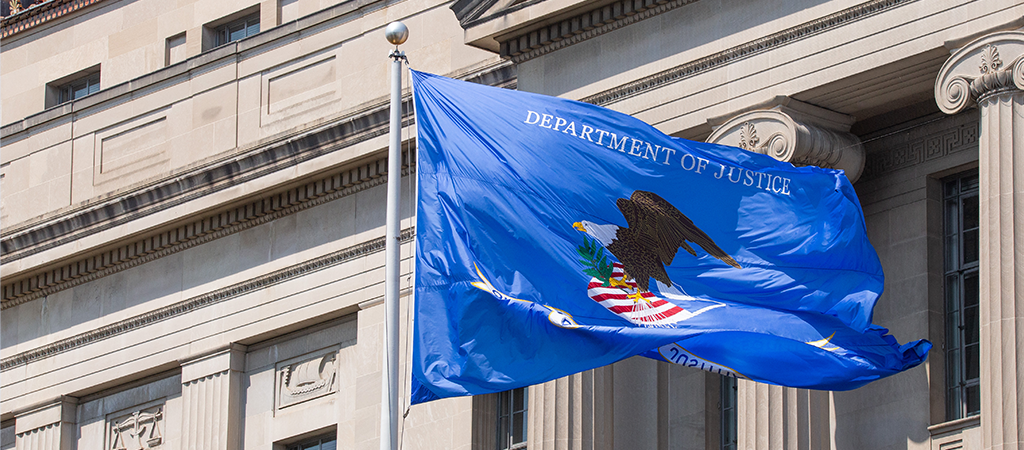
WASHINGTON — The Justice Department has sued Alaska to stop the state from certifying its U.S. Senate result if Sen. Dan S. Sullivan loses and votes cast for another candidate named Daniel J. Sullivan could have changed the outcome.
President Donald Trump said on Friday that he told the department to bring the case, Reuters reported.
The complaint, United States v. Alaska, was filed Oct. 22 in federal court in Anchorage. It asks the court to declare that certifying a result that may be impacted by voter confusion would violate the state’s duties under the National Voter Registration Act to “protect the integrity of the electoral process.”
It also asks the court to bar certification of such a result pending an investigation to determine whether votes cast for Daniel J. Sullivan were meant to be cast for Senator Sullivan.
Under the filing, a result counts as impacted in two steps. Senator Sullivan does not win, and, had every vote for Daniel J. Sullivan gone to him instead, with Alaska’s ranked-choice process played out on that basis, he would have won.
Sullivan, a Republican, has held the seat since 2015. His main opponent is Democrat Mary Peltola, a former U.S. representative. The department calls the race close, and the complaint says many polls put the two within one or two percentage points.
At the center of the case is Daniel J. Sullivan of Petersburg, a retired teacher who had never run for office before. He filed on May 29, about two weeks after the senator filed for reelection.
The complaint alleges he decided to run as a Republican “with the intention of misleading supporters of Senator Sullivan into voting for him,” and that the sole purpose of his candidacy is to benefit the Peltola campaign. Daniel J. Sullivan has denied in interviews that his aim is to cause confusion or divert votes from the senator, Reuters reported.
Alaska’s elections director reached a similar conclusion in June and removed him from the ballot. In a June 15 letter, Carol Beecher found that his declaration of candidacy was not filed to declare a good-faith candidacy but was “filed with a purpose to confuse or mislead and to thereby compromise the ballot’s fairness or neutrality.”
The complaint, quoting the Division of Elections, says he asked to appear on the ballot as “Dan Sullivan,” changed his party affiliation to Republican immediately before filing, and worked with a political consultant described as a known longtime supporter of Democratic candidates. It says his campaign website uses a format, color scheme and overall theme similar to the senator’s, and that he told The New York Times on July 18 that he had voted for Democrats in the last three presidential elections and had voted for Peltola when she ran for Congress.
He challenged the decision to exclude him. A trial court held that the division erred, and the Alaska Supreme Court summarily affirmed on June 29. The state court has yet to issue a full opinion, the complaint says, so his name will appear on the November ballot.
In the Aug. 28 primary, Peltola took 49.5% of the vote, Senator Sullivan 41.4%, Daniel J. Sullivan 2.5% and Republican Gerald Heikes 1.1%, according to the complaint. All four advanced to the general election, which is conducted by ranked-choice voting.
The Peltola campaign rejected the suit. “This is a despicable political threat to overturn an election, designed by Senator Dan Sullivan’s allies to suppress the voices of Alaskans because Sullivan is terrified he’ll lose the seat that has allowed him to enrich himself at Alaskans’ expense for over a decade,” Harry Child, a spokesperson for the campaign, said in a statement reported by USA Today.
Attorney General Todd Blanche told reporters it was not the department’s intention to improperly interfere with elections, according to The Associated Press. “It is not DOJ’s intention to and it’s never our intention to improperly interfere with elections,” Blanche said, according to the AP.
Legal experts have questioned the theory behind the case. Derek Muller, an election law professor at Notre Dame Law School, told the AP that the statute does not let the Justice Department enjoin certification. Writing separately, he called the department’s legal argument “one of the worst ones I’ve ever seen,” USA Today reported.
Alaska’s Division of Elections, a defendant in the case, did not immediately respond to a request for comment, USA Today reported. No hearing date has been reported. The general election is Nov. 3, and the Alaska race is one of several that could decide control of the Senate.
Have something to promote?
Bring your business, services or event to our readers.