
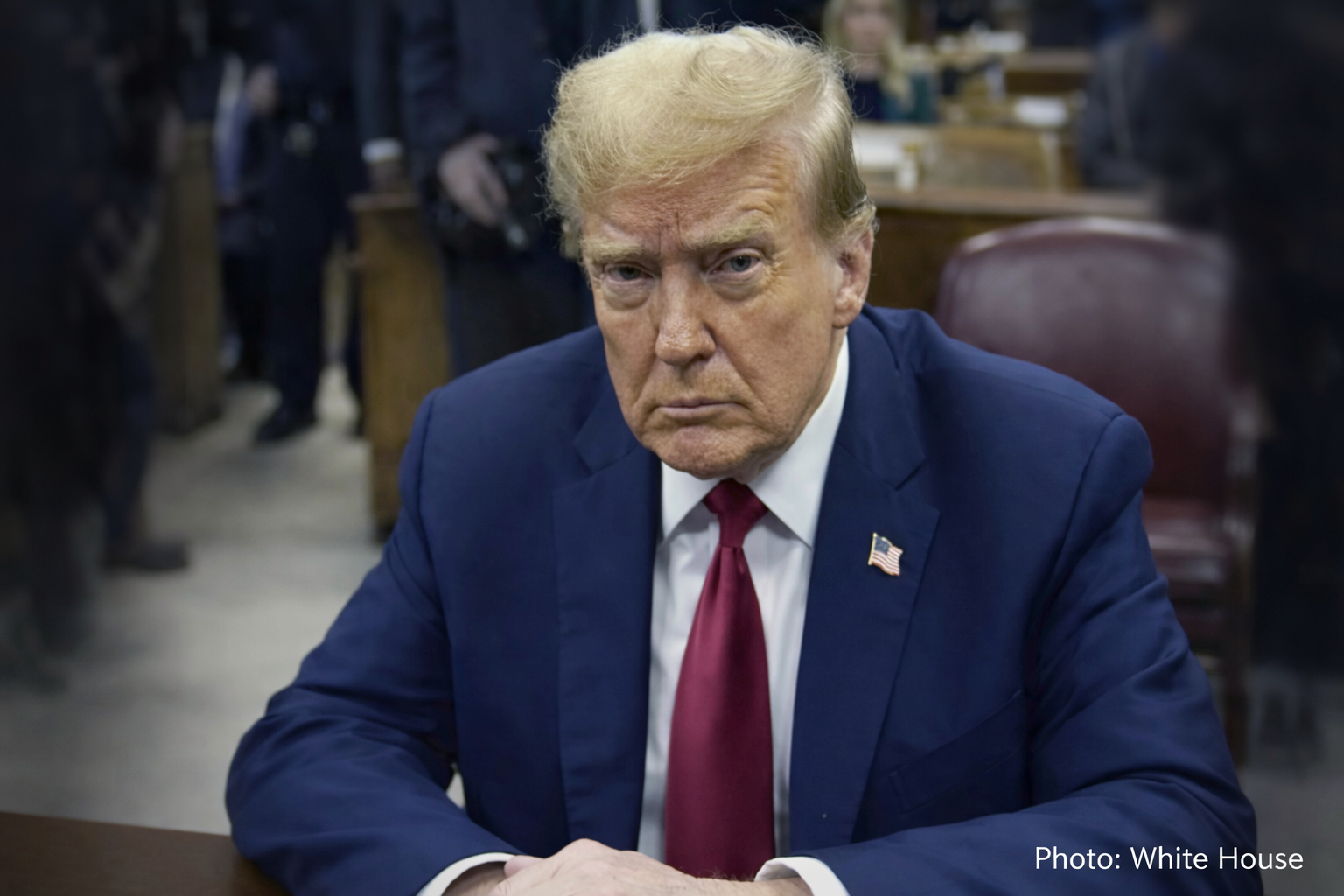
President Donald Trump said Monday that Washington was open to possible talks with Iran, signaling a change in tone after he expressed skepticism earlier this month about reaching an agreement. His remarks came as escalating regional tensions sent oil prices sharply higher in early trading.
In a post on Truth Social, Trump said Iran “wants to make a deal, quickly and badly.” He said he would decide whether the United States would engage but provided no timetable, conditions or possible channel for negotiations. Iranian officials did not immediately confirm Trump’s account, according to Reuters.
Trump’s remarks followed several conflicting statements about possible diplomacy. In a Sept. 1 interview with Fox News, he said an agreement with Iran “isn’t worth the paper it’s written on.” He also wrote that day that he did not care whether Iran signed an agreement.
On Sunday, however, Trump told reporters that Iran wanted an agreement but would have to make “the right deal.”
Oil prices rise after pipeline closure
Oil prices climbed nearly 5% at one point Monday before giving back most of their gains following Trump’s comments about possible negotiations with Iran.
Brent crude futures rose $1.07, or 1%, to settle at $105.68 a barrel. West Texas Intermediate crude for October delivery gained $1.34, or 1.3%, to settle at $101.39 a barrel.
Saudi Arabia shut down its East-West oil pipeline following a drone attack late last week. A commercial vessel was also struck by a projectile in the Strait of Hormuz.
The East-West Pipeline carries crude from Saudi Arabia’s eastern oil fields to the Red Sea port of Yanbu, allowing exports to bypass the Strait of Hormuz. The pipeline could remain largely out of service for several weeks while repairs are completed, according to regional officials cited by The Associated Press.
In another Truth Social post, Trump said oil was moving through the Strait of Hormuz and argued that countries benefiting from U.S. protection of shipping routes should reimburse the United States.
Trump also blamed higher energy prices on the Biden administration but provided no supporting figures. He predicted that prices would “drop like a rock” when the conflict ends.
Trump addresses munitions concerns
In a separate post, Trump said he had received a report stating that the United States was producing more “exquisite and elite weapons” than at any other time in its history.
He said the weapons were being delivered daily to U.S. forces operating in the Middle East and elsewhere. According to Trump, defense plants were operating around the clock, with production focused on Patriot missiles, Terminal High Altitude Area Defense systems, Tomahawk missiles and other Standard Missile systems.
Trump did not release the report or provide production or stockpile figures supporting the claims.
Houthis say they attacked Saudi air base
Houthi military spokesman Brig. Gen. Yahya Saree said Monday that the group had fired dozens of missiles and drones at King Khalid Air Base in Khamis Mushait, southwestern Saudi Arabia. He said the attack targeted aircraft hangars, radar systems, runways and ammunition depots.
Saree claimed the base suffered significant damage. However, the claim could not be independently verified.
Saudi Arabia did not immediately comment on the Houthi claim. The country’s Civil Defense issued an emergency alert for Khamis Mushait and later announced that the threat had ended. Authorities advised residents to follow safety instructions and refrain from gathering at or filming affected areas.
Saree described the operation as retaliation for what he said were more than 300 Saudi airstrikes conducted during the previous five days. Saudi officials said last week that Houthi attacks on civilian and economic sites in Abha, Khamis Mushait, Jazan and Najran had injured 73 civilians.
The Houthis captured Perim Island, also known as Mayun, in the Bab el-Mandeb Strait on Friday. Fighting has continued on the nearby Yemeni mainland, where Houthi forces are clashing with forces loyal to the Saudi-backed government.
Iran denies involvement in Yemen and pipeline attack
Iranian Foreign Ministry spokesperson Esmaeil Baghaei said Monday that Tehran does not interfere in Yemen’s internal affairs and had no connection to the latest developments there. He described Yemen’s problems as longstanding.
Iran’s opponents have long accused Tehran of training, financing and arming the Houthis. Iran has repeatedly denied directing the group’s military operations.
At the same news conference, Baghaei said Saudi Arabia had requested the postponement of a planned meeting between Iranian and Gulf representatives in Salalah, Oman.
Omani Foreign Minister Badr Albusaidi announced Sunday that the meeting had been postponed “in the interest of consensus.” A new date has not been announced.
Baghaei also denied that Iran was involved in the attack on the Saudi pipeline from Iraqi territory. He said Iran and Oman had finalized an agreement covering a maritime route through the Strait of Hormuz, according to RFE/RL.
Asked about the Pickaxe Mountain site, Baghaei said there was no basis for claims that the location contained nuclear facilities.
Trump said last week that the United States had detected activity around Pickaxe Mountain and warned Iran not to “get cute.” The site is about one mile south of the Natanz uranium-enrichment facility.
The United States struck Natanz and two other Iranian nuclear sites in June 2025 during Operation Midnight Hammer, according to the U.S. Department of Defense.
Background on the U.S.-Iran conflict
Trump announced on Feb. 28 that the U.S. military had begun what he called “major combat operations” against Iran as American and Israeli forces conducted strikes on military, government and infrastructure targets.
Negotiations began in June under a memorandum of understanding between the United States and Iran. The talks later broke down, and strikes continued, with the Strait of Hormuz becoming a central flashpoint in the conflict.
On Aug. 19, Trump announced what he described as the most extensive economic operation against another country and warned other nations and companies not to conduct business with Iran.

A global media for the latest news, entertainment, music fashion, and more.