

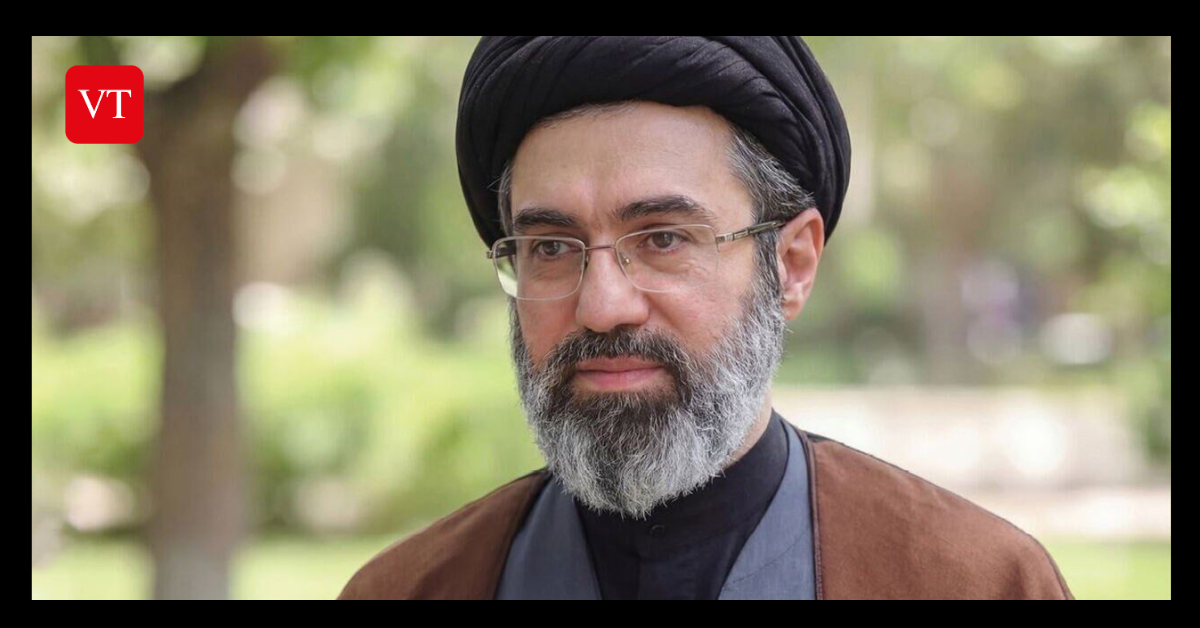
Iran’s new leader, Ayatollah Sayyid Mojtaba Hosseini Khamenei, called U.S. and Israeli rulers “sworn enemies” of Muslim unity Sunday and urged greater solidarity and cooperation across the Islamic world.
In the written message, Khamenei directed a particular appeal to rulers of Islamic countries in West Asia and along the Persian Gulf.
“You must know who your true enemy is, understand their plots, and confront them,” he wrote.
The message marked Islamic Unity Week and the birth anniversaries of Prophet Mohammad and Imam Ja’far Sadiq. The IRNA news agency published the full text.
Khamenei has not been seen in public since U.S.-Israeli airstrikes six months ago began the Iran war and killed his father and predecessor, Ayatollah Ali Khamenei. Mojtaba Khamenei was reportedly injured in the strikes.
Khamenei described the rulers of the United States and what he called the “illegitimate Zionist regime” as enemies of unity and friendship among Muslims.
Their hostility extended beyond Iran, the Iranian people and what he called the Islamic Resistance to the entire Islamic community, he asserted. Khamenei said that included nations in West Asia and North Africa, as well as rulers of countries considered their allies.
The message accused Islam’s enemies of exploiting ideological and religious differences, along with racial, cultural, social, economic, political and geographical divisions. Anyone whose actions divide Muslims advances the enemies’ agenda, whether knowingly or unknowingly, Khamenei wrote.
He said shared beliefs should form the foundation of relations among people in Islamic societies. Differences should be addressed through reason, brotherhood, peace and harmony, according to the message.
Citing Quranic teachings, Khamenei urged Muslims to remain firm against those he described as disbelievers and merciful toward one another. He warned that internal disputes would weaken Muslim societies and diminish their power.
Khamenei asked whether greater Muslim unity would have prevented Palestinians from being left defenseless. He also questioned whether unity among Persian Gulf nations and governments would have deterred outsiders from seeking their lands and wealth.
Beyond avoiding discord, the message called for mutual defense against disbelief and greater cooperation involving wealth, security, science and progress. Khamenei said those measures could lead to what he called a “New Islamic Civilization.”
He traced Unity Week’s first celebration to Esfand 1356 AHS, identified in the message as February-March 1978, during the uprising against the Pahlavi government.
Khamenei said the idea was proposed in Iranshahr, welcomed by Shia and Sunnis and formally established by Imam Khomeini after the Islamic Revolution. The leader credited with proposing the observance was not named in the message.
Khamenei concluded by urging Iranians to prevent internal division. He described Iran as a model that had achieved Muslim unity to a level he considered acceptable.
Have something to promote?
Bring your business, services or event to our readers.