

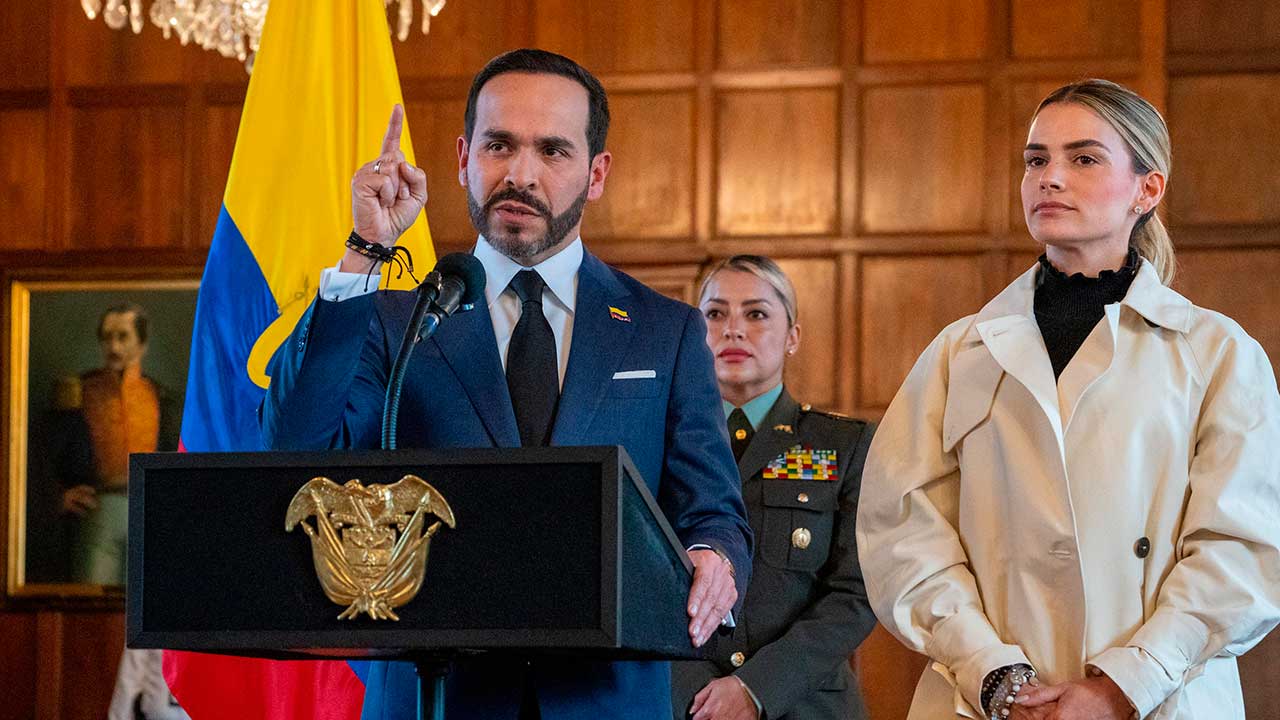
Colombia’s government reported Wednesday that 265 people had died and 496 remained missing after Monday’s earthquake as President Abelardo De La Espriella announced plans to invoke a constitutional economic emergency.
In the latest consolidated assessment released by the Colombian Presidency, UNGRD listed 3,494 injuries, 25,872 affected families and 53,816 people affected.
The assessment covered Valle del Cauca, Quindío, Risaralda, Caldas and Chocó. De La Espriella said the government’s main efforts were focused on locating the missing, using national capabilities and international assistance beginning to reach Colombia.
The government reported 11,347 homes destroyed, 53,526 damaged and 140 buildings collapsed. The assessment also listed 1,819 damaged educational facilities, 631 affected community centers and 179 health facilities with structural problems.
One pedestrian bridge had fallen, while 20 vehicle bridges, 203 roads, 44 aqueducts and five airports were affected, according to the assessment.
Speaking to reporters at the Palace of San Carlos alongside first lady Ana Lucía Pineda, De La Espriella called the emergency a “tragedy of great magnitude” and urged Colombians to unite “under one flag.”
Virginia Times could not independently verify the casualty, damage or aid figures or the president’s assessment of Colombia’s finances.
Economic Emergency and Recovery Plans
In a separate Colombian Presidency statement, De La Espriella announced his decision to invoke the economic emergency mechanism provided by the Constitution.
The proposed emergency would create an entity De La Espriella called the Fondo Milagro, or Miracle Fund. According to the statement, the fund would channel domestic and international contributions toward rebuilding hospitals, educational facilities, buildings, roads and airports damaged by the earthquake.
The emergency should also stimulate investment, reduce obstacles to development projects and create jobs in affected areas, De La Espriella said.
His economic team was developing temporary relief measures, the president said. They included government payment of utility bills for affected families and rental subsidies for people who lost their homes.
Other proposals included tax and financial relief, aid for vulnerable families and support for merchants and small businesses affected by the earthquake.
De La Espriella described Colombia’s fiscal crisis as the most complex in its republican history. He cited the country’s highest level of debt, severely limited treasury funds and an underfunded public budget.
The Presidency statement did not include financial data supporting that assessment.
The planned economic emergency is separate from the nationwide disaster situation declared under Decree 1171 for 12 months. Decree 1172 established three days of national mourning for the victims and directed flags to be flown at half-staff on public buildings and Colombian embassies and consular offices abroad.
De La Espriella said the emergency declaration would demonstrate the government’s commitment to prioritize victims and reconstruction. He pledged to act within the Constitution and the law.
He thanked police officers, soldiers, Civil Defense members, firefighters, volunteers and Red Cross personnel for their emergency work. The president also acknowledged the international assistance arriving in Colombia.
Humanitarian Aid Response
Pineda leads the “Colombia un Solo Corazón” campaign, which coordinates efforts among the national government, private businesses, social organizations and the public.
According to Pineda, the campaign had coordinated more than 1,500 tons of food and humanitarian supplies. She credited the Tigresas de la Patria, Banco de Alimentos, Fundación Minuto de Dios, Tiendas Ara, Supermercados de Uno, Nestlé and Purina.
Avianca, LATAM and privately organized flights transported aid to affected areas. More than 120,000 liters of water had been distributed in bottles and tanker trucks, Pineda reported.
The campaign also arranged fuel tankers with Terpel and Petromil, she said. Other aid included power plants, Starlink equipment, generators and refrigerated containers longer than 40 feet to support Medicina Legal, especially in Risaralda.
Donated medicines had reached hospitals and the Colombian Red Cross with help from Farmatodo, Cruz Verde and other pharmacies, according to Pineda. Municipal shelters received blankets, mattresses and tents.
The aid package also included medical, psychosocial and free funeral assistance for affected families, Pineda said. Rescuers received more than 150 tons of emergency kits, while McDonald’s donated meals.
Aid had been distributed in the hardest-hit municipalities, she added. The campaign was communicating with first ladies in Risaralda, Quindío, Caldas and Valle del Cauca and with Chocó’s governor.
According to Pineda, donation sites remained open across Colombia and in Miami and New Jersey, with assistance routed through Cali’s airport before distribution to affected municipalities.