











KEY POINTS
- The White House said President Trump’s Philippines visit produced more than $17 billion in commercial deals and strategic investments for U.S. companies.
- A $12 billion Boeing and GE Aerospace sale to Philippine Airlines leads the list, alongside a defense financing package of more than $2 billion.
- The fact sheet also sets out the Thailand trade deal’s tariff terms and a planned $123 million HIMARS purchase by Thailand.
WASHINGTON — The White House said on Wednesday that President Donald Trump had concluded a two-day visit to the Philippines with more than $17 billion in commercial deals and strategic investments for U.S. companies, led by a $12 billion aircraft sale to Philippine Airlines.
Boeing and GE Aerospace finalized that sale, according to a White House fact sheet. It covers up to 20 Boeing 787 aircraft with GE engines, and the White House said it supports 47,000 American jobs.
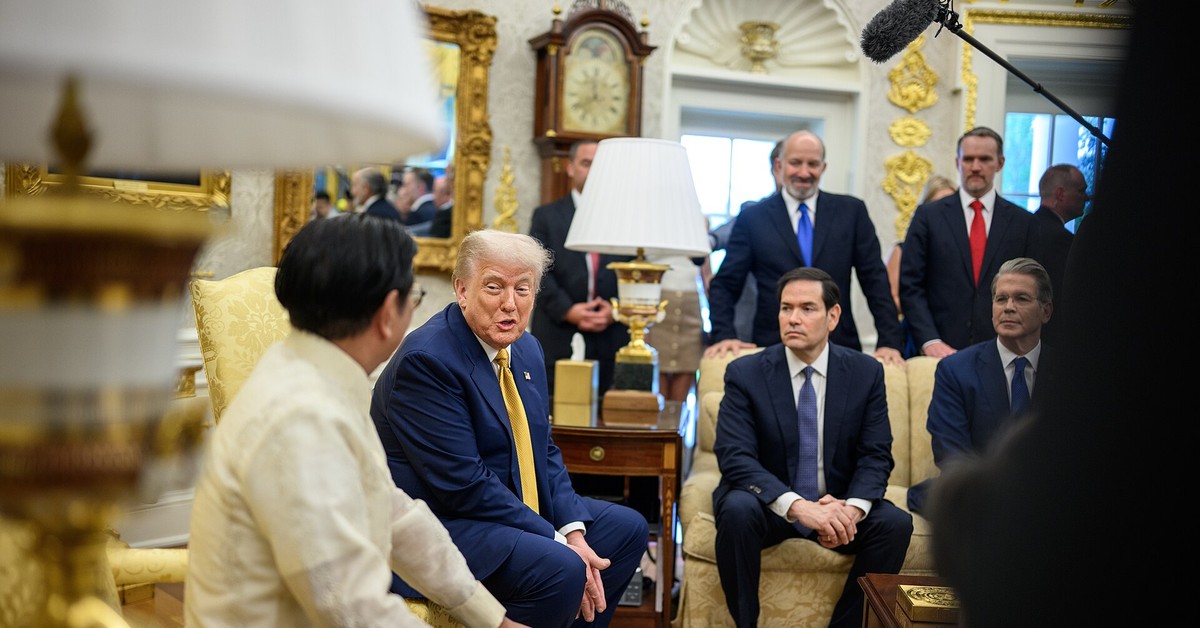
President Ferdinand R. Marcos Jr. hosted Trump in Manila for a state visit held alongside the Association of Southeast Asian Nations summit. The fact sheet said the two leaders committed to eliminating the U.S. trade deficit with the Philippines, to be done through increased Philippine imports of American energy and agricultural products.
Defense financing is the next largest piece. The United States and the Philippines will pursue a Foreign Military Financing loan package of more than $2 billion for Philippine purchases from U.S. suppliers, which the White House said would support over 7,000 American jobs. A further $400 million in Foreign Military Financing would expand the Philippine military’s operational reach in the South China Sea, including long-range fires, command and control and multi-domain drones, supporting 1,500 jobs, it said.
Smaller Philippine defense technology deals were listed as well. The Philippine Department of National Defense announced a $37 million contract with a U.S. firm for super intelligence-enabled mission support, and committed to work with U.S. providers on a $63 million initiative to modernize its defense cloud infrastructure, according to the fact sheet.
The two countries also agreed to explore an intergovernmental agreement on civil nuclear technology, which the White House called the first U.S. civil-nuclear intergovernmental agreement with an Indo-Pacific partner. U.S. company Astranis is offering connectivity services from its AGILA satellite to the Philippines in a commercial opportunity worth up to $200 million, it said.
At Subic Bay, Subic Grain will build a new $40 million fuel storage depot to support U.S. military and commercial operations, the fact sheet said, and the Philippines will modernize its Basco Airport in its northernmost islands.
Thailand trade deal and a HIMARS sale
At the ASEAN summit, Trump announced the substantial conclusion of the U.S.-Thailand trade deal. Once signed, the White House said, it will eliminate tariffs on 99 percent of goods and remove non-tariff barriers on American vehicles, medical devices, pharmaceuticals, ethanol and poultry.
Thailand also intends to commit up to $123 million toward buying U.S. High Mobility Artillery Rocket Systems, according to the fact sheet. The White House said the sale would support 400 American jobs and would be the first deal of its kind in mainland Southeast Asia.
Deals elsewhere in Southeast Asia
The fact sheet listed further agreements across the region. In Indonesia, U.S. company Latitude Energy and the Indonesian sovereign wealth fund Danantara announced negotiations on a $2 billion project using U.S. technology to improve Indonesia’s utilization of its coal resources.
Panasonic signed a multi-year agreement to buy advanced silicon-carbon anode materials from U.S. company Sila, worth up to $1 billion and supporting an additional 500 American jobs, the White House said. In Malaysia, Navajo Transitional Energy Company signed a three-year, $100 million agreement to supply coal from its southern Montana mine to TNB Fuel Services, the fuel procurement subsidiary of Malaysia’s national power utility.
Trump and Malaysian Prime Minister Anwar Ibrahim also announced that a U.S. consortium will develop a sovereign super intelligence cloud for the Malaysian government, according to the fact sheet. In Brunei, Unified National Networks intends to award U.S. company Vertiv the Rimba Data Centre tender and source the nearly $1 billion buildout from U.S. vendors, it said.