

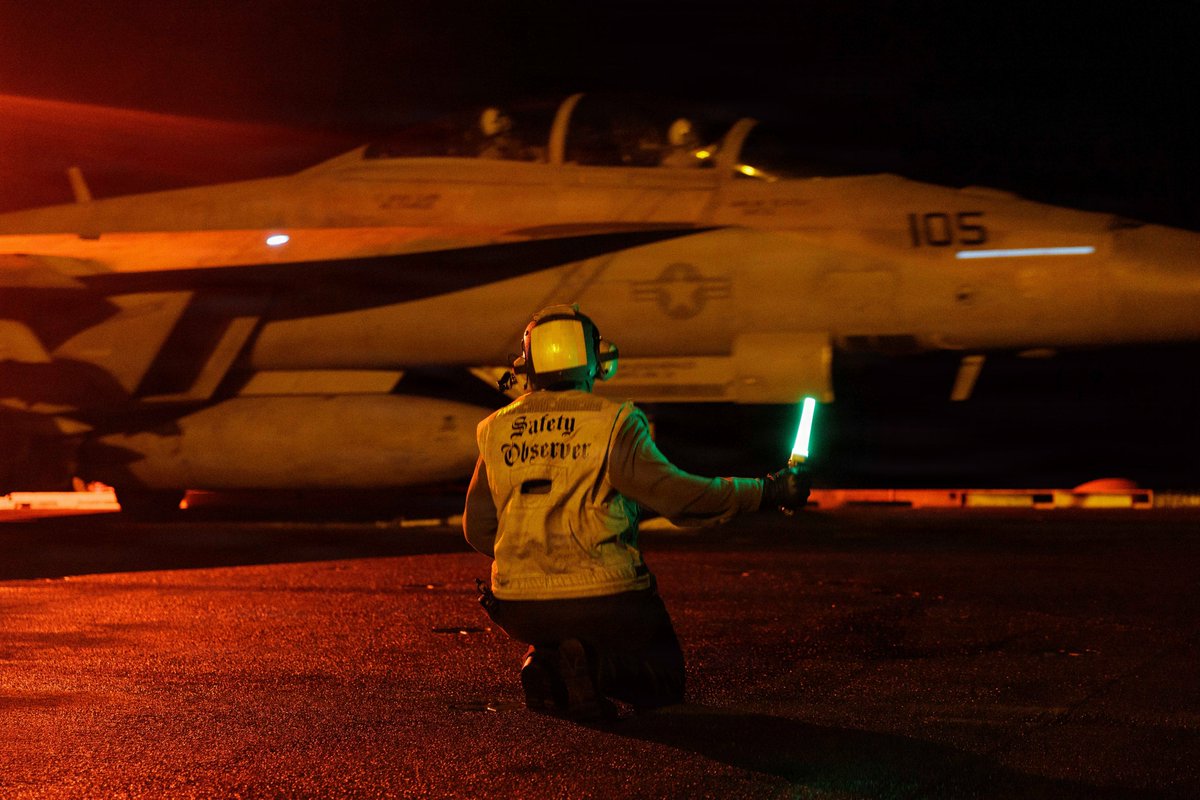
U.S. forces began a 12th day of strikes on Iranian military targets at 5:30 p.m. ET Wednesday, U.S. Central Command said.
The strikes were launched at Trump’s direction, according to the command. The mission will keep degrading Iran’s ability to threaten civilian mariners and commercial vessels moving through regional waters, Central Command said.
The statement did not name targets, provinces or a duration.
Trump Warns U.S. Will Bomb Iran Bridges Over Hormuz Attacks
President Donald Trump said Wednesday that the United States will bomb a bridge or power plant in Iran, including in Tehran, each time Iran fires on a ship in the Strait of Hormuz.
The threat covers any missile, rocket, drone or other weapon used against a vessel, Trump wrote on Truth Social. He said the policy takes effect immediately.
An 11th day of strikes
The previous round ended at 8:15 p.m. ET on July 21, according to Central Command. Assets struck Iranian military operations centers, maritime capabilities, aircraft hangars, drone storage facilities and military logistics infrastructure.
Those targets were chosen to weaken Iran’s ability to threaten commercial shipping in the Strait of Hormuz, the command said.
Iran has attacked more than 30 commercial vessels in the waterway over the past three months, according to Central Command. The command said the attacks endangered hundreds of mariners and undermined freedom of navigation.
The strait is still open to commercial traffic. Since early May, Central Command forces have helped move roughly 900 commercial vessels and 450 million barrels of crude oil through the region, the command said.
Iranian accounts of the July 21 strikes
Iranian state media reported explosions across seven provinces on the night of the 11th round, NPR reported. That included a strike on an electrical installation near the nuclear power plant in Bushehr province.
Fars News Agency reported that a U.S. missile hit a power substation near the Bushehr plant, cutting electricity to a nearby village for about two hours. The governor of Bushehr said two locations in the city were struck and no one was killed or hurt.
Fars also cited East Azerbaijan officials saying a military site near Tabriz was hit early Wednesday, The Jerusalem Post reported. Those Iranian accounts could not be independently verified.
$37.5 billion and counting
Defense Secretary Pete Hegseth told the Senate Appropriations Committee on July 21 that the war has cost the United States $37.5 billion so far, CNN reported. Experts have told the network the real figure is likely higher.
Hegseth and Gen. Dan Caine, chairman of the Joint Chiefs of Staff, testified in support of the White House’s $87.6 billion supplemental funding request, according to Newsweek.
Sen. Dick Durbin, the No. 2 Senate Democrat, said the administration could not explain how the money would be spent. He called the request “unexplainable and unacceptable,” Newsweek reported.
“unexplainable and unacceptable” — Sen. Dick Durbin, on the $87.6 billion funding request
Sen. Patty Murray, D-Wash., said the package is loaded with unrelated Pentagon priorities that belong in the annual appropriations process, Air & Space Forces Magazine reported. The magazine reported that the Office of Management and Budget listed $21 billion for munitions, $17.3 billion for operational costs and $1.5 billion for fuel.
Republicans pressed the administration, too. Sen. John Kennedy, R-La., told reporters that Congress and the public need “some straighter answers” from the Pentagon, according to CNN.
American losses
Seventeen U.S. service members have been killed since the war began Feb. 28, the Washington Examiner reported this week.
Two of them died July 17 while defending against Iranian ballistic missile and drone attacks, according to Central Command. Four other service members were hurt and have since been discharged from Jordanian hospitals.
Another service member was killed over the weekend in northern Iraq during a controlled detonation of an unexploded Iranian munition, the command said.
A ceasefire that came apart
The United States and Iran signed a 14-point memorandum of understanding on June 17 that formalized a ceasefire, ended the U.S. naval blockade and reopened the Strait of Hormuz, ABC News reported. The deal opened a 60-day window to negotiate a permanent agreement.
Trump said on July 8 that the memorandum was over, though U.S. negotiators could keep talking. Iranian Deputy Foreign Minister Kazem Gharibabadi announced on July 18 that Tehran was suspending its commitments under the deal, blaming what he described as a U.S. breach.
Secretary of State Marco Rubio said Iran is not serious about negotiations and warned of consequences if Tehran does not keep its commitments, Virginia Times reported. He made the remarks to Southeast Asian foreign ministers in Manila on July 22.
Have something to promote?
Bring your business, services or event to our readers.