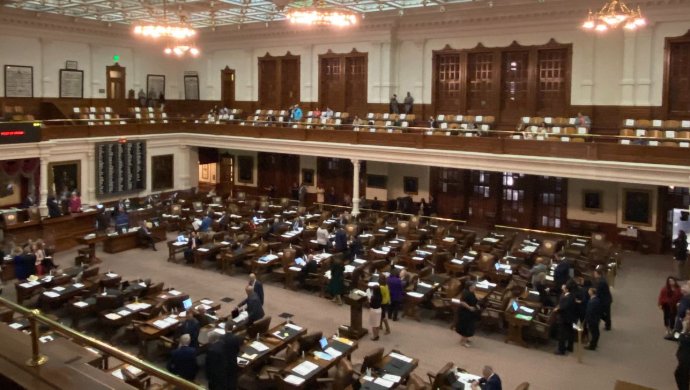
Texas Republicans passed the bill in the state Senate early Sunday and sent it to the state’s House. The legislation was unveiled Saturday amid efforts by GOP-led states to overhaul election laws in the wake of former President Trump’s electoral loss.
The Texas Senate, voting along party lines, approved a sweeping Republican elections bill shortly after 6 a.m. Sunday after a lively overnight debate led mostly by Democrats that had begun 7½ hours earlier.
The bill is almost certain to pass in the House in Texas as Republican have a GOP majority. Texas Governor Greg Abbot is also a staunch supporter of Donald Trump. The states across the nation that have a GOP majority have been passing similar bills to appease the former president Donald Trump and his supporters who have bought into the idea of “the big lie.” They say that such the bills have been formulated to maintain “election integrity.”
The bill, S.B. 7, includes several controversial provisions that critics say would disproportionately affect poor and minority voters. It also specifically targets voting practices employed this past year in Harris County, which includes Houston, by banning drive-through voting and 24-hour voting. Those practices were used by 140,000 voters in 2020.
On Saturday, President Joe Biden said a few strong words against the latest voting restrictions bill which was expected to be passed by late Sunday, in Texas. This bill, like its predecessors in Georgia, Florida and other Republican dominated states will make it more difficult for voters to vote as it does away with early voting and more. President Biden said that Senate Bill 7 was “part of an assault on democracy.” In a statement he also said called it wrong and un-American. He said that America should make it easier and not harder for every eligible voter to vote, in the 21st century.
Some of the reported restrictions in the bill include:
banning of drive-through voting
banning of 24-hour voting
limiting voting on Sundays
forbidding election officials from sending absentee ballots to all eligible voters
banning provision of temporary structures as polling locations
limiting absentee ballot voting
making identification requirements more stringent for vote by mail
empowering partisan poll watchers
making it easier to overturn the voting results
According to the Brennan Center for Justice more than fourteen states have approved of or passed restrictive voting laws since Trump lost the November 2020 elections. Despite protests from civil rights groups, advocacy groups and a few corporate entities, states which have a majority of Republicans who can ensure that the restrictive bills will pass, have gone ahead and applied restrictions on voting. Lawsuits have been filed against states that have passed restrictive bills.
Comments
Advertisements
▶ Watch: Mountain Tang — Taste the Freshness
Follow Virginia Times on Facebook for news as it happensFollow
The VT Newsroom is the editorial desk of Virginia Times, an independent digital news outlet based in Burke, Virginia, operated by Global News Break LLC. The newsroom covers Virginia and the Washington, DC region — state and local government, courts, schools, business and community news — alongside national and world reporting. Editor and publisher: Sunil Dahal. News tips and corrections: [email protected]
President Donald Trump demanded an immediate investigation on Thursday into the growth figures published before the midterm elections, calling them fake in a Truth Social post after the Bureau of Economic Analysis revised third-quarter GDP to 4.3% from its 3.4% advance estimate.
U.S. District Judge Christopher Cooper in Washington issued a preliminary injunction Wednesday blocking President Trump's August executive order narrowing birthright citizenship, the second such ruling after a Maryland judge blocked the order in September.
The Trump administration is poised to release findings from its Section 301 probe of excess factory capacity in 16 trading partners, with new import duties expected on a wide range of goods, three people familiar with the matter told Reuters.
A federal appeals court on Monday revived President Donald Trump's bid to move his New York hush money case to federal court, where he could seek to have his conviction dismissed on presidential immunity grounds.
Democrats across the party's spectrum, including Sens. Bernie Sanders, Elizabeth Warren and Andy Kim, backed the DNC's new pledge requiring 2028 primary candidates to denounce dark-money spending to reach the debate stage.