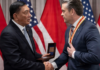

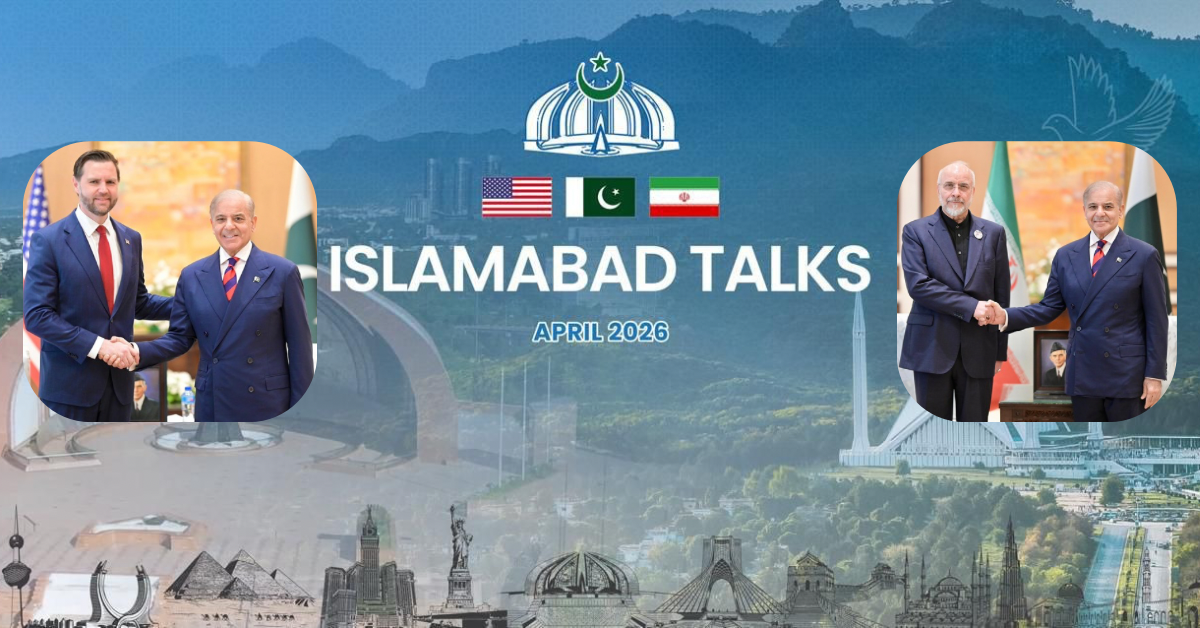
Iranian and U.S. delegations arrived in Islamabad on Saturday for talks on ending the war, days after both sides agreed to a shaky ceasefire.
Security was heavy across the Pakistani capital before the meeting. Police and military checkpoints were set up across Islamabad, traffic was light, and several roads were closed to civilians ahead of Vice President JD Vance’s arrival.
According to the Government of Pakistan, Prime Minister Shehbaz Sharif met Vance on the sidelines of the Islamabad Talks as negotiations began. The Pakistani government said Sharif praised both delegations for engaging constructively and voiced hope that the talks could help lead to durable peace in the region. It also said he reiterated Pakistan’s willingness to continue facilitating progress between the two sides.
The talks began with disputes still unresolved. Both sides have continued to accuse each other of violating the ceasefire reached earlier this week. President Donald Trump has repeatedly called on Iran to reopen the Strait of Hormuz, saying the waterway should have reopened under the two-week truce agreed on Tuesday.
Iran has objected to continued Israeli attacks in Lebanon and said the ceasefire should have covered that front as well. Iranian parliament speaker Mohammad Bagher Ghalibaf, who is leading Tehran’s delegation, said Friday that two steps agreed between the parties had still not been carried out: a ceasefire in Lebanon and the release of blocked Iranian assets. In a post on X, he said those issues had to be addressed before negotiations begin.
Trump also took a hard line before the meeting. In a Truth Social post on Friday, he said Iran had no leverage and should negotiate.
Pakistan also held a separate meeting with the Iranian delegation during the talks. According to the Government of Pakistan, Sharif met the Iranian side, which was led by Ghalibaf and included Iranian Foreign Minister Abbas Araghchi. The Pakistani government said Sharif welcomed Iran’s participation and said Pakistan would continue trying to help the talks move toward meaningful results.
The Pakistani side at that meeting included Deputy Prime Minister and Foreign Minister Ishaq Dar, Chief of Army Staff and Chief of Defence Forces Field Marshal Syed Asim Munir, and Interior Minister Syed Mohsin Raza Naqvi, the statement said.
Diplomats in the region said the delegations were larger and more senior than those sent to earlier nuclear talks. The U.S. delegation includes Vance, envoy Steve Witkoff and Jared Kushner, who also took part in earlier talks with Iran this year. The Iranian team, which arrived late Friday, includes more than a dozen senior officials, among them Araghchi, senior security officials and Iran’s central bank governor.
The two sides are still divided over the Strait of Hormuz, Iran’s nuclear program and Tehran’s demand for compensation for war-related damage.
Iran has published a 10-point plan to end the war. The proposal says Iran would remain in control of the Strait of Hormuz and calls for U.S. forces to withdraw from bases in the Middle East. Trump has nonetheless described the outline as a workable basis for negotiations.
Iranian officials have also said any peace deal must include compensation from the United States for damage caused by the war. Less is publicly known about the Trump administration’s position. U.S. officials have said Washington sent Tehran a 15-point proposal last month, though it has not been released publicly. According to officials who spoke anonymously to The Washington Post, the proposal offers broad sanctions relief in exchange for the removal of all enriched uranium from Iran and strict limits on its nuclear and missile programs.

A global media for the latest news, entertainment, music fashion, and more.