
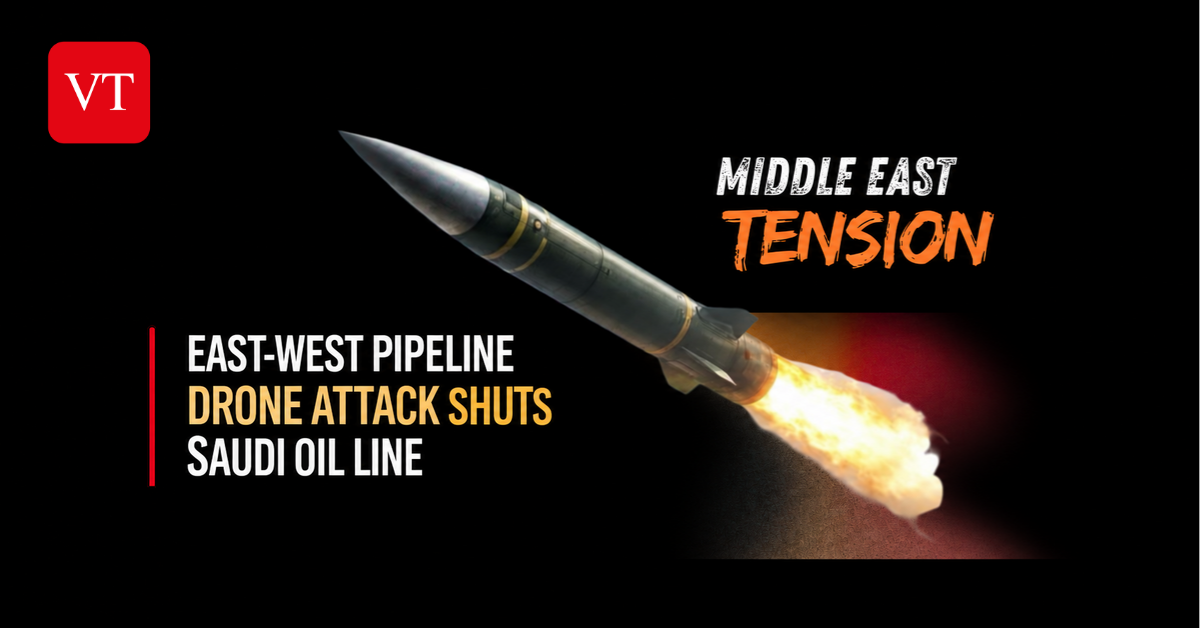
Saudi Arabia has shut down the east-west pipeline for transporting oil after a drone attack on the country from Iraqi territory. The Saudis say they will not retaliate at this stage as per the requests of the Iraqi Prime Minister.
In a statement from Saudi Arabia’s Foreign Ministry on Friday, the drone attacks launched from Iraqi territory damaged the pipeline in the regions of Riyadh and Madinah, causing casualties, injury to people, and property damages.
According to the foreign ministry, the Kingdom decided to refrain from retaliating at this juncture after the Iraqi prime minister requested some time to curb the launches of attacks from Iraqi territory on Saudi Arabia and neighboring countries.
An official in the Energy Ministry told the state news agency SPA that the pipeline has been stopped as a precaution. The shut down halts the transport of Saudi crude through the 1,200-kilometre pipeline running from the oil wells of the Eastern Province to the Red Sea port of Yanbu.
Pictures of satellite images seen by AFP showed smoke emanating from Medina in the area of the pipeline a day before the shutdown. Pictures from Planet Labs on Friday showed destruction caused by fire at an infrastructure site southeast of Medina. Initial analysis indicated that the pump stations on the line were damaged.
So far, no organization has claimed responsibility for the attack. While the Saudi statement mentioned where the drone attacks were launched from, it didn’t name any particular entity nor the number of casualties.
Iran-backed militias in Iraq have conducted previous attacks against Saudi targets using drones, and the current attack is viewed as a part of the Iranian plan to distance the Arab countries from their alliance with the United States.
Iraq denounced the attack and acknowledged that it came from its territory. Prime Minister Ali al-Zaidi ordered an investigation, fired a military commander in charge of operations in Maysan province and shut down a border crossing to Iran. He also promised not to tolerate activities that threaten the country or its relationship with neighboring countries.
Iraq also appreciated Riyadh’s decision not to respond at the moment.
The Gulf Cooperation Council described the strike as a dangerous escalation threatening Saudi sovereignty. Secretary General Jasem Mohamed Albudaiwi appealed to Baghdad to halt using its territory for launching attacks.
The pipeline becomes of greater importance now due to the closuring of the Hormuz Strait in March, blocking Saudi Arabia’s major export route. Now that the pipeline is shut down, Saudi Arabia can’t ship eastern crude through it to Yanbu and ships cargoes north through the Red Sea to reach the Mediterranean region, which takes much longer for Asian customers.
Houthi rebels have gained territory in Yemen for the first time in years along the Bab al-Mandab strait, seizing Mokha and eventually Perim Island, while government forces have retreated. It raised oil prices.
Crown Prince Mohammed bin Salman talked with President Donald Trump on Thursday twice — first, to inform him about the Houthi advances and later to urge American attacks against Houthis, two U.S. officials say. Trump refused.
The administration has no intentions of conducting military operations against Houthis yet but will share intelligence with Riyadh. About 200 Americans are stationed in Saudi Arabia on a non-combat mission.
Adm. Brad Cooper, Commander of US CENTCOM, visited Saudi Arabia on Thursday for emergency talks. Saudi Arabia’s embassy in Washington and the White House have not made comments about it.
The talks follow a previous request from Riyadh to get American support to attack the airport of Sanaa, while the Crown Prince denied that his country needed American military help in these matters. The Houthis responded with attacks against Saudi oil tankers and eventually attacked energy facilities in Saudi Arabia. Saudi Arabia and Yemeni forces retaliated with airstrikes and ground operations.
U.S. Officials have informed their Saudi counterparts that President Trump wants his forces to focus on Iran and the Strait of Hormuz, not a second front.
The foreign ministry of Saudi Arabia said that the Kingdom has reserved the right to take all necessary measures in defense of its sovereignty, security, facilities, and citizens.

A global media for the latest news, entertainment, music fashion, and more.