









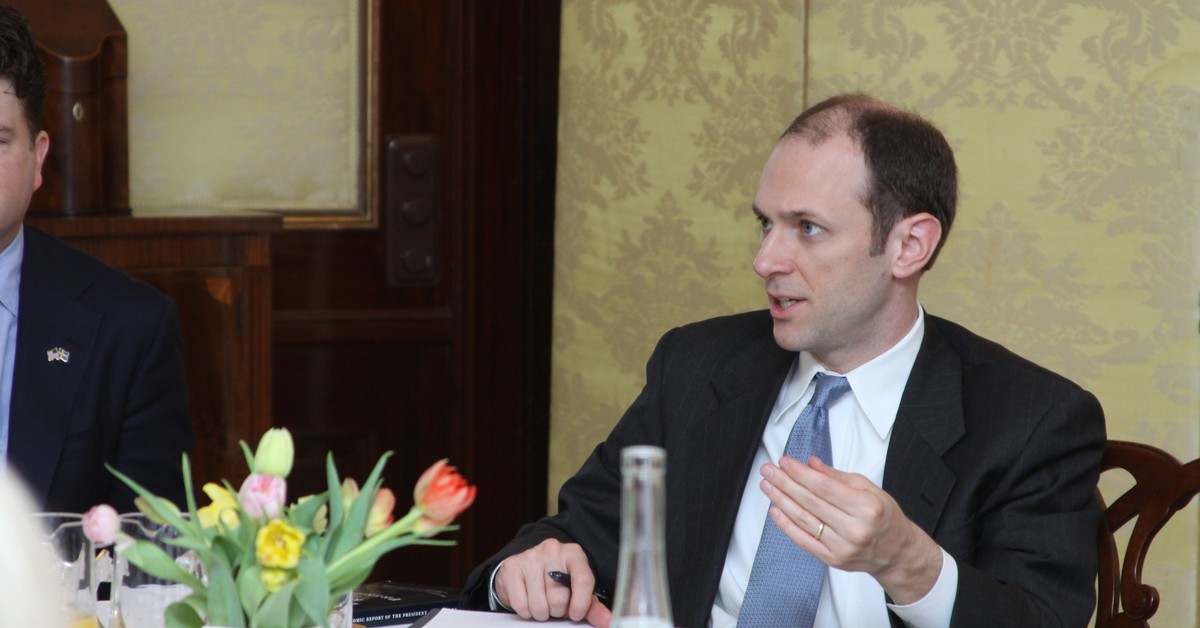
Chicago Fed President Austan Goolsbee said on Friday that the Federal Reserve is not on a path back to its 2 percent inflation target, a blunt assessment he gave on CNBC hours after wholesale prices posted their biggest annual rise in almost four years, investingLive reported.
“We’ve been above 2% for almost six years, and while it sometimes we were making progress, lately we’re not making any progress, and if anything, it’s going the wrong way,” Goolsbee said in the interview, on “Squawk Box.”
Asked whether the Fed was on its way back to 2 percent, he did not hedge. “My feeling is that right now we’re not on the way to 2% and we have to deal with that,” he said.
The Bureau of Labor Statistics reported on Friday morning that producer prices rose 0.3 percent in October and 6.5 percent over the year, the largest 12-month increase since November 2022. Consumer prices, reported on Tuesday, rose 0.4 percent in October, more than expected.
Inflation has spread beyond the usual suspects, Goolsbee said. Price pressures now sit in categories that are not driven by oil prices or tariffs, and services inflation and health care costs, he added, do not feel like they will change quickly.
AI buildout enters the argument
He also pointed to the artificial intelligence buildout. Until about six months ago, Goolsbee said, he thought AI overheating was staying in its lane. He has begun to change that view, describing the data center construction boom as old-fashioned demand overheating that looks like it is starting to spread out of its lane.
Demand-overheating shocks, he warned, are extremely hard to get rid of. Even if the price of oil fell fast, he said, refining capacity would still be a problem.
The labor market, at least, is not adding to the trouble. The jobs market looks stable, he said, perhaps even tightening a little.
Bessent argued the other way
Goolsbee’s remarks landed the same morning Treasury Secretary Scott Bessent argued the opposite case on the same network, saying the Fed should not raise rates in response to an energy supply shock tied to the war with Iran. Asked about Bessent’s warning, he answered politely and returned at once to the persistence of inflation, investingLive reported.
On the size of a December move — 25 basis points or something faster — he would not commit, but he did not argue with the idea either. Futures traders have fully priced a quarter-point increase for the Dec. 8-9 meeting and put the chance of a half-point move at better than 10 percent, according to the CME Group’s FedWatch tool. Governor Christopher Waller said earlier in the week that he would consider a 50 basis point increase depending on the inflation data.
Goolsbee does not vote on rates this year. He joins the voting rotation in 2027. His warning, then, is not a December vote. It is a marker for where the argument inside the Fed may go next. The central bank, he said, has work to do to reestablish its credibility.