











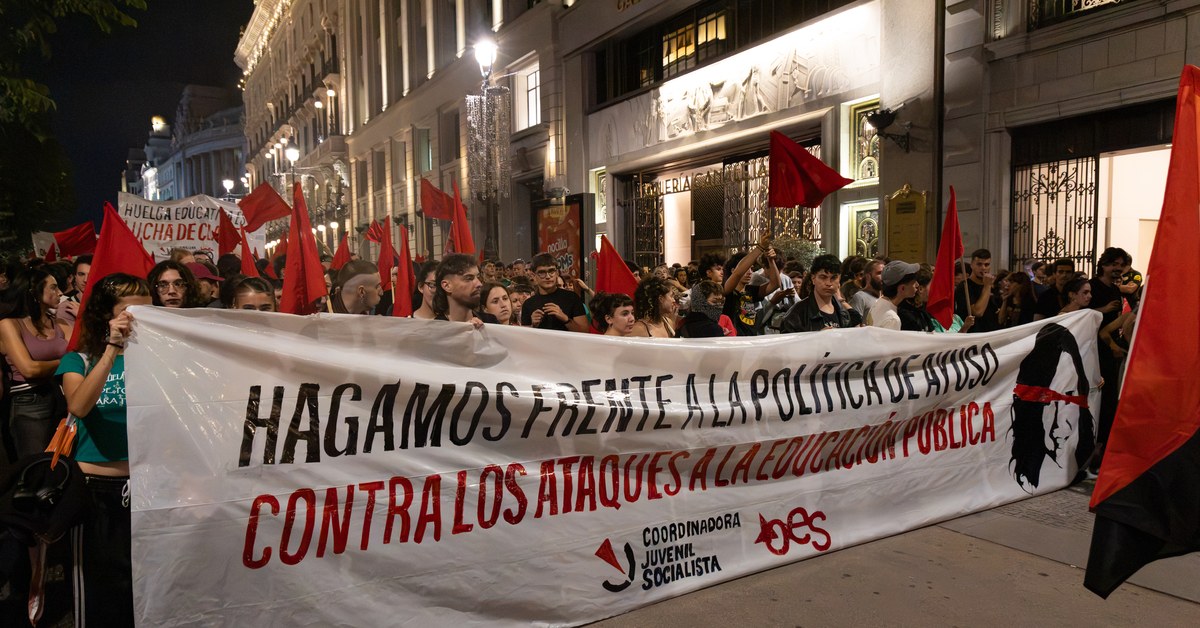
MADRID — Workers across Spain went on a general strike Wednesday, the country’s first in 14 years, in a protest over housing costs that disrupted transport and factories less than three weeks before a snap general election, according to Reuters.
The walkout was backed by Spain’s two largest unions, UGT and CCOO, along with other labour organisations and tenants’ associations angry about rising rents and evictions. Picket lines went up despite stormy weather.
In Madrid, protesters dragged large recycling bins into the streets to block traffic. Many shops in Barcelona were closed and boarded up ahead of possible unrest, and schools and universities were closed or running at reduced capacity.
Turnout was strongest at ports and car plants
According to UGT and CCOO, early participation reached 90% at ports and in the automotive sector, with total stoppages at factories including Volkswagen’s plant in Navarre and SEAT’s plant in Barcelona.
The unions put turnout at 85% in the meat industry, 82% in waste collection and 75% in the energy sector. It was lower in healthcare and social services, at 38%, and in the postal service, at 35%.
They also pointed to a 10% drop in electricity demand, which they said showed disruption across energy-intensive industries. Angela de Miguel, vice president of the main business lobby CEOE, said the drop was less than the 14% recorded in the last general strike.
Barcelona’s metro said no trains would run outside peak commuting hours. Madrid’s metro cut service by 50% for most of the day, rising to 80% of normal service at peak hours.
At Madrid’s Mercamadrid wholesale market, the CCOO union said on X that police fired pepper spray at pickets and arrested one person, with 13 people needing medical attention. A police spokesperson confirmed the arrest but not the use of pepper spray at that picket, although he said it was used to disperse a separate picket line in the Carabanchel district.
A housing shortage at the centre of the election
Spain has a deficit of about 750,000 homes, set to grow to more than a million by 2028, according to the central bank. Average rent is €1,176 ($1,315), equivalent to about 98.7% of a young person’s average monthly salary, according to the Youth Council of Spain.
“I’m 36 years old and I still can’t move out on my own,” said Madrid resident Jesus Gonzalez, 36, who works in a hospital IT department and supports the strike. “Rents just keep going up, house prices just keep going up, and it’s simply impossible.”
Housing activists want an end to tourist apartments, action against real estate speculation and automatic renewals of leases for renters. The unions are seeking more government intervention in the housing market and talks with employers on a new minimum wage agreement.
De Miguel said the strike was counterproductive because small businesses were also hit by the housing crisis, which made recruitment harder. Speaking on state broadcaster TVE, she said the answer was to build more homes and cut taxes in construction and the home-buying process.
The strike follows weeks of demonstrations and encampments after the eviction, and subsequent death, of an 87-year-old Madrid woman known as Maricarmen. Parliament’s rejection last month of government decrees meant to curb evictions and limit rent pressures prompted Prime Minister Pedro Sanchez to call the election for Nov. 29.
Sanchez hopes to harness voter resentment over housing to shift the campaign away from corruption cases involving his inner circle and a deadly train crash last month. His Socialist Party still trails in opinion polls, and protesters and union leaders said they hold the central government responsible for the housing crisis as well as regional and local authorities.
Plans for large afternoon marches were threatened by two storms, Charles and Bruna, which led weather agency AEMET to issue alerts for 14 regions over strong winds, rough seas and heavy rain.