











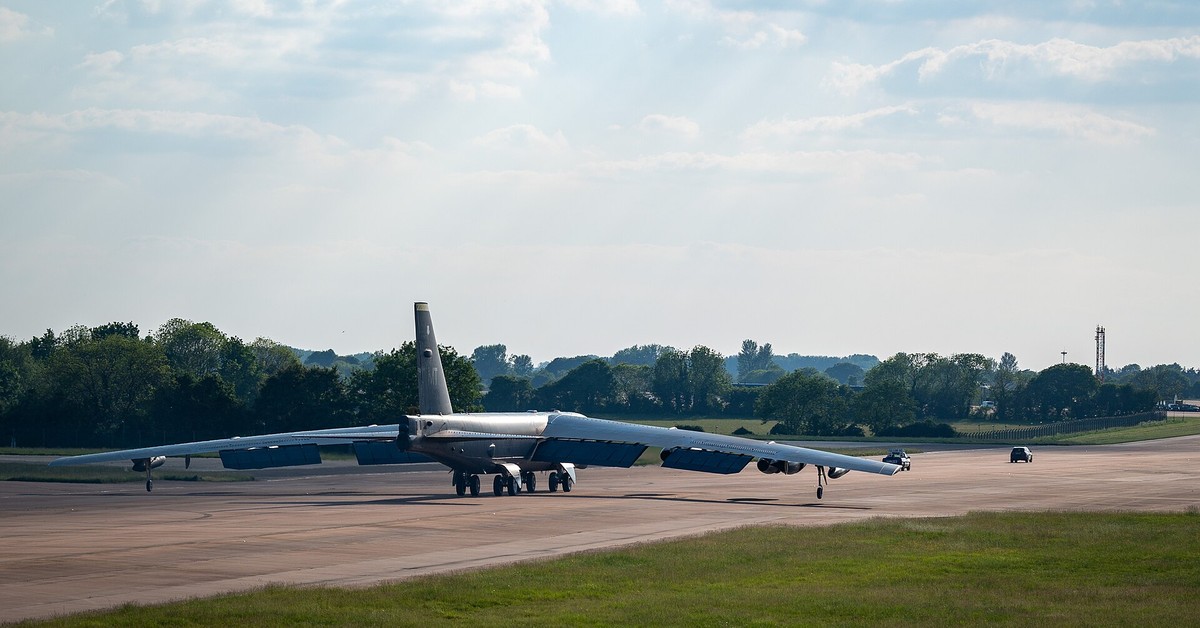
WASHINGTON — From a jail cell in New York, Mohammad Baqer Saad Dawood al-Saadi allegedly helped line up a September attack on RAF Fairford, the British base that housed American forces. It is now part of an eight-count superseding indictment, unsealed Tuesday, that also names two other men, the U.S. Department of Justice said.
Mohsen Mohajeri, 48, is an Iranian national, and Mohammad Ali al-Hassani, 35, is from Iraq; both are the other defendants in the case. Al-Saadi, 32, holds dual Iranian and Iraqi citizenship. Prosecutors tie all three to nearly 20 attacks and attempted attacks in Europe and the United States, carried out for Kata’ib Hizballah and Iran’s Islamic Revolutionary Guard Corps. Washington designates both groups as foreign terrorist organizations.
Only al-Saadi is in American custody. He was arrested abroad on May 1 and has been held in federal custody since reaching the United States, the department said. Mohajeri and al-Hassani were in Iran at the time of the Fairford plot, according to the indictment.
A plot run from a jail cell
The strangest part of the case sits in New York. Al-Saadi was in custody awaiting trial on the May charges. From jail, prosecutors say, he still got word to Mohajeri and al-Hassani, using coded language in phone calls with his mother and sister in Iraq.
The calls mattered most in late September. On the 24th, al-Saadi asked his family about al-Hassani — “Ali” in the calls — and told them to “give him [al-Hassani] money so we can do it,” according to the indictment. Three days later, al-Hassani allegedly directed the Fairford plot.
In Britain, according to prosecutors, al-Hassani paid associates in August to watch the base perimeter and later had others buy vans and barrels of fuel, research chemical accelerants and fit the vans with decals for a fuel delivery business and a swimming pool supply business. On Sept. 26, three vans set out for the base. At least two hit a security roadblock, and British police recovered all three vans in the early hours of Sept. 27 and arrested the occupants.
“Even after one of their co-conspirators was arrested and placed in federal custody, the defendants allegedly continued coordinating terrorist activity through coded communications and a network of associates overseas.”
Attacks across Europe
The wider campaign, prosecutors say, ran through a group calling itself Harakat Ashab al-Yamin al-Islamiya, or HAYI, which the department calls a front for Kata’ib Hizballah. HAYI claimed 18 attacks in Europe in the spring of 2026. Seven were in Britain, more than in any other country, and they included arsons, explosives and a near-fatal stabbing in London of two Jewish men, one of them a dual U.S.-British citizen.
Prosecutors say the three men took part personally in planning many of those attacks. On April 6, Mohajeri and al-Hassani allegedly planned attacks in a room in Iraq with a map of London on a computer screen. Six attacks in and around London followed about a week later.
On April 17, according to the indictment, the three directed an attack in real time over a FaceTime video, with al-Hassani telling the attacker to take a lighter and “light one in your hand,” “light it,” and “throw the fourth one.” The next day, al-Hassani allegedly told another attacker on a video call about an attack on a London synagogue to “light it up like a Christmas tree.”
In March and April, al-Saadi also allegedly tried to arrange attacks inside the United States, including against a synagogue in Manhattan, prosecutors said.
What the charges carry
“Anyone who plans a terrorist plot on a military base housing American servicemembers will be prosecuted by the United States government,” Attorney General Todd Blanche said.
The charges include conspiring to provide material support to Kata’ib Hizballah and to the IRGC, each carrying up to 20 years in prison, and conspiring to bomb a place of public use, which carries up to life in prison for all three men, according to the department’s penalty chart. Al-Saadi alone faces attempted acts of terrorism transcending national boundaries, also punishable by up to life.
The case is assigned to U.S. District Judge Colleen McMahon. A superseding indictment is only an allegation, the Justice Department noted, and all three men are presumed innocent until proven guilty.