

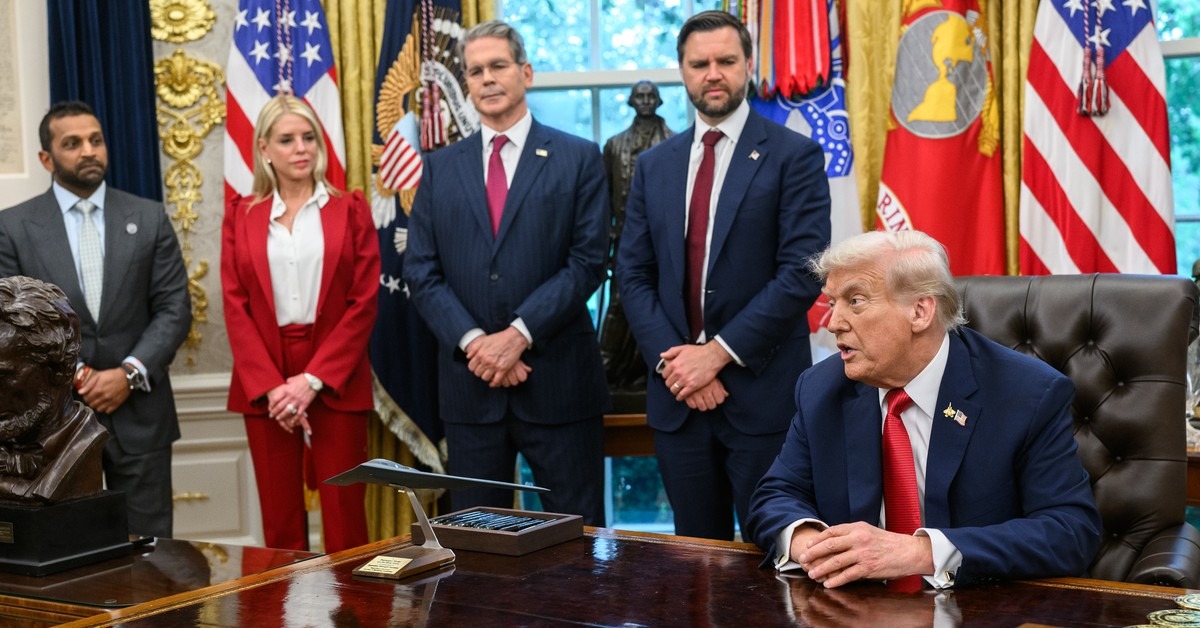
WASHINGTON — The Oval Office is now a national monument. President Donald Trump signed a proclamation on Thursday establishing it as one under the Antiquities Act, according to the proclamation released by the White House.
The monument covers more than the one room. It takes in the Oval Office itself, listed as Room 110, together with the Outer Oval Office, Rooms 106 and 108, and the Cabinet Room, Room 105. The proclamation says those boundaries are the smallest area that fits the proper care of the rooms.
Trump signed the document in the Oval Office and told reporters it would protect the rooms from future changes. “It concerns the Oval Office and the Cabinet Room, very important spaces. And I’m going to be signing a document which will make them into a landmark for the ages,” he said, according to CNN.
He added that once the documentation is fully done and legally binding, “it’ll make it impossible for anybody ever to destroy this incredible space,” CNN reported.
What the proclamation orders
The Interior Department, through the National Park Service, will manage the monument. The secretary of the interior has to draw up a management plan, working with the White House Office of Administration and other agencies, and preservation of the rooms’ structural and significant architectural features comes first in it.
Before anything is substantially altered or demolished, the proclamation requires documentation, a review and a look at alternatives. Any proposed change also has to be checked for consistency with the monument’s national significance, and the secretary is to coordinate with the Committee for the Preservation of the White House.
Day-to-day, little changes for whoever sits at the desk. A president can still redecorate, swap the furniture and make the routine operational or security fixes a working office needs. The limit kicks in only at the level of the building itself — work that would substantially impair the historic structure or its architectural character. Two things the document does not touch: Congress’s authority over federal property stays where it was, and so do the exemptions the White House already has under the National Historic Preservation Act.
A room that was already a landmark
Landmark status, by itself, is not new here. The Park Service administers the White House and its grounds as part of the President’s Park, and the property is already on the books as a National Historic Landmark. Trump’s argument in the document is narrower: that this single room has a significance of its own, apart from the house around it, and should be managed and protected on that basis.
Its shape goes back to President William Howard Taft, who first introduced the oval design in the West Wing. The room took its present location and form under President Franklin D. Roosevelt in the early 1930s, and it has served since then as the president’s principal working office.
The signing is Trump’s latest move on the White House building itself. He has also pushed a new ballroom for the complex, a project he has defended as an event space and a security upgrade, and one a federal judge halted earlier this year unless Congress approves it.
The White House fact sheet on the proclamation said the designation is meant to ensure the Oval Office’s preservation, proper care and management. It gave no deadline for the management plan the proclamation orders.
Have something to promote?
Bring your business, services or event to our readers.