

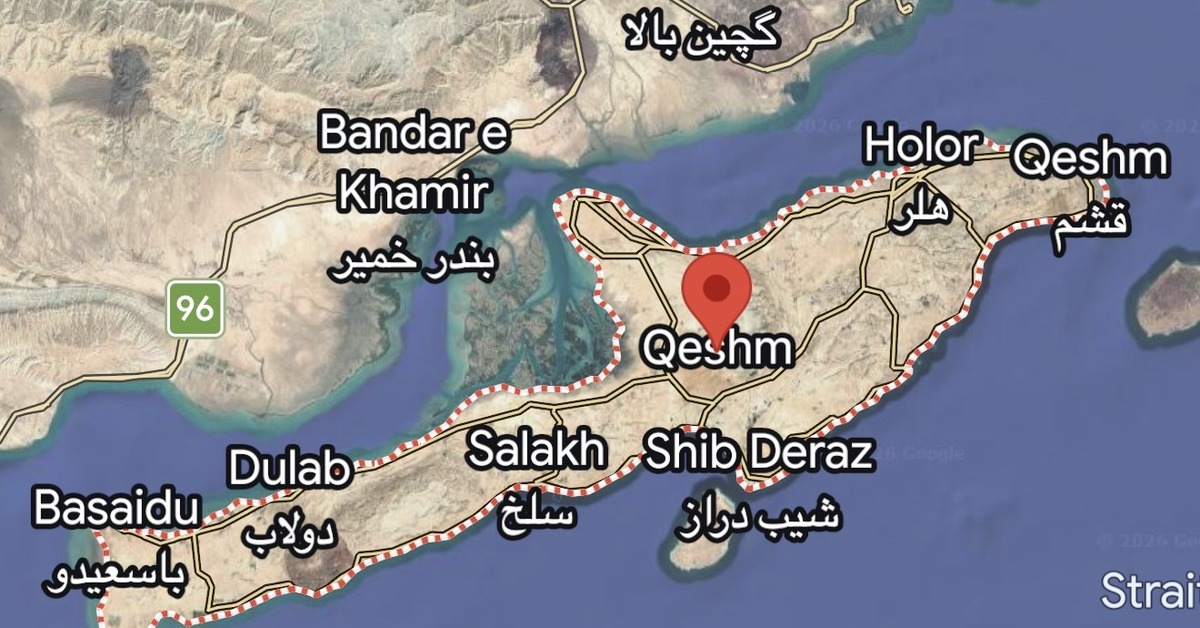
The U.S. military struck Iran’s Qeshm Island on Monday, U.S. officials told The Wall Street Journal and CBS News, even as President Donald Trump played down the chance of renewed war after Tuesday’s midterm elections.
According to the Journal, the attack was the latest in a series of limited strikes Washington has carried out against Iran in secret over recent weeks. Unlike earlier in the war, the U.S. has not announced them.
One official told the newspaper the campaign has been kept quiet on purpose, so it would not signal plans to resume major combat.
Missile fired at US jet
Officials described the strikes as defensive. A senior military official told CBS the strikes on Qeshm came after Iran’s Islamic Revolutionary Guard Corps fired on a U.S. aircraft.
The Journal reported more detail from officials: an IRGC surface-to-air missile was fired at a U.S. fighter jet, which fired back. U.S. forces separately intercepted an IRGC missile launched from Qeshm toward commercial shipping.
Iranian state media reported explosions around the island Monday. The U.S. accounts could not be independently verified.
A strategic island
Qeshm sits at the mouth of the Strait of Hormuz, a critical passage for global oil shipments. The Journal reported that the island holds a large underground missile site, a naval base and a major desalination plant. U.S. forces also hit it during earlier rounds of fighting.
Trump weighs his options
Speaking Monday at the Lincoln Memorial Reflecting Pool in Washington, Trump said he wasn’t sure “you even call it a war” because there had been no fighting for months, CBS reported. The Journal quoted him as saying the U.S. had won.
Later Monday, Trump wrote on Truth Social that a deal with Tehran “could happen.”
Asked whether he was considering striking Iran after the midterms, he said no. Administration officials told the Journal he is still weighing more airstrikes, tougher sanctions and tighter limits on Iranian trade.
Adm. Brad Cooper, commander of U.S. Central Command, briefed Trump at the White House last week as forces prepared for possible expanded operations. The military has since moved more missile defenses and munitions into the region.
Gulf nations have been advised to prepare for a short but intense campaign after the election, according to the Journal.
Iran puts the onus on Washington
Tehran says the next move belongs to the United States.
“The ball is in the U.S. court.”
Baghaei told journalists in Tehran that Iran’s demands were clear, reasonable and logical.
Foreign Minister Abbas Araghchi said talks through mediators were moving intensively but that the outcome depends on Washington, according to Iran’s state news agency IRNA. He warned that any new military operation would meet a stronger response than before.
Supreme Leader Ayatollah Mojtaba Khamenei said Saturday there would be no “geographical limitations” if fighting resumed, CBS reported.
Closed-door talks have run through mediators, mainly Qatar and Pakistan, according to CBS. The war began with joint U.S. and Israeli strikes on Iran on Feb. 28. Whether Washington pursues a deal or renewed strikes after Tuesday’s vote remains unresolved.
Have something to promote?
Bring your business, services or event to our readers.