

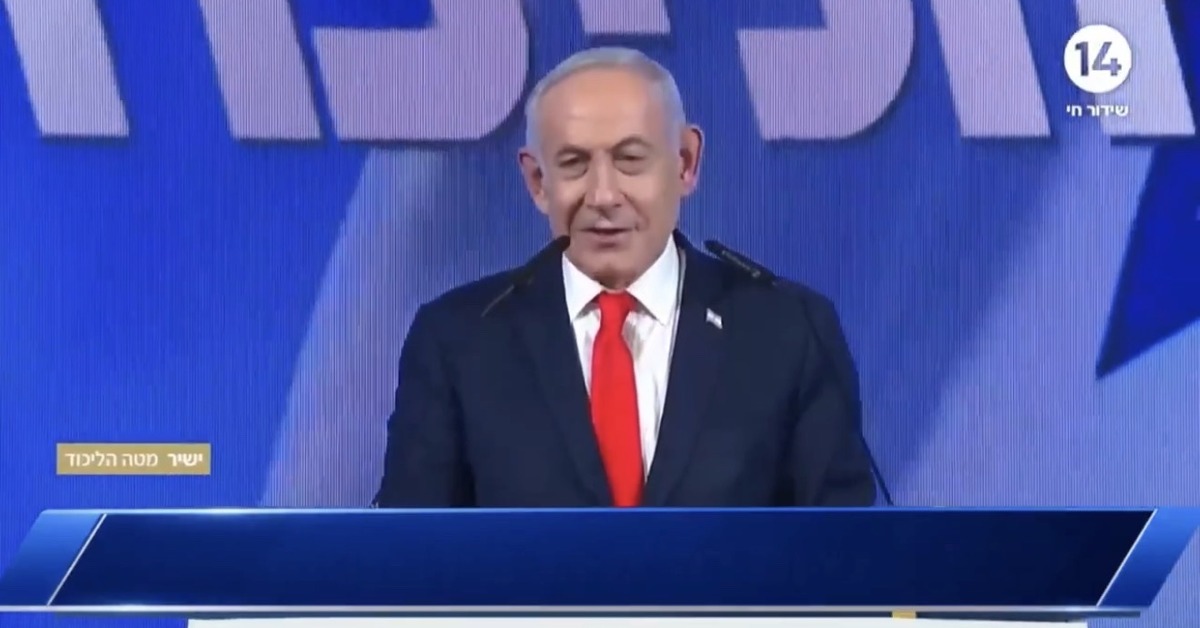
JERUSALEM — Israel’s election was stolen, Prime Minister Benjamin Netanyahu claimed Thursday, after the country’s elections chief asked the Shin Bet to look into suspected foreign money and vote-buying in Tuesday’s vote.
Netanyahu posted his Likud party’s statement on X. It calls the affair an “earthquake,” and the party has a name for it: “Ra’amgate.” No Zionist party, Likud said, should work with Ra’am or the Joint List. Together, the two Arab-led parties won a record number of seats.
Behind the alleged interference, Likud argued, was a push for a foreign takeover of the Knesset, the “Islamization of Israel” and an end to right-wing government. The party said the aim was to force the military into retreat on every front, with Iran at the top of the list.
The statement also warned against replacing the Knesset speaker “through votes bought for cash.” Likud called on the Shin Bet and police to investigate immediately with every means available.
Supreme Court Deputy Chief Justice Noam Sohlberg, who chairs the Central Elections Committee, asked Shin Bet Director David Zini on Thursday to use the agency’s powers to examine suspected improper influence through foreign funding. Sohlberg wrote that he could not vouch for the substance of the suspicions, according to Ynet.
His letter did not name any foreign actors, identify the source of the money or link the suspicions to Likud’s claims against Arab parties, Ynet reported. Sohlberg asked for any findings within a week, citing legal deadlines for filing election appeals.
The Shin Bet is looking into whether foreign entities, possibly including Qatar and Turkey, sent money into Israel to boost turnout in the Arab sector, The Jerusalem Post reported. According to Army Radio, investigators suspect the funding routes overlap with channels previously tied to terrorist organizations.
A security source told public broadcaster KAN the inquiry was opened within the past two weeks based on solid intelligence. Israeli media reported that four more suspects were questioned Thursday over alleged bribery involving envelopes of cash. The Shin Bet declined to comment, and none of the allegations has been independently verified.
Police, Ra’am dispute fraud claims
Israel Police rejected Likud’s broader claims of widespread fraud, saying they had no investigative or intelligence evidence to back them. A police official said election-integrity incidents dropped by nearly 40% from the previous vote.
On the eve of the election, police arrested three men from Bedouin communities in the Negev on suspicion of trying to bribe voters to back Ra’am. All three denied wrongdoing. Police said the case remains open, but investigators have found no significant evidence and expect to close it.
Police have not alleged that Ra’am’s leadership was involved. The party rejected the allegations and accused authorities of making politically motivated arrests to suppress Arab turnout.
Finance Minister Bezalel Smotrich said Arab party leaders should be questioned by the Shin Bet. National Security Minister Itamar Ben-Gvir called the affair a “political October 7” and urged the arrest of Arab party leaders suspected of involvement, provided there are legal grounds.
Yisrael Beytenu leader Avigdor Liberman called Sohlberg’s letter a dramatic and unprecedented development and urged law enforcement to move quickly. Gadi Eisenkot, who leads the Yashar party, is in contact with authorities, his office said. The statement added that every complaint must be examined but warned against using the issue to affect when the new Knesset is sworn in.
Where the count stands
Netanyahu’s bloc was projected to win 53 of the Knesset’s 120 seats and the opposition bloc 48, according to Central Elections Committee figures reported by the Post. The count reached 93% early Thursday, with only double-envelope ballots left to tally.
Likud is on track to be the largest party with 26 seats. United Torah Judaism, Shas and Otzma Yehudit were each projected at seven, and the Religious Zionist Party at six. In the opposition, Yashar led with 21, followed by B’Yachad with 12, the Democrats with eight and Yisrael Beytenu with seven.
The Joint List was projected at 11 seats and Ra’am at eight. Neither bloc reached a 61-seat majority without the Arab parties. Turnout was 77.7%, the committee said.
Double-envelope ballots, cast outside home polling stations by soldiers, hospital patients, prisoners and some election workers, could still significantly change the final outcome, the Post reported.
Democrats leader Yair Golan has urged the opposition to form a government with the Arab parties. The other opposition leaders have called Arab parties in government a red line, and Eisenkot has refused to serve under Netanyahu, including in a rotation deal.
President Isaac Herzog, who by law must consult the Knesset factions before deciding who will try to form a government, said Wednesday that Israel must do everything possible to avoid another election.
Have something to promote?
Bring your business, services or event to our readers.