

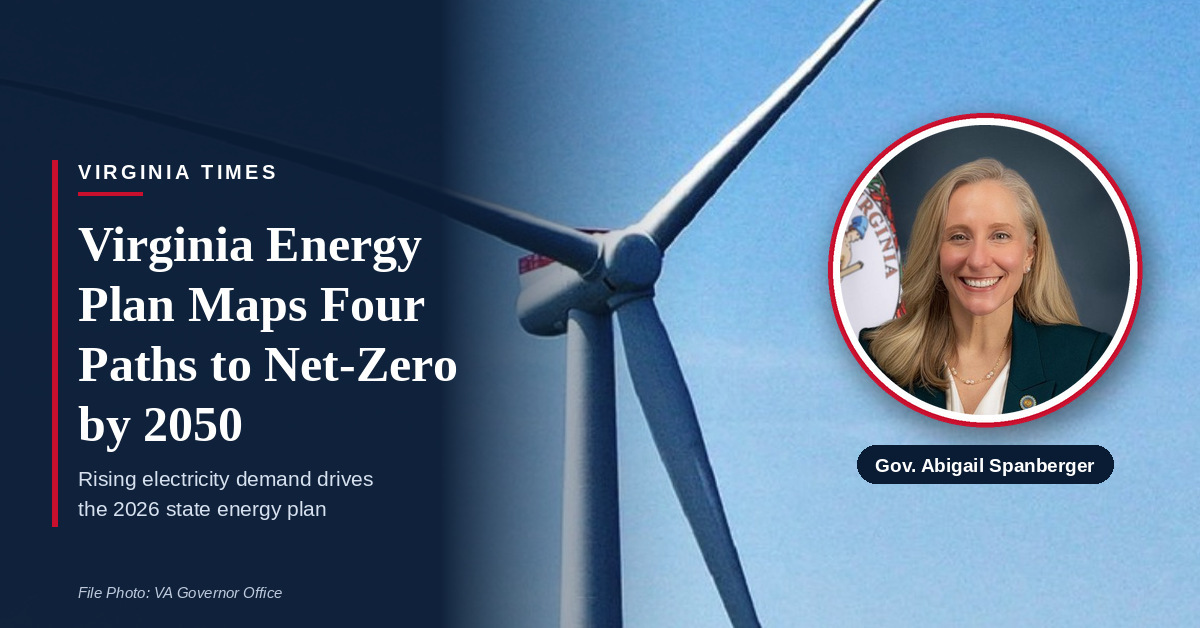
The 2026 Virginia Energy Plan models four ways the state could meet fast-rising electricity demand while staying on track for net-zero emissions by 2050, Gov. Abigail Spanberger said in a letter introducing the plan.
The scenarios rely on different energy mixes. Some lean more heavily on local sources such as rooftop solar and batteries. Others add nuclear power inside Virginia and reduce reliance on electricity bought from out of state. The remaining models test what would happen if solar growth were limited or if no new gas plants were built.
The plan also examines the cost of retreating from Virginia’s clean energy commitments. Repealing the Virginia Clean Economy Act or withdrawing again from the Regional Greenhouse Gas Initiative would almost double carbon emissions during the next 20 years, according to the plan’s modeling. It estimates those steps would cost Virginians $145 billion in health impacts.
Spanberger wrote that the analysis contradicts arguments that abandoning those policies could save money.
Virginia updates its energy plan every four years. In her letter, Spanberger said demand for electricity is climbing quickly and the state’s energy system must expand faster than at any point in more than 80 years.
Rather than set a single course, the plan compares the costs, benefits and trade-offs of each option. Spanberger said the approach reflects that “trade-offs exist with every energy choice,” that unforeseen events could limit options and that new technologies will shape future decisions.
Virginia Energy built the scenarios with the kind of modeling utilities rely on when deciding what to build, when to build it and how much it will cost. The agency is now among a small number of state energy offices able to run that modeling on its own, Spanberger wrote.
Before drafting the plan, the administration gathered input from thousands of residents, businesses, utilities, advocates and local officials. It held public listening sessions and stakeholder meetings and conducted a statewide survey.
Spanberger said Virginians consistently wanted energy that is reliable, clean and locally produced, with jobs and benefits staying in the state. Affordability was a universal demand, she wrote.
Her administration will work with the General Assembly to keep Virginia flexible as it pursues affordable, reliable and clean energy, Spanberger said. She added that she plans to work with lawmakers, local leaders, businesses, utilities and communities on the effort.