
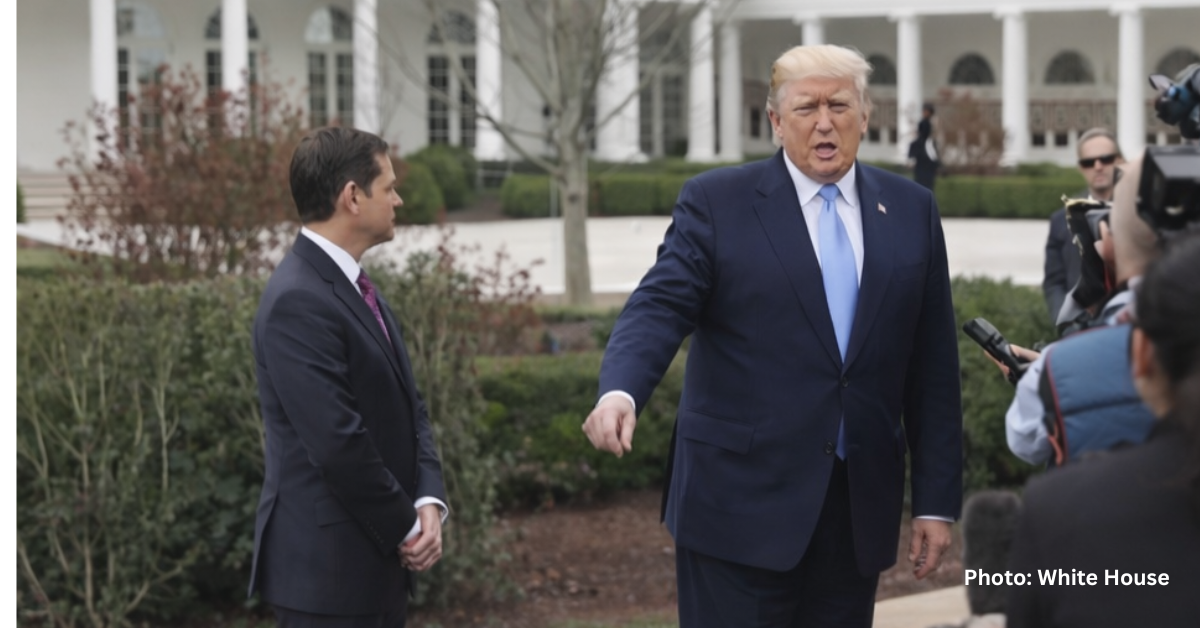
President Donald Trump said Friday he does not support a ceasefire in the ongoing U.S.-Israeli war with Iran, arguing that Washington and Israel should keep pressing ahead while Iran remains under intense military pressure.
“I don’t want to do a ceasefire,” Trump told reporters from the White House before departing for Florida. “You don’t do a ceasefire when you’re literally obliterating the other side.” “They don’t have a navy. They don’t have an air force. They don’t have any equipment,” the president added.
Trump said he believes the United States and Israel remain broadly aligned on how the conflict should end. Asked whether Israel would be prepared to stop the war at the same time as Washington, he said both sides wanted “more or less similar things” and were seeking victory.
He also said he remained open to talks with Iran, but claimed there was now “nobody to talk to” after weeks of strikes that killed senior Iranian officials. Reuters separately reported Trump saying there were no Iranian leaders left to negotiate with.
Iran has also rejected ceasefire talks. Reuters reported this week that Foreign Minister Abbas Araghchi said the United States was responsible for starting the war and for the wider damage and instability spreading across the region.
Trump also downplayed U.S. reliance on the Strait of Hormuz, the narrow waterway that remains critical to global energy shipments. “We don’t use the strait … We don’t need it. Europe needs it. Korea, Japan, China … So they’ll have to get involved a little bit,” he said.
“We are getting very close to meeting our objectives as we consider winding down our great Military efforts in the Middle East with respect to the Terrorist Regime of Iran,” the president wrote on Truth Social on Friday evening.
The strait has become a central pressure point in the conflict since Iran moved to restrict shipping after the U.S.-Israeli attacks began on February 28. Reuters has reported that Washington pushed allies to help secure the route, but support has been uneven and several countries tied any broader involvement to a halt in the fighting.
Regional tensions have climbed sharply since the United States and Israel launched joint strikes on Iran late last month. Iran has responded with missile and drone attacks on Israel and on targets it describes as linked to the United States, raising fears that the conflict could widen further across the region.

A global media for the latest news, entertainment, music fashion, and more.