

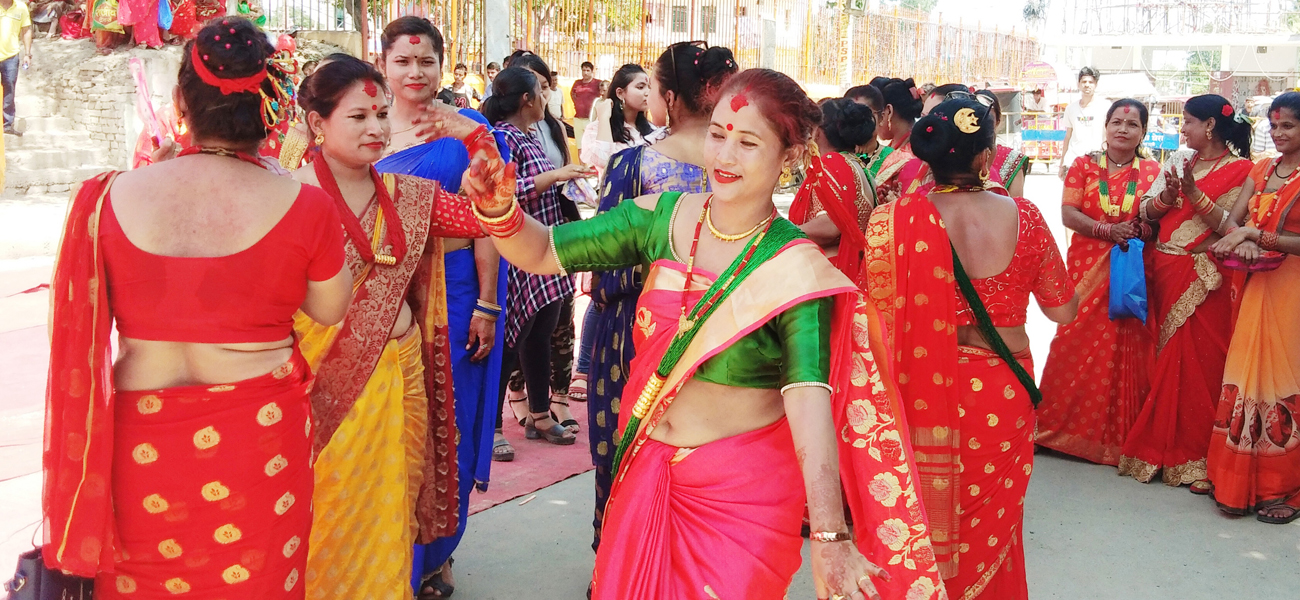
Teej is one of Nepal’s most vibrant Hindu festivals, bringing women together through worship, fasting, feasting, music and dance. Dedicated to Lord Shiva and Goddess Parvati, the festival celebrates devotion, marital harmony, family well-being and the enduring strength of women.
The celebration follows the Hindu lunar calendar and usually falls in August or September. Although customs differ among families and communities, Teej in Nepal is commonly described as a three-day observance centered on Dar Khane Din, the main fasting day and Rishi Panchami.
The Origin of Teej: A Story of Love and Determination
The meaning of Hartalika Teej is rooted in the story of Parvati and her determination to marry Shiva.
According to Hindu tradition, Parvati was the daughter of the Himalayan king. Her father intended to arrange her marriage to Vishnu, but Parvati had already devoted herself to Shiva, the ascetic deity who lived and meditated in the wilderness.
When Parvati’s friends learned of the proposed marriage, they helped her leave the palace and seek refuge in the forest. There, she undertook severe penance and prayed for Shiva to accept her as his wife.
Moved by her unwavering devotion, Shiva agreed to marry her. Their union became a symbol of lasting love, faith and commitment.
Parvati’s friends also hold an important place in the story because they supported her at a decisive moment in her life. The legend therefore reflects not only devotion between Parvati and Shiva but also loyalty and solidarity among women.
Celebrating Teej in Nepal
Teej holds deep religious and cultural meaning for many Nepali Hindu women. The festivities include family gatherings, elaborate meals, fasting, visits to Shiva temples, ritual worship and traditional songs and dances.
Married women traditionally pray for their husbands’ health and longevity, while unmarried women may pray for a suitable future partner. Many participants also seek blessings for personal well-being, family happiness and spiritual strength.
The celebration begins with Dar Khane Din, the day of feasting. Women traditionally gather at their maternal homes or in other communal spaces to share a generous meal with relatives and friends.
The gathering is filled with food, music, dancing and conversation. Gifts and blessings may also be exchanged. The feast often continues late into the evening before the fasting observance begins.
For many married women, Dar Khane Din offers a cherished opportunity to return to their childhood homes and reconnect with mothers, sisters and friends.
The second day is the religious heart of Teej. Women dress in red saris, bangles, tikas and jewelry before visiting temples dedicated to Lord Shiva.
Pashupatinath Temple in Kathmandu draws particularly large crowds. Devotees offer prayers, flowers and garlands to Lord Shiva and Goddess Parvati while seeking blessings for their marriages, families and personal lives.
Many women observe a day-long fast, while some abstain from both food and water. Fasting practices vary according to individual health, family tradition and personal choice.
Teej songs also give women a way to share personal experiences, family memories, social concerns and hopes for the future.
Rishi Panchami, observed on the fifth lunar day, honors the seven revered sages known as the Saptarishi.
Women traditionally visit rivers, ponds or other water sources for ritual bathing. In some communities, participants bathe using sacred clay or mud and cow dung and brush their teeth with Datiwan twigs. These practices symbolize ritual purification and spiritual renewal.
The traditional observance is also associated with seeking forgiveness for religious transgressions, including those historically connected with beliefs about menstruation. Interpretations and practices differ among women and communities today.
After bathing, devotees worship the Saptarishi and offer prayers for forgiveness, purity and a renewed spiritual life.
A Celebration of Faith and Sisterhood
Teej remains a powerful expression of faith, cultural identity and fellowship among Nepali women. Its feasts reunite families, its songs preserve personal and collective memories, and its rituals connect generations through shared tradition.
At its heart is the story of Parvati—a woman whose patience, determination and devotion allowed her to follow the path she had chosen. That message continues to give Teej its lasting meaning in Nepal and among Nepali communities around the world.

A global media for the latest news, entertainment, music fashion, and more.