

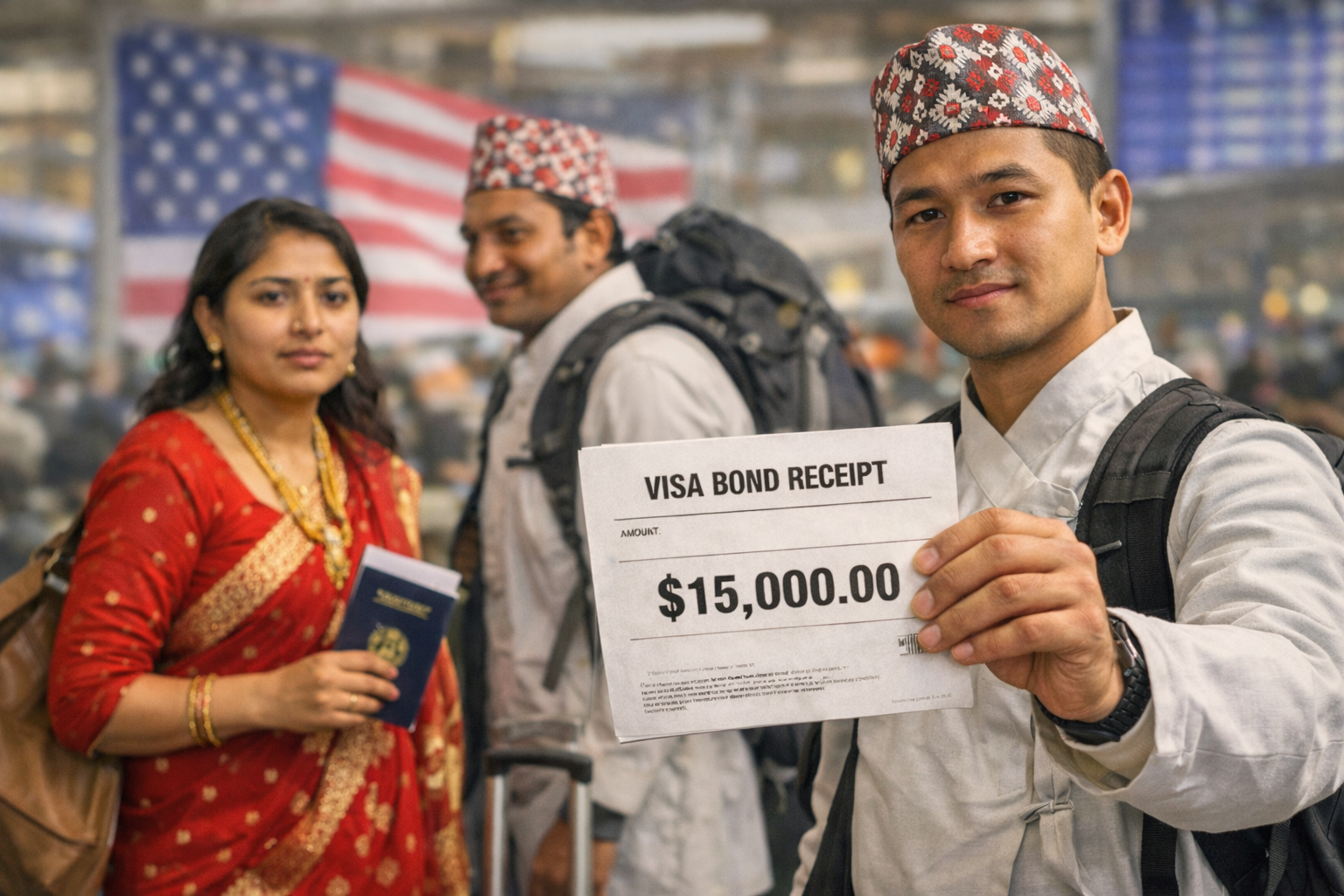
The US State Department has included Nepal in the list of countries whose citizens could be requested to post a refundable visa bond as a condition for granting B1/B2 tourist/business visas. Qualifying Nepali B1/B2 visa applicants may be compelled to post bonds of $5,000, $10,000, or $15,000 starting January 21, 2026, the exact amount at the discretion of the consular officer during the interview.
Background of policy
This forms part of a visa bond pilot program encompassing nationals from countries with relatively high visa overstay rates. The program requires extra financial guarantees to encourage compliance with the conditions of short-term visas. Nepal further joins more than three dozen other countries whose citizens may henceforth be asked to post such bonds before a B1/B2 visa is issued.
Which of the bond amounts applies—$5,000, $10,000, or $15,000—will be determined by the consular officer after reviewing the applicant’s profile (travel purpose, background, etc.) and only if the officer has already determined the applicant is otherwise qualified for a B1/B2 visa.
Application and Payment Process
Applicants covered under this program follow the standard B1/B2 visa application and consular interview process. The consular officer, if a bond is required, will instruct the applicant to submit DHS Form I-352 and to make payment through the U.S. government’s Pay.gov platform.
Officials warn applicants not to use third-party websites or middlemen to post the bond; any payments made outside of official channels will not be safeguarded or acknowledged. They also stress that posting a bond does not guarantee that a visa will be issued; a visa can still be denied for other legal grounds.
Travelers with the Visa Bond must arrive and depart the United States through one of three airports: Boston Logan (BOS), New York’s John F. Kennedy, or Washington Dulles (IAD).
The bond is normally cancelled and returned when the traveler departs within the authorized period, does not use the visa prior to its expiration, or is denied admission at a U.S. port of entry.
However, the bond can be forfeited if the traveler overstays, remains unlawfully in the United States, or seeks to change status or apply for asylum while holding the covered non-immigrant visa.
Impact on Nepali travelers
The policy is expected to affect Nepali citizens planning short-term travel for tourism, family visits, and business trips by adding a potentially significant up-front deposit on top of regular visa fees, while also requiring closer attention to entry, exit, and status rules to ensure the bond is refunded.

A global media for the latest news, entertainment, music fashion, and more.