
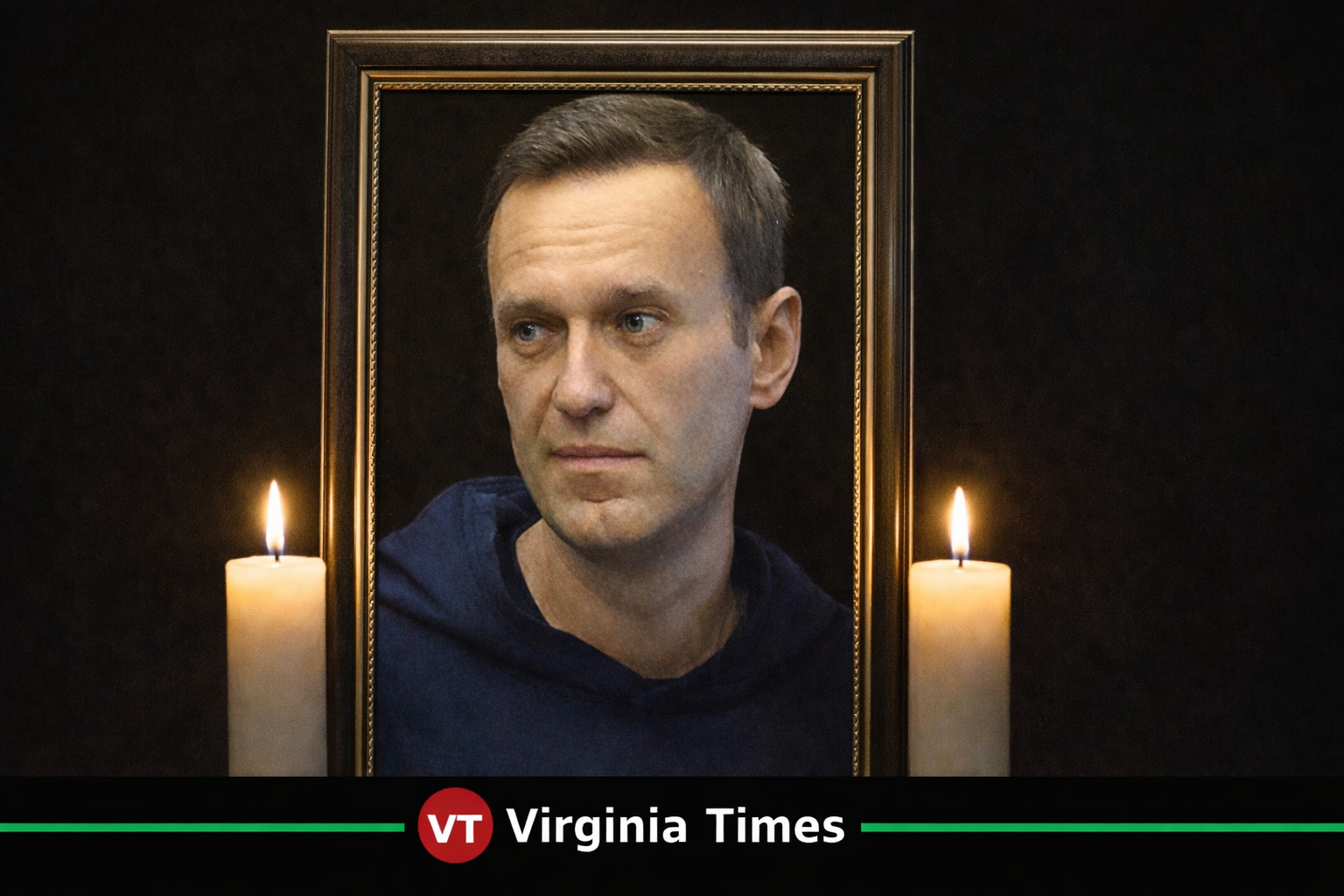
In a joint statement, five governments in Europe announced their belief that Alexey Navalny, a prominent political figure in Russia, was poisoned by a lethal toxin, dismissing Russia’s long-held claim of a natural death.
The five governments, comprising the United Kingdom, Sweden, France, Germany, and the Netherlands, announced their findings after lab tests were conducted on Alexey Navalny’s samples, which “conclusively confirmed” the presence of a lethal toxin, Epibatidine, a poison found in poison dart frogs in South America.
The governments also claimed that this lethal toxin was not found in Russia, and its effects were similar to what was reported by Alexey Navalny around the time of death. Alexey Navalny, a prominent critic of Vladimir Putin, was arrested and sentenced to a five-year prison term in Russia in Februay 2024.
Alexey Navalny was arrested by Vladimir Putin’s government while in Russia, and he was sentenced to a five-year term in a Russian penal facility. Alexey Navalny’s death was announced in February 2026, and Russia claimed that Alexey Navalny was not poisoned, as alleged by Alexey Navalny’s associates and wife, but rather suffered a natural death. Alexey Navalny’s associates and wife claimed that Alexey Navalny was poisoned by Vladimir Putin’s government, and Russia dismissed claims of poisoning Alexey Navalny by stating that Alexey Navalny was not poisoned, as he was seen not feeling well after a walk and was unable to be revived.
The governments said they announced their findings after Alexey Navalny’s death, stating that Alexey Navalny was poisoned by Russia, as Alexey Navalny was arrested and sentenced in a penal facility in Russia, giving Russia “means, motive, and opportunity” for poisoning Alexey Navalny. They also claimed that Alexey Navalny’s death was a part of a series of chemical weapons offenses, as Alexey Navalny was poisoned by a nerve agent in 2020, and a chemical weapons attack was carried out in Salisbury, UK, in 2018, which later claimed the life of Dawn Sturgess.
They also claimed that their permanent representatives to the Organisation for the Prohibition of Chemical Weapons wrote a letter to the director-general of the Organisation for the Prohibition of Chemical Weapons, announcing Russia’s violation of the Chemical Weapons Convention and, in Alexey Navalny’s case, the Biological and Toxin Weapons Convention.
The statement did not name specific individuals suspected of carrying out the alleged poisoning. Instead, it placed responsibility on the Russian state, saying the circumstances of Navalny’s imprisonment gave Russian authorities control over access, security, and medical response.

A global media for the latest news, entertainment, music fashion, and more.