











KEY POINTS
- A divided 4th Circuit panel let Virginia enforce its conditions on local 287(g) agreements with ICE.
- The same panel kept Virginia’s mask-and-identification law blocked for federal officers.
- Judge Robert King dissented on the mask ruling; the Justice Department’s lawsuit continues in Richmond.
RICHMOND, Va. — Virginia can enforce its new limits on local police agreements with U.S. Immigration and Customs Enforcement, a federal appeals court ruled Monday. But the same court kept the state’s mask-and-ID law blocked for federal officers.
The split decision from a three-judge panel of the U.S. Court of Appeals for the 4th Circuit lifted one preliminary injunction a lower court had placed on the commonwealth and upheld another. Both laws passed the General Assembly earlier this year.
Judge Toby Heytens wrote the opinion, and Judge DeAndrea Gist Benjamin joined it. Judge Robert King agreed on the ICE agreements but dissented on masks.
Local ICE agreements
The first law covers agreements under Section 287(g) of federal immigration law. Those deals let state and local officers carry out some immigration enforcement duties under federal supervision.
Virginia’s law, signed April 22, sets conditions for those agreements. It also says existing deals that weren’t changed to meet the new terms by Sept. 1 are void.
The Justice Department argued the law interfered with federal operations and broke contracts. The panel rejected both. The federal government’s arguments “get basic federalism principles backwards,” Heytens wrote.
Washington can’t order state or local officers to enforce federal law, the court said, and Virginia is free to change its mind about helping. Every agreement covered by the lower court’s order let the local agency end it without cause, according to the opinion. Only five of the 30 required advance notice.
“States may not issue orders directly to the Federal Government.”
Masks and identification
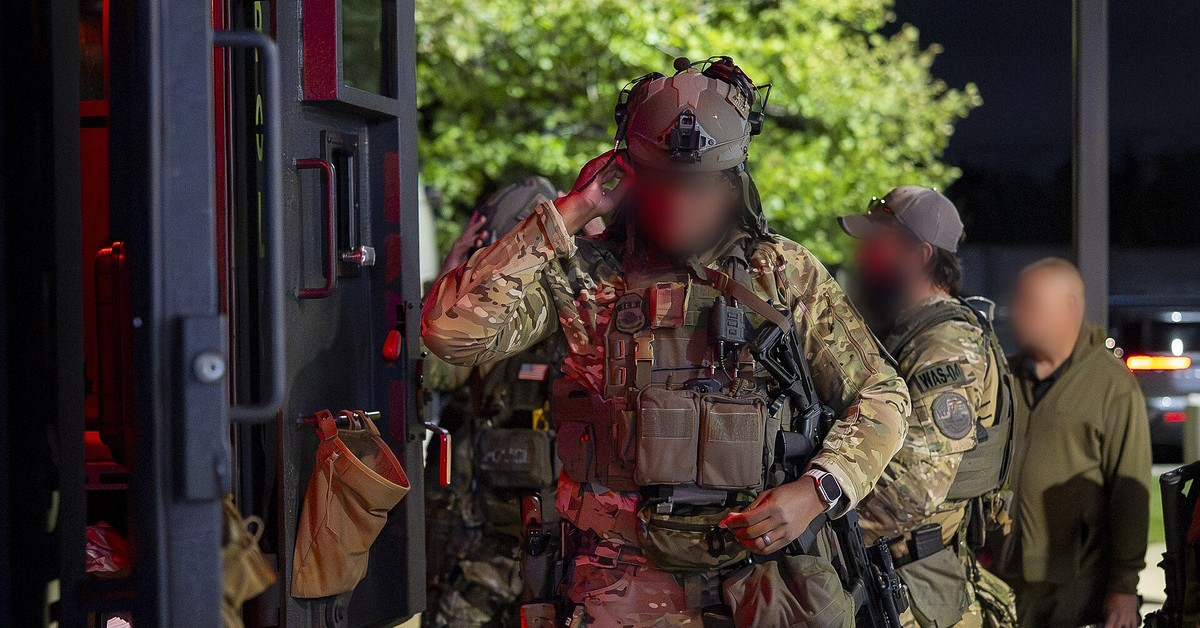
The second law, signed May 20, bars law enforcement officers from covering their faces on duty, with exceptions. It also requires them to display a badge or insignia with a name or other identifier and the agency’s name.
Because it reaches federal officers, the majority said, it directly regulates the federal government and likely violates a doctrine that shields federal operations from state control. The court said it didn’t question the sincerity of Virginia’s concerns. It also said states may limit or forbid masking by their own state and local officers.
King disagreed. He called the law a reasonable use of the state’s police powers and noted it contains 11 exceptions for officers’ faces.
“The people of Virginia should not be expected to guess about whether masked men who confront them are legitimate law-enforcement officers and not robbers or common criminals,” King wrote.
What comes next
The ruling deals only with the preliminary injunctions. The Justice Department’s lawsuit, filed June 11, remains before Senior U.S. District Judge Robert Payne in Richmond.