











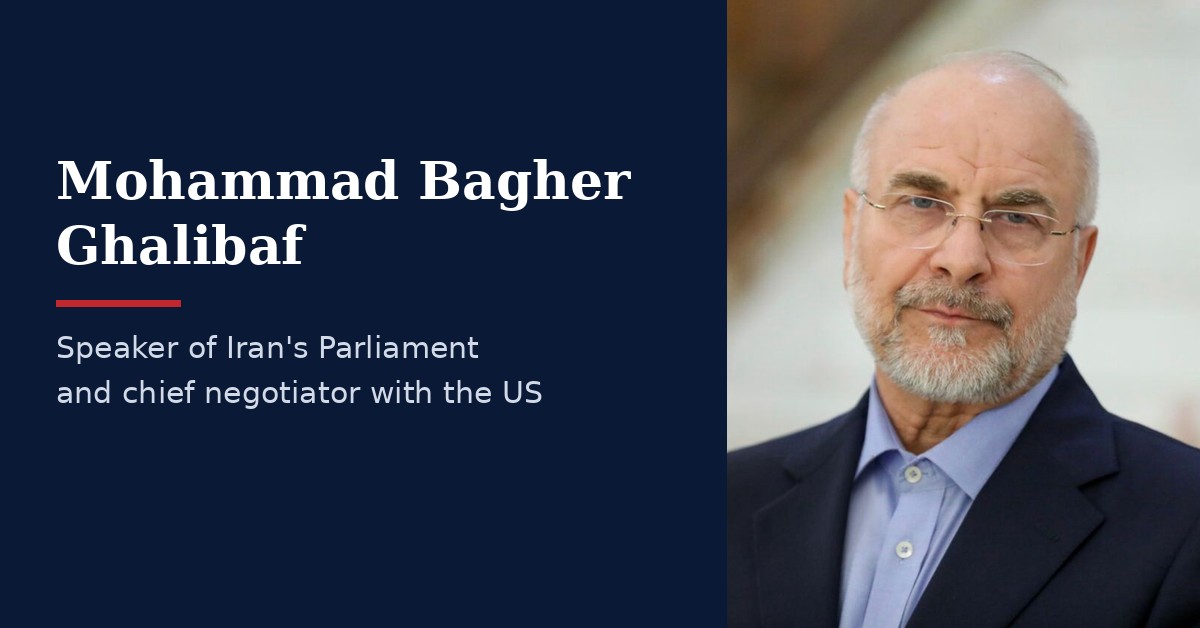
TEHRAN — Mohammad Bagher Ghalibaf, Iran’s parliament speaker and chief negotiator, said Tuesday that Iran’s position has not changed and that there will be no step and no negotiations with the United States until Tehran’s seven conditions are met, according to IRIB, Iran’s state broadcaster.
“In the face of the recent nonsense and threats of the US President, I must clarify that our position is clear and unchangeable,” Ghalibaf told an open session of parliament.
“The threats and insults to the proud and honourable people of Iran and the emphasis on economic pressure are, more than anything, a sign of the Americans’ helplessness in the face of our beloved, resilient and independent nation.”
Ghalibaf then restated the condition itself. “Our words are the same as we have said before: there will be no action or negotiation before Iran implements its seven conditions, and we are ready to respond decisively to the enemy’s movements and change the geography of the battle in the event of the enemy’s mistake,” he said.
The seven conditions, as Ghalibaf outlined them to Al Jazeera on Nov. 11, include lifting the US naval blockade of Iranian ports and the sanctions on Iran, releasing Iran’s frozen funds, ending the fighting on all fronts and an explicit announcement that the war has ended.
He told Al Jazeera those demands were part of the Islamabad memorandum of understanding signed in June, and that they had to be implemented before Iran entered negotiations with Washington. Tehran sent its response through a Qatari mediator and is still waiting for an official US reply, he said.
Ghalibaf also turned to conditions at home during Tuesday’s session. Iran is in a “war-like” situation, he told lawmakers, and people already dealing with economic hardship are watching how officials behave. He urged lawmakers not to let disagreements — justified or not — harden into conflict and division, pointing to a clear instruction from the Supreme Leader to safeguard unity and cohesion among officials.
His remarks followed a new round of US sanctions on Monday. The Treasury Department said it had sanctioned over two dozen Iranian exchange houses, front companies and key personnel in an effort to disrupt Iran’s global shadow banking networks, under an effort it calls Operation Economic Outcast.
“Iran’s economy is underwater, and its leaders are panicking,” Treasury Secretary Scott Bessent said in the Treasury statement. “Iran’s shadow banking system is the last financial lifeline of a bankrupt regime. Treasury will continue dismantling these illicit networks until we have buried the head of the snake.”
Bessent posted the same words on X on Monday. Treasury said Iran’s shadow banking system is overseen by the Central Bank of Iran and relies on dozens of Iran-based exchange houses and “rahbar companies,” bank affiliates that manage sanctions evasion networks for Iranian clients, moving billions of dollars through front companies mainly in Dubai and Hong Kong.
In a separate analysis released the same day, Treasury’s Financial Crimes Enforcement Network said it had identified about $14.7 billion in financial activity from January 2025 to August 2026 that was potentially linked to Iranian shadow banking.
Tehran has not published a single numbered text of all seven conditions. Versions described by Iranian officials also mention safe passage for commercial ships and tankers through the Strait of Hormuz and Iran’s nuclear material staying in Iran. Ghalibaf told Al Jazeera the strait will “never return” to its status before the US-Israel war on Iran.