











KEY POINTS
- Gov. Abigail Spanberger and General Assembly members proposed housing bills for the 2027 session aimed at transit areas and surplus state land.
- A pilot Affordable Housing Preservation Fund would finance purchases of affordable units whose protections are running out.
- Other measures cover manufactured housing, heirs’ property, home repair programs, renter referrals and local zoning.
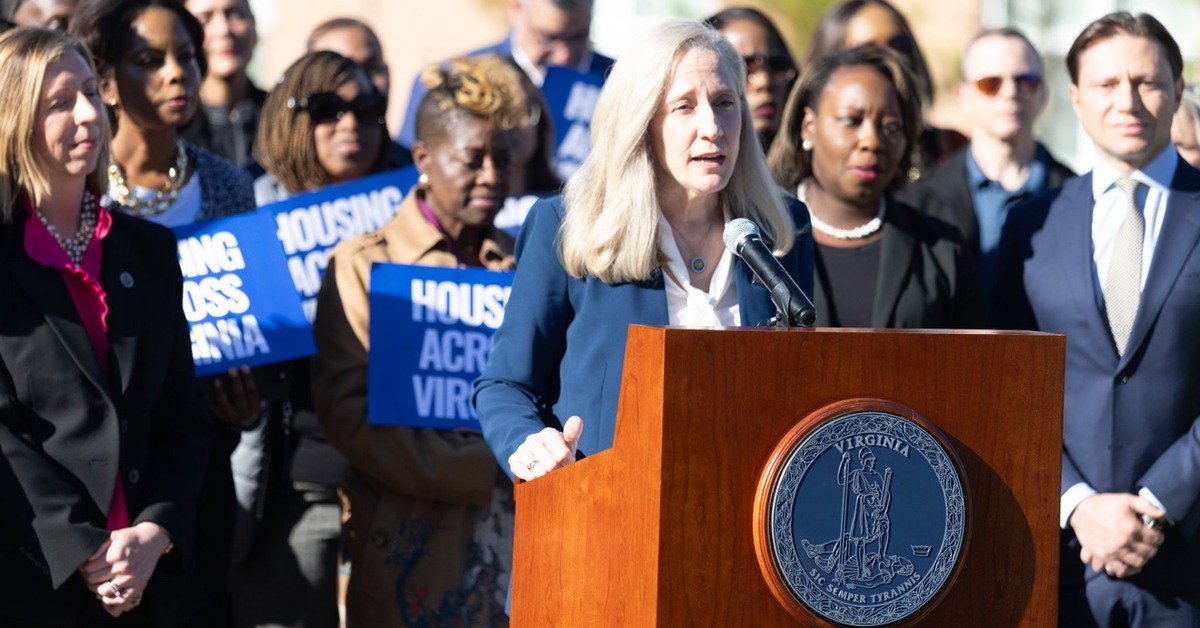
WOODBRIDGE, Va. — Gov. Abigail Spanberger and members of the General Assembly on Wednesday proposed housing legislation for the 2027 session that would encourage more homes near public transit and put surplus state land toward development.
The package also would create a fund to help localities and nonprofits buy affordable properties whose affordability protections are expiring. The governor’s office said that would prevent large rent increases. Spanberger announced the bills at Joyfield Flats at Woodbridge Apartments, about a 15-minute walk from the Woodbridge VRE station.
The proposals are part of the “Moving Virginia Forward” agenda that Spanberger and General Assembly leaders unveiled last week. In a news release, the governor blamed what she called “continued chaos out of Washington” for driving up costs. She said the goal is to “make sure more Virginians can find a home they can afford and keep the one they already have.”
What the bills would do
A one-page summary from the governor’s office lays out eight proposals. It lists them under the name “Affordable Virginia Agenda.”
The Department of Rail and Public Transportation would designate transit-oriented development zones that could qualify for supportive policies and incentives. The Virginia Department of Transportation would set standards for safe, dense road networks in those zones. Projects there, including housing, would become eligible for Virginia Transportation Infrastructure Bank funding.
The Department of General Services would have to sell or lease surplus land for housing and transit-oriented projects. That agency would work with the Department of Housing and Community Development, the rail department and Virginia Housing to find state-owned land suited to transit-oriented development and affordable housing.
A pilot loan program, the Affordable Housing Preservation Fund, would finance purchases of affordable units whose protections are running out.
Other measures would:
- create a single access point at the housing department for the state’s home repair and rehabilitation programs;
- update Virginia’s definition of a manufactured home to match federal law, which no longer requires a permanent chassis, the steel frame used to move the home;
- set up a Heirs’ Property Assistance Program to connect families with nonprofits and legal service providers to clear title problems;
- require Virginia Eviction Reduction Program grantees to coordinate referrals to community partners for help such as utility assistance, food pantries and job training;
- let the housing department inventory local zoning rules statewide, collect data on best practices and barriers, and share the findings with localities.
Lawmakers and advocates weigh in
Sen. Saddam Azlan Salim summed up the transit idea in a few words: “build homes where transit already runs.” Do that, he said, and teachers, nurses and transit workers can afford to live in the places they serve.
Manufactured homes rarely come up when people think about owning a home, Delegate Stacey Carroll said. She noted they often cost half as much as a single-family home or townhome.
Delegate Adele McClure said she will carry part of the plan in the House of Delegates. Sens. Schuyler VanValkenburg and Lashrecse Aird and Delegates Margaret Franklin and Briana Sewell also voiced support.
Several housing groups backed the package. Brian Koziol, executive director of the Virginia Housing Alliance, said his organization supports it.
LISC Virginia’s executive director, Jane Ferrara, singled out the heirs’ property program. It would build on her group’s work in the Richmond region, where LISC helps families clear up title issues.
Randy Grumbine, who leads the Virginia Manufactured and Modular Housing Association, called dropping the chassis requirement “especially significant.” Builders could then set homes lower to the ground, put them on basements and build multi-story manufactured homes, he said.
Andrew Clark of the Home Builders Association of Virginia said the industry strongly supports the proposals. He pointed to the governor’s creation of the Commission on Unlocking Housing Production.
Budget and broader agenda
Earlier this year, Spanberger signed a two-year state budget with upwards of $100 million to expand housing development, her office said. The budget also puts record funding into the Virginia Housing Trust Fund.
Housing is only one piece of the Moving Virginia Forward agenda. Other proposals would create a medical debt forgiveness program and ban NDAs and closed-door data center approvals. Another would bar using AI to set workers’ wages and salaries.
The proposals go to the General Assembly for its 2027 session. Spanberger said she looks forward to working with lawmakers “to turn these proposals into law.”