

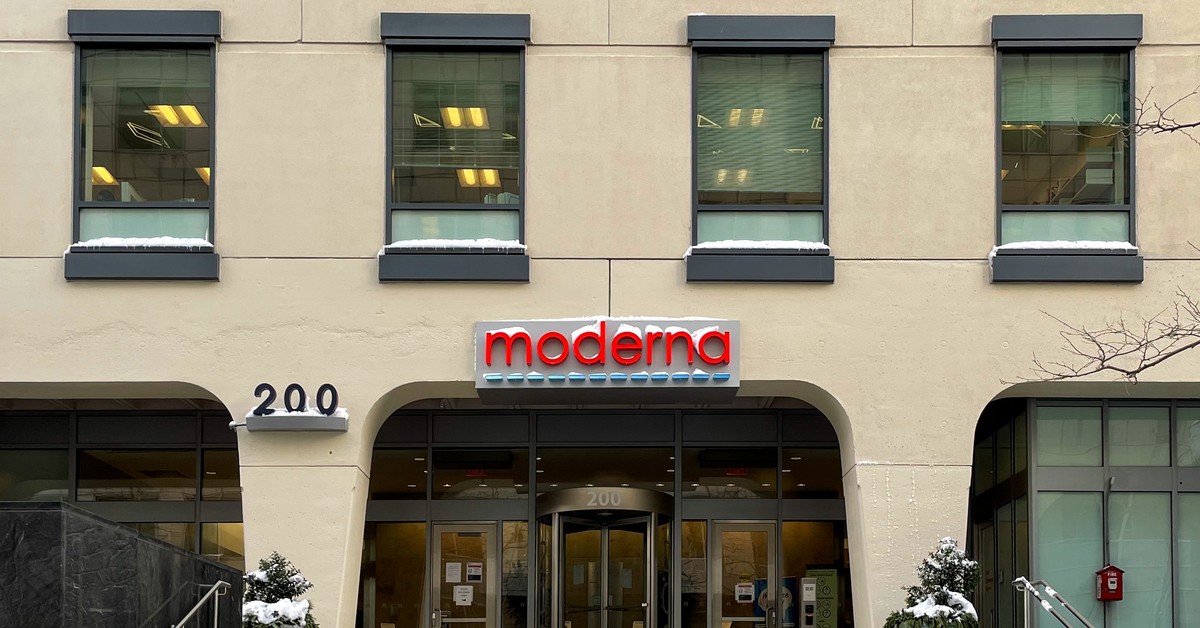
CAMBRIDGE, Mass. — After a long stretch of losses, Moderna turned a quarterly profit again. It earned $162 million in the third quarter, the company said on Friday. A year earlier, the same quarter ended $200 million in the red.
The top line explains the turn. Revenue came in at $1.31 billion, 29% higher than the $1.0 billion of a year ago. COVID shots sold better abroad, and government partnerships signed for the long term brought in deliveries. Of the total, $780 million came from the United States. International markets brought in $533 million.
Per share, the profit works out to $0.38. Last year it was a loss of $0.51 a share.
Spending tells two stories at once. Research and development dropped 27%, to $583 million, once some late-stage infectious disease studies wrapped up and were wound down. Making the product cost more, though. Cost of sales jumped 54% to $318 million, and $65 million of that was royalties paid to third parties, as volumes rose.
“We delivered 29% revenue growth in the third quarter, alongside the U.S. approval of mFLUSIVA, our fifth approved product globally, and positive Phase 3 results for intismeran in melanoma,”
A Stronger Outlook for the Year
For 2026 as a whole, Moderna now puts revenue growth at 15% to 25%. Before Friday, the top of its range was 10%. The split between home and abroad is not expected to change much: roughly half the revenue from the United States, half from elsewhere.
Cash is where the forecast moved most. The year is now expected to close with $8.1 billion to $8.3 billion in cash and investments on hand. The old outlook said $4.7 billion to $5.2 billion. At Sept. 30 the figure already stood at $8.0 billion, up from $6.9 billion three months earlier, helped by about $2.6 billion in net proceeds from convertible notes. A $950 million litigation settlement payment went the other way.
Research spending for the full year should land near $2.7 billion, a bit less than the $2.9 billion planned before, with capital spending near $0.2 billion.
New Products Behind the Numbers
August brought Food and Drug Administration approval for mFLUSIVA, the company’s seasonal flu shot, for adults aged 50 to 64. Adults 65 and older got accelerated approval. Canada has cleared the vaccine, too, making five approved products worldwide for Moderna, which is selling it in the United States on a limited basis for the 2026-2027 flu season.
The cancer work drew attention in October. Moderna and Merck showed Phase 3 data for intismeran, a melanoma treatment tailored to each patient. Patients who got it with KEYTRUDA saw their risk of recurrence or death fall 42%. The risk of distant metastasis or death fell 38%. Both figures are against KEYTRUDA on its own, and the partners are now getting regulatory submissions ready.
In September, Moderna signed a five-year deal with a local manufacturer in Mexico covering COVID-19 vaccines. Its analyst day is Nov. 12.
Have something to promote?
Bring your business, services or event to our readers.