

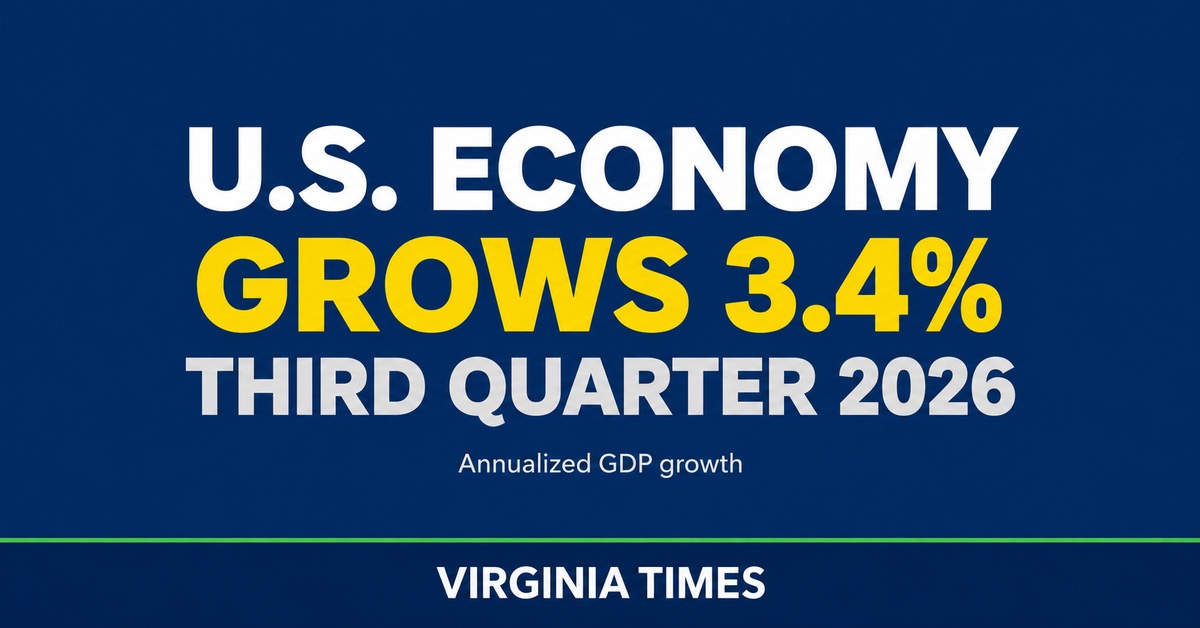
The U.S. economy expanded at a 3.4% annual rate from July through September, faster than the 2.2% pace in the second quarter, the U.S. Bureau of Economic Analysis reported Thursday.
Investment, consumer spending and government spending all rose in the third quarter, according to the advance estimate released at 8:30 a.m. EDT. A drop in exports offset part of those gains. Imports, which are subtracted when GDP is calculated, went up.
Most of the pickup from the spring came from faster investment growth and a turn higher in government spending, the agency said. Exports turned down from the second quarter, cutting into that boost, and imports grew more than they had three months earlier.
At a quarterly rate rather than an annualized one, real GDP rose 0.8%. Current-dollar GDP climbed 5.6%.
The investment gain came mainly from private inventories and equipment. Wholesalers and manufacturers added the most to inventories, with nondurable goods industries leading in both. Information processing equipment, mostly computers and peripherals, topped the equipment increase.
Households spent more on both services and goods. Health care, chiefly hospitals and outpatient services, led the rise in services, along with food services and accommodations, mostly meals and drinks. Prescription drugs led the gain in goods.
Federal spending more than accounted for the increase in government outlays, with nondefense consumption in the lead. BEA tied that pattern largely to crude oil sales from the Strategic Petroleum Reserve, which the national accounts deduct from government consumption.
Those sales were smaller than in the second quarter, pushing the spending figure up. The agency said the sales have no direct effect on GDP because the oil shows up as an increase elsewhere in the economy’s accounts.
Lower shipments of petroleum and related products drove the decline in exports. Capital goods other than autos made the largest contribution to imports.
Consumer spending and private fixed investment together, a measure BEA calls real final sales to private domestic purchasers, rose 4.9%, up from 4.6% in the second quarter.
Price gains slowed. The price index for gross domestic purchases rose 3%, down from 5.6% in the spring. The personal consumption expenditures price index increased 2.1% after a 5% gain, and the index excluding food and energy rose 2.5%, down from 3.3%.
BEA will revise the figures in its second estimate of third-quarter GDP, due with corporate profits data Nov. 25 at 8:30 a.m. EST.
Have something to promote?
Bring your business, services or event to our readers.