

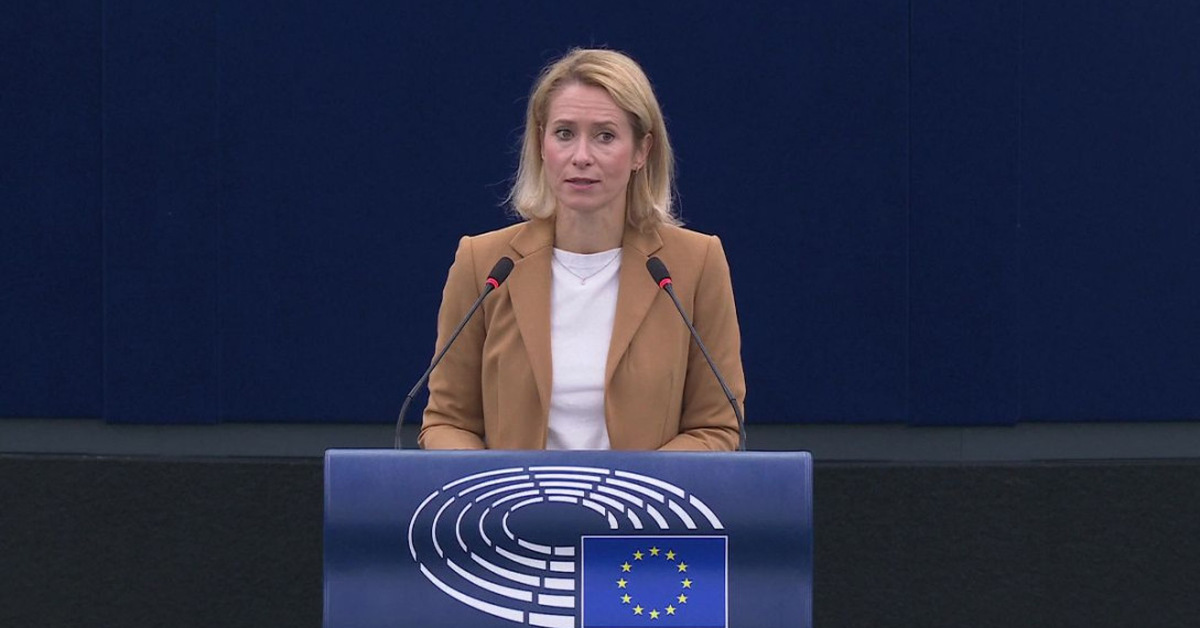
The European Union’s foreign policy chief Kaja Kallas accused Russia on Tuesday of weaponizing food supplies through attacks on Ukraine’s export routes, warning that suspected Russian drone strikes in the Black Sea were endangering sailors and threatening global food security.
Six attacks in 10 days marked a “dangerous and unacceptable escalation,” the high representative told the European Parliament, according to remarks published by the European External Action Service.
Rescuers were still searching for seven sailors missing after a drone attack on two tankers near Romania’s Black Sea coast, the official said. Romanian F-16 fighter jets shot down two drones over the country’s territorial waters Saturday.
Kallas called for stronger maritime defenses and an agreement to protect civilian shipping, saying attacks on Ukraine’s ports and trade routes were hurting countries that depend on its agricultural exports.
Ukraine Losing Export Revenue
Russia has stepped up attacks on Ukraine’s export routes since mid-July, costing the country an estimated 60 million euros a day in export revenue, according to the statement.
Kallas said Russia was attacking agricultural infrastructure, Black Sea and Danube ports, border crossings, vessels and shipping lanes, while destroying grain storage facilities.
Ukraine supplies about 15% of global maize exports, 10% of wheat, 15% to 20% of barley and half of sunflower oil exports, the official said. Roughly 90% of those goods pass through the Black Sea corridor.
EU leaders last week accused Russia of deliberately undermining food security, particularly in Africa, Asia and the Middle East, and called for the immediate restoration of safe passage for civilian and commercial vessels.
Kallas said global grain prices had reached their highest level since February 2023. Although stockpiles were larger than in 2022, drought in both hemispheres, a super El Niño and conflict in the Middle East affecting fertilizer exports were adding pressure.
The official identified the Strait of Hormuz, Bab al-Mandab and the Black Sea as three choke points affecting supplies.
Alternative Routes Also at Risk
Grain exports through the EU–Ukraine Solidarity Lanes, which offer alternative trade routes, have risen by almost 2 million metric tons since July, according to the statement.
But the high representative warned that those routes were also under threat because Russia was targeting border crossings with Moldova, Romania and Poland.
The EU is seeking better early detection of threats and faster sharing of maritime surveillance information. Romania and Bulgaria are jointly establishing a Black Sea Maritime Security Hub with EU support.
A proposed emergency protocol would provide for immediate political consultations and closer coordination during major hybrid crises, including with NATO. Other efforts include joint development and procurement of defense equipment, stronger surveillance along Europe’s eastern flank, and cooperation on clearing maritime mines.
The high representative said 51 countries had joined a call at the U.N. General Assembly condemning Russia and seeking safe Black Sea passage. The EU is working with Turkey, India and food-importing countries to build support for a freedom of navigation arrangement.
Ukraine has proposed such an arrangement, but Russia has rejected it, the official said.
Dispute Over Peace Efforts
In closing remarks, the high representative rejected lawmakers’ accusations that Europe lacked a peace strategy.
The official said a negotiating plan presented to EU foreign ministers in February set out demands intended to counter Russia’s own and ensure Europe had a role in decisions about lifting European sanctions.
The high representative also accused American negotiators of trying to push Ukraine into surrender on Russian terms, arguing that European support had helped Kyiv resist that pressure.
Sanctions had deprived Russia of 1 trillion euros, the official said, without providing a breakdown in the remarks.
Ukraine had agreed to an energy ceasefire, a Black Sea arrangement and a broader ceasefire, while Russia had not, the high representative said, calling for continued pressure on Moscow alongside diplomatic efforts.
Have something to promote?
Bring your business, services or event to our readers.