

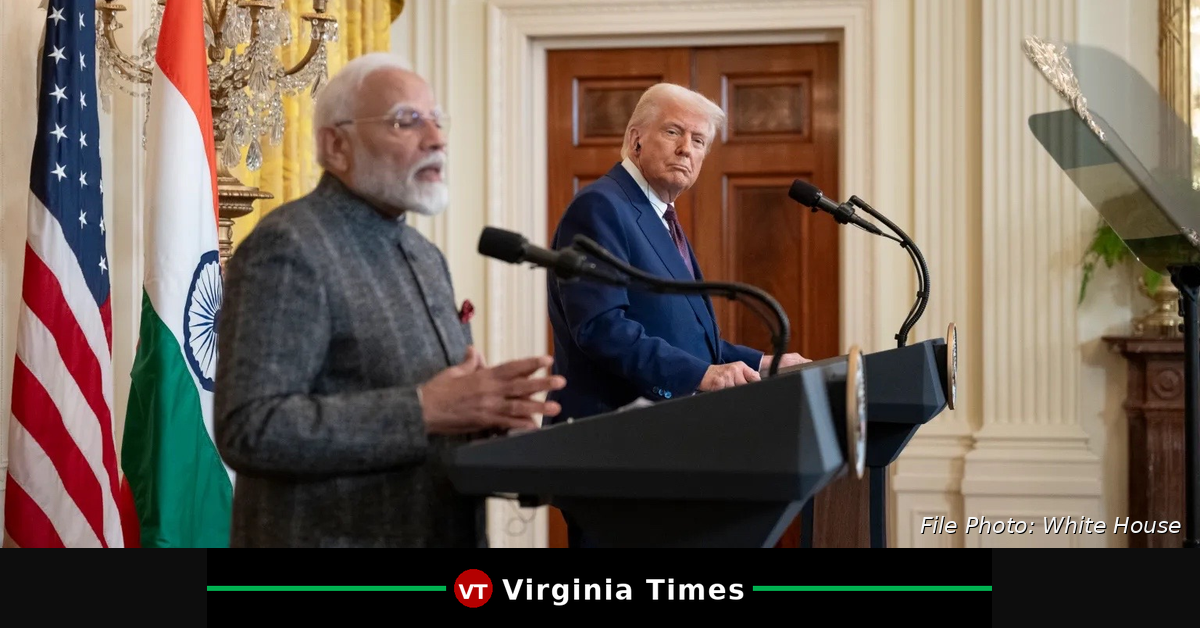
The United States and India have agreed to a framework for an interim trade agreement that will see India lower or eliminate tariffs on U.S. exports, address non-tariff barriers, and establish a reciprocal 18% U.S. tariff rate for many Indian exports, as outlined in a joint statement issued Friday, February 6, 2026, by The White House.
The agreement follows the rollout of a joint statement issued by U.S. President Donald Trump aimed at “removing tariff and non-tariff barriers” and increasing access to the Indian market for U.S. exports, which comprises over 1.4 billion people, as per a statement issued by the Office of the U.S. Trade Representative and posted on its official website.
According to U.S. Trade Representative Jamieson Greer, the agreement will see India lower its tariffs for “all U.S. industrial goods” and a wide range of U.S. agricultural products, thanking Indian Commerce and Industry Minister Piyush Goyal for “his efforts to achieve fair and balanced trade.”
As outlined in the agreement rolled out by The White House, India will lower or eliminate its tariffs on all U.S. industrial goods as well as a wide range of U.S. agricultural and food products such as dried distillers grains, red sorghum for animal feed, tree nuts, fresh and processed fruit, soybean oil, wine and spirits, among others.
Conversely, the U.S. will establish a reciprocal 18% tariff rate for originating Indian exports across a wide range of products such as textiles and apparel, leather and footwear, plastics and rubber, organic chemicals, home decor items, artisan products, machinery, among others.
The statement also sets out possible tariff actions related to other steps the United States might take, such as lifting certain tariffs on aircraft and aircraft parts from India and providing India a “preferential tariff-rate quota” for certain automotive parts, subject to national security requirements in the United States. It adds that “India will work to address long-standing non-tariff issues affecting medical devices from the United States, import licensing for certain ICT products, and standards and testing for certain sectors.”
Additionally, the agreement contains provisions on supply chain resiliency, export controls, and digital trade rules. It adds that “India intends to procure $500 billion in energy products, aircraft and aircraft parts, precious metals, technology products such as GPUs for use in data centers, and coking coal from the United States over the next five years.”
The announcement builds on broader bilateral trade agreement negotiations launched Feb. 13, 2025 by Trump and Prime Minister Narendra Modi, the White House said. The documents describe government-to-government commitments and do not allege wrongdoing by any individuals.
Have something to promote?
Bring your business, services or event to our readers.