
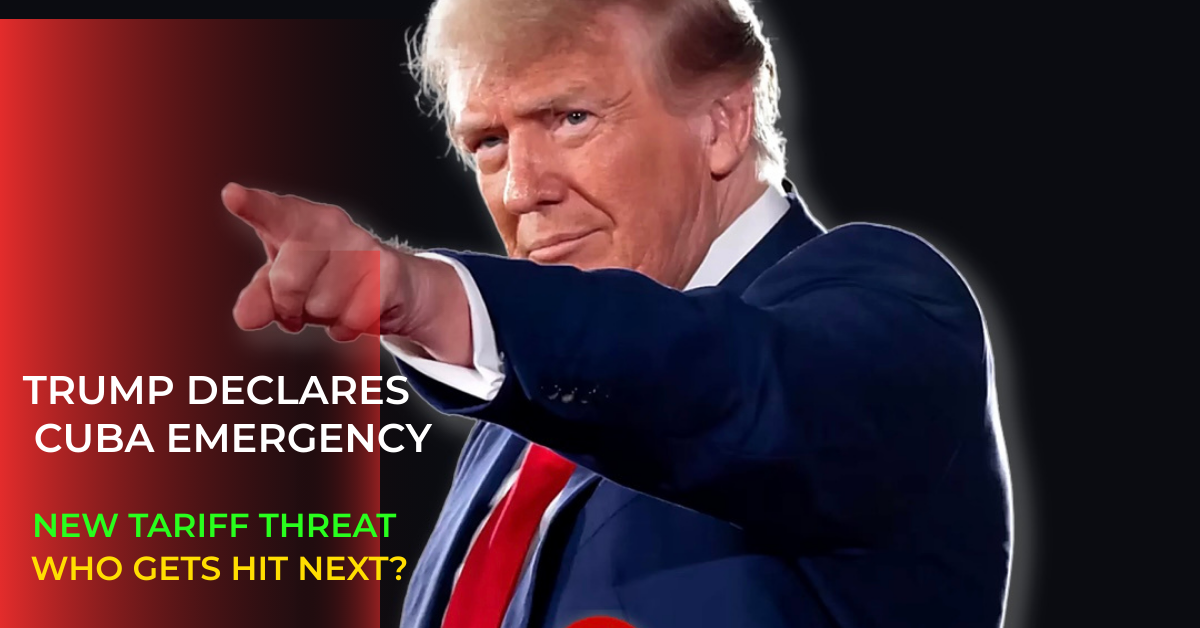
President Donald Trump on Thursday signed an executive order declaring a national emergency over what the White House described as threats posed by Cuba. It also directs the administration to build a process that could impose new tariffs on imports from countries that supply oil to the island.
The White House order, which came into force at 12:01 a.m. on Friday, allows the government to increase tariffs on imports from countries that sell or supply oil to Cuba. This includes both direct and indirect sales through third-party countries.
Under the directive, the Commerce Department is tasked with determining whether a foreign country “directly or indirectly” sells or provides crude oil or petroleum products to Cuba. Once a positive decision is reached, the State Department, in cooperation with Treasury, Homeland Security, and the US Trade Representative, will decide whether to recommend the imposition of ad valorem tariffs on imports of that country. The president will consider all recommendations in deciding whether to impose tariffs and what level of tariffs should be applied.
The executive order frames the emergency around Cuba’s foreign relationships and internal repression. It claims Cuba supports or provides space for hostile governments and groups, naming Russia, China, and Iran, along with Hamas and Hezbollah, and alleges the Cuban government hosts sophisticated intelligence capabilities that threaten U.S. security. It also cites alleged human rights abuses, including persecution of political opponents and restrictions on the press and civil society.
The move would add a new pressure point beyond longstanding U.S. restrictions on Cuba by potentially penalizing third countries through trade duties tied to energy shipments. The order also gives Trump authority to modify the action, including in response to retaliation by affected countries or if Cuba or other governments take steps the administration views as addressing the declared threat.
Cuban state media sharply criticized the action, warning it could worsen an already severe crisis and disrupt services such as electricity and water supply, Reuters reported. The White House also issued a separate White House fact sheet saying the order establishes a new tariff system and authorizes senior officials to issue implementing rules and guidance.
What comes next will depend on Commerce’s country-by-country determinations and the State Department’s recommendations, setting up a potentially sweeping tool that could reach far beyond Cuba itself.